

ABSTRACT
Background and Aim: The rapid expansion of giant freshwater prawn (Macrobrachium rosenbergii) aquaculture has raised concerns regarding the emergence and dissemination of antimicrobial resistance (AMR) in aquatic ecosystems. However, information regarding antibiotic-resistant bacteria and resistance genes in freshwater prawn earthen pond systems in Northeastern Thailand remains limited. This study aimed to isolate and characterize antibiotic-resistant bacteria from giant freshwater prawn aquaculture ponds in Kalasin Province, Thailand, and to determine the occurrence of clinically important β-lactamase resistance genes.
Materials and Methods: Water samples were collected quarterly from nine earthen ponds located in three districts of Kalasin Province, Thailand, between July 2024 and June 2025. Bacterial isolates were recovered using ampicillin-supplemented selective media and identified through 16S rRNA gene sequencing. Antimicrobial susceptibility was evaluated using agar disk diffusion according to Clinical and Laboratory Standards Institute guidelines. Polymerase chain reaction assays were performed to detect β-lactamase genes, including blaTEM, blaSHV, blaOXA, blaKPC-2, blaNDM-1, and blaIMP.
Results: Twenty antibiotic-resistant isolates representing eight bacterial species belonging to five genera were identified. Aeromonas veronii was the predominant species, accounting for six isolates. Fourteen isolates (70.0%; 95% confidence interval: 45.7–88.1%) exhibited multidrug resistance to at least three antimicrobial classes. Resistance was particularly common against ampicillin, vancomycin, and rifampicin. Molecular analysis revealed the presence of clinically important β-lactamase genes, mainly blaSHV and blaKPC-2. Several isolates carried these genes, and A. veronii isolate MSS1 co-harbored blaSHV and blaKPC-2, indicating the possible clustering of resistance determinants. To the best of our knowledge, this study represents the first report of blaKPC-2-positive bacteria isolated from M. rosenbergii aquaculture ponds in Thailand.
Conclusion: The detection of multidrug-resistant bacteria and clinically relevant β-lactamase genes highlights the role of freshwater prawn aquaculture systems as environmental reservoirs of AMR. These findings provide baseline information for AMR surveillance in Thailand and emphasize the need for improved antimicrobial stewardship, enhanced biosecurity measures, and sustainable disease management strategies within a One Health framework. Further investigations employing metagenomics and whole-genome sequencing are warranted to elucidate resistance dissemination mechanisms.
Keywords: Aeromonas veronii, antimicrobial resistance, aquaculture, β-lactamase genes, giant freshwater prawn, multidrug-resistant bacteria, One Health, Thailand.
INTRODUCTION
Aquaculture has become a cornerstone of global food production, with freshwater prawn farming representing a rapidly growing sector in Southeast Asia. The giant freshwater prawn (Macrobrachium rosenbergii) is one of the most commercially important aquaculture species because of its rapid growth, high market value, and adaptability to diverse farming systems [1, 2]. In Northeastern Thailand, particularly in Kalasin Province, freshwater prawn farming contributes substantially to rural livelihoods and local food security. However, the intensification of aquaculture production has led to increasing challenges associated with disease outbreaks and environmental health. Opportunistic bacterial pathogens, particularly Aeromonas spp., are frequently associated with motile aeromonad septicemia and other infectious diseases in cultured prawns [3, 4]. Consequently, antibiotics are commonly used for disease prevention and treatment in aquaculture systems, often without strict veterinary oversight, raising growing concerns about antimicrobial resistance (AMR), antibiotic-resistant bacteria (ARB), and antibiotic resistance genes (ARGs) in aquatic environments [5, 6]. Environmental dissemination of clinically important resistance genes, including blaSHV, blaOXA, and blaKPC-2, has increasingly been reported in aquatic bacterial species such as Aeromonas spp., Klebsiella spp., and Enterobacter spp., highlighting the potential public health risks associated with aquaculture-associated AMR [7–10]. In response to these concerns, the World Health Organization has emphasized the importance of integrated AMR surveillance under a One Health framework [11].
Despite growing global concern about AMR in aquaculture, most investigations in Thailand have focused primarily on marine shrimp farming systems or cage-cultured fish, including studies associated with Lam Pao Dam and coastal aquaculture regions. In contrast, earthen pond systems used for culturing M. rosenbergii in Northeastern Thailand remain poorly characterized with respect to profiles and the occurrence of clinically relevant ARGs. This knowledge gap is particularly important because small-scale freshwater prawn farming represents a major source of income and food security for rural communities in Kalasin Province and surrounding regions. Furthermore, previous studies have generally investigated bacterial diversity or antimicrobial susceptibility independently, whereas only a limited number have integrated culture-based bacterial isolation, molecular identification using 16S rRNA gene sequencing, antimicrobial susceptibility profiling, and targeted detection of clinically important β-lactamase genes in freshwater prawn aquaculture systems. Information regarding carbapenemase-associated genes, particularly blaKPC-2, in environmental isolates from freshwater prawn ponds remains scarce in Thailand. In addition, the occurrence and distribution of clinically important β-lactamase genes among ARB associated with freshwater prawn farming systems have not been comprehensively characterized. This lack of information limits ecological risk assessment and hinders the development of effective surveillance and antimicrobial stewardship strategies under a One Health framework.
Therefore, this study aimed to isolate and identify ARB from M. rosenbergii aquaculture ponds in Kalasin Province, Thailand, and to characterize their antimicrobial susceptibility patterns and associated β-lactamase resistance genes, including blaSHV and blaKPC-2. By integrating culture-based bacterial isolation, molecular identification using 16S rRNA gene sequencing, antimicrobial susceptibility testing, and targeted polymerase chain reaction (PCR)-based detection of resistance genes, this study provides important baseline information regarding multidrug-resistant (MDR) bacteria and clinically relevant ARGs in freshwater aquaculture environments. The findings are expected to improve the understanding of AMR dissemination in small-scale freshwater aquaculture systems and support future surveillance and antimicrobial stewardship strategies in Thailand under a One Health perspective.
MATERIALS AND METHODS
Ethical approval
This study was conducted in accordance with the ethical principles and research guidelines established by Kalasin University, Thailand. The study protocol was reviewed and approved by the Research and Development Institute Committee of Kalasin University. All procedures complied with applicable national regulations and institutional standards for microbiological and environmental research. Laboratory procedures involving opportunistic pathogenic bacteria, including Klebsiella pneumoniae, were performed in accordance with institutional biosafety regulations and standard containment practices for handling potentially pathogenic microorganisms. No experimental manipulations or invasive procedures involving live animals were performed during this study, as only environmental water samples were collected from commercial aquaculture ponds.
Study period and location
This study was conducted from July 2024 to June 2025 at the Kalasin University Excellent Laboratory for Agricultural and Food Product Standard Testing Center, Faculty of Agricultural Technology, Kalasin University, Thailand.
Study design
A cross-sectional observational study was designed to investigate the occurrence of ARB and clinically important ARGs in freshwater prawn aquaculture ponds. Water samples were collected quarterly during both rainy and dry seasons to account for seasonal variation. Bacterial isolates were recovered using selective culture techniques and subsequently identified by 16S rRNA gene sequencing. Antimicrobial susceptibility profiles were determined using the agar disk diffusion method, and PCR assays were employed to detect clinically relevant β-lactamase genes. Descriptive and inferential statistical analyses were performed to evaluate resistance patterns and the prevalence of MDR bacteria.
Study area description
Water samples were collected from earthen aquaculture ponds culturing giant freshwater prawn (Macrobrachium rosenbergii) across three districts in Kalasin Province, Northeastern Thailand (Figure 1).
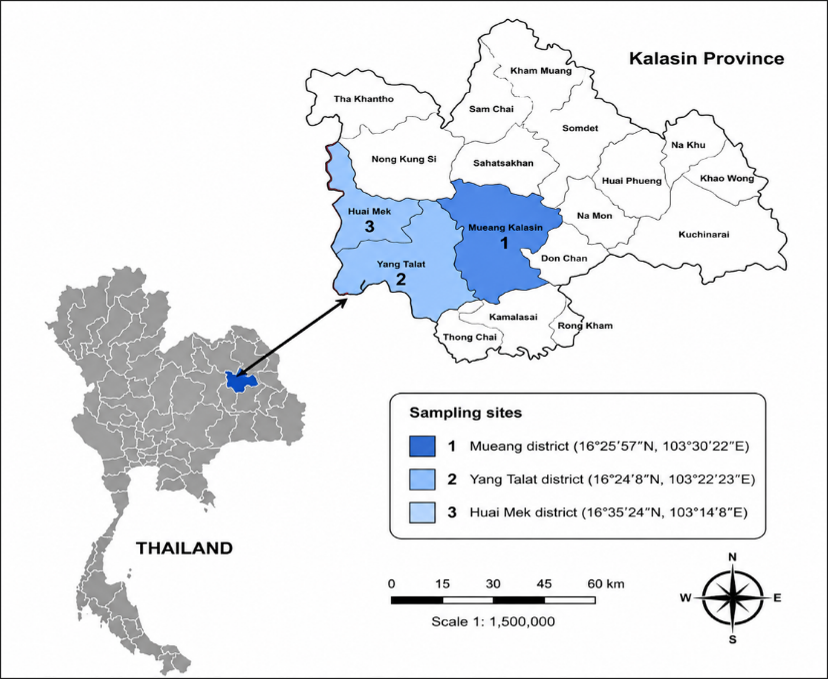
Figure 1. Geographic locations and spatial distribution of giant freshwater prawn (Macrobrachium rosenbergii) aquaculture ponds sampled in Mueang, Yang Talat, and Huai Mek districts of Kalasin Province, Northeastern Thailand. Geographic coordinates of the sampling sites are shown to provide geographical and epidemiological context for the study area.
A total of nine earthen aquaculture ponds (three ponds per district) were included in this study. Water sampling was conducted quarterly between July 2024 and June 2025 to capture both rainy and dry seasons. One water sample was collected from each pond at each sampling event, yielding a total of 36 water samples over the study period. Pond selection was based on active cultivation of M. rosenbergii and the farmer's willingness to participate in the study.
Organic load was estimated qualitatively based on turbidity and sediment accumulation observed during sampling. No major disease outbreaks were reported during the sampling period, although occasional reductions in water quality and prawn survival were noted by farmers. Ponds were selected using convenience sampling based on accessibility, active freshwater prawn cultivation, and farmers’ willingness to participate in the study.
Basic environmental parameters, including water temperature (28–33°C), pH (7.2–8.1), and dissolved oxygen levels (4.5–6.8 mg/L), were monitored during sampling using portable field meters. Average pond depth ranged from approximately 1.2 to 1.8 m.
Sample collection and bacterial isolation
Water samples were collected aseptically from earthen aquaculture ponds culturing M. rosenbergii across three districts in Kalasin Province, Northeastern Thailand. Samples were collected into sterile 1-L polyethylene bottles and transported on ice to the laboratory for immediate processing within 6 h to preserve microbial viability [12].
To selectively recover environmental ARB associated with local freshwater prawn farming systems, a multi-medium isolation strategy supplemented with 50 µg/mL ampicillin (AMP) was employed. This selective approach was designed to enhance the detection of resistant bacterial populations that may be exposed to antimicrobial selective pressure in earthen aquaculture ponds.
Serial 10-fold dilutions of each water sample were prepared using sterile 0.85% normal saline. A 1-mL aliquot of each dilution (10⁻¹–10⁻²) was plated onto selective media containing 50 µg/mL AMP to isolate potential ARB. AMP was selected as the primary screening antibiotic because β-lactam antibiotics are among the most commonly used antimicrobial agents in freshwater aquaculture systems and are frequently associated with the emergence of MDR environmental bacteria. In addition, AMP supplementation has been widely used to selectively recover Gram-negative ARB, particularly Aeromonas spp. and members of the family Enterobacteriaceae, from aquatic environments.
The media used included Luria-Bertani agar (HiMedia Laboratories Pvt. Ltd., Mumbai, India) for general bacterial growth, blood agar base (HiMedia) for detecting hemolytic activity, Streptococcus selection agar (HiMedia), Salmonella-Shigella agar (HiMedia), and thiosulfate-citrate-bile-sucrose agar (HiMedia) for Vibrio spp. Following incubation, CFU counts on AMP-supplemented media ranged from approximately 1.2 × 10² to 4.8 × 10⁴ CFU/mL depending on the sampling site and season. Approximately 10–20 colonies displaying distinct morphological characteristics were screened from each sample before selecting representative isolates for further molecular characterization.
Plates were incubated at 37°C for 18–24 h. Colonies exhibiting distinct morphological characteristics were selected and purified through repeated subculturing. Colony morphology, including shape, margin, elevation, and pigmentation, was recorded. Gram staining was performed to classify bacterial groups [13].
Retrospective interviews with pond operators indicated occasional use of oxytetracycline and amoxicillin-based formulations for disease prevention and management. However, complete dosage records and treatment frequencies were inconsistently documented and therefore could not be quantitatively analyzed.
Molecular identification of bacteria
DNA was extracted from pure bacterial isolates using a standard boiling method. The 16S rRNA gene region was subsequently amplified using universal primers 27F (5′-AGAGTTTGATCCTGGCTCAG-3′) and 1492R (5′-GGTTACCTTGTTACGACTT-3′), as previously described [14]. PCR reactions were carried out in a total volume of 25 µL using Taq DNA polymerase (Vivantis Technologies Sdn. Bhd., Selangor, Malaysia) and optimized annealing temperatures.
PCR amplification was performed in a thermal cycler under the following conditions: initial denaturation at 95°C for 5 min, followed by 35 amplification cycles consisting of denaturation at 95°C for 30 s, annealing at 55–60°C for 30 s depending on primer specificity, and extension at 72°C for 1 min, followed by a final extension at 72°C for 10 min. Positive control strains carrying known resistance genes and nuclease-free water as a negative control were included in each PCR assay.
PCR products were visualized on 1% agarose gels stained with ethidium bromide and subsequently submitted for sequencing using the Macrogen sequencing service (Macrogen Inc., Seoul, South Korea). Resulting sequences were analyzed using the Basic Local Alignment Search Tool against the GenBank database of the National Center for Biotechnology Information (NCBI) using a sequence identity threshold of ≥99% [15]. Phylogenetic trees were constructed using Clustal Omega alignment and the neighbor-joining method [16].
Antimicrobial susceptibility testing
Antimicrobial susceptibility testing was performed using the agar disk diffusion method on Mueller-Hinton agar according to the guidelines of the Clinical and Laboratory Standards Institute (CLSI) [17]. Inocula were adjusted to the 0.5 McFarland standard and evenly spread on agar plates using sterile cotton swabs.
Commercial antibiotic disks (Oxoid, Thermo Fisher Scientific, Basingstoke, United Kingdom) were used for susceptibility testing and included AMP (10 µg), vancomycin (VAN, 30 µg), azithromycin (AZM, 15 µg), streptomycin (STR, 25 µg), rifampicin (RIF, 5 µg), and chloramphenicol (CHL, 30 µg).
Plates were incubated at 37°C for 24 h, and inhibition zones were measured in millimeters. Results were interpreted as resistant (R ≤15 mm), intermediate (I = 16–20 mm), or susceptible (S ≥21 mm) according to CLSI breakpoints.
All antimicrobial susceptibility tests were performed in triplicate. Escherichia coli American Type Culture Collection (ATCC) 25922 and Staphylococcus aureus ATCC 25923 were used as quality control strains in accordance with CLSI M100, 31st edition [17].
Detection of ARGs
Plasmid DNA was extracted from selected antibiotic-resistant isolates using the GF-1 Plasmid DNA Extraction Kit (Vivantis Technologies Sdn. Bhd., Selangor, Malaysia) according to the manufacturer's instructions. Extracted plasmid DNA was quantified using a NanoDrop™ spectrophotometer (Thermo Fisher Scientific, Waltham, MA, USA). Targeted screening for clinically relevant carbapenemase and β-lactamase genes in environmental isolates was conducted to assess the potential dissemination of AMR determinants within freshwater aquaculture ecosystems within a One Health framework.
PCR assays were conducted to detect six resistance genes associated with β-lactamase production, namely blaTEM, blaSHV, blaOXA, blaKPC-2, blaNDM-1, and blaIMP, using specific primers and previously published protocols [18, 19]. PCR products were resolved on 1.5% agarose gels, stained with ethidium bromide, and visualized under ultraviolet illumination.
The present study focused primarily on plasmid-associated resistance determinants. Chromosomal DNA-associated resistance genes were not specifically investigated.
Statistical analysis
Descriptive statistics were used to summarize bacterial prevalence and AMR profiles. Differences in resistance frequencies among bacterial species and sampling districts were evaluated using Fisher's exact test or chi-square analysis where appropriate. Statistical significance was defined as p < 0.05. The 95% confidence interval (CI) for MDR prevalence was calculated using the Wilson method.
RESULTS
Bacterial identification and phylogenetic analysis
A total of 20 ARB isolates were successfully recovered from water samples collected from three giant freshwater prawn (M. rosenbergii) aquaculture ponds in Kalasin Province, Thailand. Based on 16S rRNA gene sequencing and sequence alignment using the Basic Local Alignment Search Tool, the isolates were taxonomically classified into eight bacterial species across five genera, with sequence identities ≥99% (Table 1).
| Isolate | GenBank accession number | Species | Sequence similarity (%) |
|---|---|---|---|
| YAmp1 | PQ432911 | Bacillus cereus | 99 |
| YAmp2 | PQ432912 | B. cereus | 99 |
| YBA1 | PQ432913 | B. cereus | 100 |
| YBA2 | PQ432914 | Bacillus wiedmannii | 99 |
| HAmp1 | PQ432915 | Klebsiella pneumoniae | 99 |
| HAmp2 | PQ432916 | B. wiedmannii | 99 |
| HAE1 | PQ432917 | Aeromonas sanarellii | 99 |
| HAE2 | PQ432918 | K. pneumoniae | 99 |
| HTCBS1 | PQ432919 | Aeromonas veronii | 99 |
| HBA1 | PQ432920 | A. veronii | 100 |
| HBA2 | PQ432921 | A. veronii | 99 |
| HSS1 | PQ432922 | K. pneumoniae | 99 |
| MAmp2 | PQ432923 | A. veronii | 99 |
| MAmp3 | PQ432924 | A. veronii | 100 |
| MAE1 | PQ432925 | Enterobacter aerogenes | 99 |
| MAE2 | PQ432926 | Aeromonas jandaei | 99 |
| MAE3 | PQ432927 | Bacillus wiedmannii | 99 |
| MSS1 | PQ432928 | A. veronii | 99 |
| MSS2 | PQ432929 | A. veronii | 100 |
| MBA2 | PQ432930 | Aeromonas dhakensis | 99 |
Table 1. Molecular identification and taxonomic characterization of antibiotic-resistant bacterial isolates recovered from giant freshwater prawn (Macrobrachium rosenbergii) aquaculture ponds in Kalasin Province, Thailand, based on 16S rRNA gene sequencing and sequence similarity analysis.
| Isolate | GenBank accession number | Species | Sequence similarity (%) |
|---|---|---|---|
| YAmp1 | PQ432911 | Bacillus cereus | 99 |
| YAmp2 | PQ432912 | B. cereus | 99 |
| YBA1 | PQ432913 | B. cereus | 100 |
| YBA2 | PQ432914 | Bacillus wiedmannii | 99 |
| HAmp1 | PQ432915 | Klebsiella pneumoniae | 99 |
| HAmp2 | PQ432916 | B. wiedmannii | 99 |
| HAE1 | PQ432917 | Aeromonas sanarellii | 99 |
| HAE2 | PQ432918 | K. pneumoniae | 99 |
| HTCBS1 | PQ432919 | Aeromonas veronii | 99 |
| HBA1 | PQ432920 | A. veronii | 100 |
| HBA2 | PQ432921 | A. veronii | 99 |
| HSS1 | PQ432922 | K. pneumoniae | 99 |
| MAmp2 | PQ432923 | A. veronii | 99 |
| MAmp3 | PQ432924 | A. veronii | 100 |
| MAE1 | PQ432925 | Enterobacter aerogenes | 99 |
| MAE2 | PQ432926 | Aeromonas jandaei | 99 |
| MAE3 | PQ432927 | Bacillus wiedmannii | 99 |
| MSS1 | PQ432928 | A. veronii | 99 |
| MSS2 | PQ432929 | A. veronii | 100 |
| MBA2 | PQ432930 | Aeromonas dhakensis | 99 |
Identification of bacterial isolates was performed using partial 16S rRNA gene sequencing followed by sequence similarity analysis against the GenBank database of the NCBI using the Basic Local Alignment Search Tool for nucleotide sequences. Sequence similarity values are presented as percentages relative to the closest reference strains. GenBank accession numbers corresponding to representative isolates generated in this study are provided.
Among the isolates, Aeromonas veronii was the predominant species (n = 6), followed by Bacillus cereus (n = 3), Klebsiella pneumoniae (n = 3), and Bacillus wiedmannii (n = 3). Notably, all identified species comprised environmental or opportunistic human pathogens, suggesting anthropogenic influences on pond microbiota through contaminated feed, water sources, or cross-contamination via equipment and surface runoff [10, 20].
The phylogenetic tree constructed from 16S rRNA gene sequences (Figure 2) showed clear genus-level clustering, reflecting both the taxonomic consistency and environmental diversity of the isolates. Notably, Aeromonas spp. formed a well-supported clade, suggesting their ecological dominance under aquaculture conditions. This finding is consistent with previous reports showing a high prevalence of Aeromonas species in semi-intensive aquaculture systems characterized by nutrient enrichment and exposure to antimicrobial residues [21].
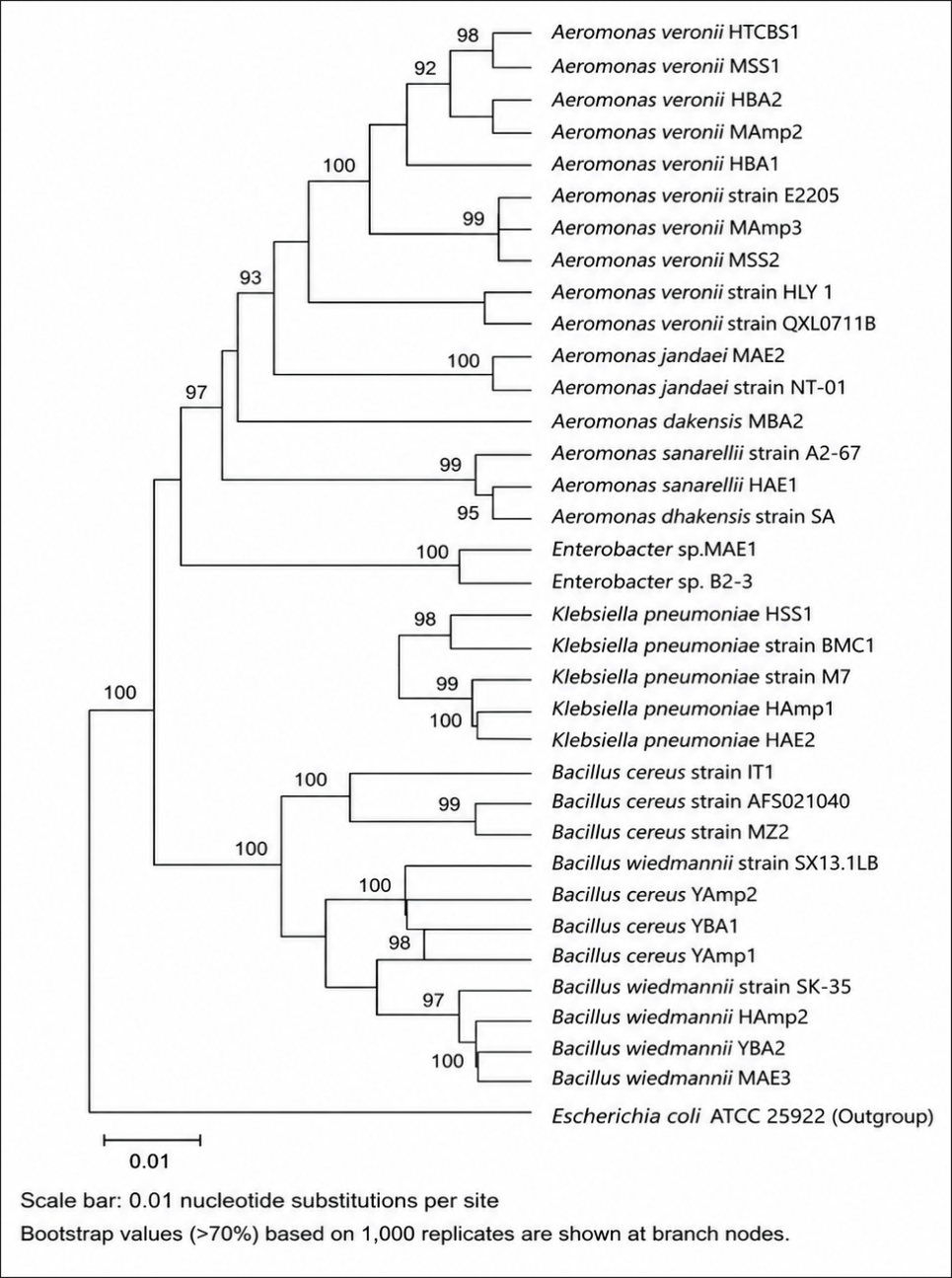
Figure 2. Neighbor-joining phylogenetic tree based on partial 16S rRNA gene sequences of bacterial isolates recovered from giant freshwater prawn (Macrobrachium rosenbergii) aquaculture ponds in Kalasin Province, Thailand. Bootstrap values (>70%) derived from 1,000 replicates are shown at the branch nodes. The scale bar indicates nucleotide substitutions per site. Escherichia coli ATCC 25922 served as the outgroup.
The occurrence of both environmental species, such as B. wiedmannii, and zoonotic species, such as K. pneumoniae, highlights the complexity of microbial communities in aquaculture ecosystems and underscores the importance of molecular surveillance to monitor potential public health threats.
Antimicrobial susceptibility patterns
Antimicrobial susceptibility testing using the agar disk diffusion method demonstrated widespread resistance to multiple antimicrobial classes among the isolates. Fourteen of the 20 isolates (70.0%; 95% CI: 45.7–88.1%) exhibited multidrug resistance (MDR) according to CLSI criteria [17].
| Bacterial species and isolate | AMP | VAN | AZM | STR | RIF | CHL |
|---|---|---|---|---|---|---|
| Bacillus cereus YAmp1 | R | R | R | I | R | I |
| B. cereus YAmp2 | R | I | I | S | R | S |
| B. cereus YBA1 | R | R | I | I | R | S |
| Bacillus wiedmannii YBA2 | R | R | S | I | R | R |
| Klebsiella pneumoniae HAmp1 | R | R | I | S | R | S |
| B. wiedmannii HAmp2 | R | R | I | I | R | R |
| Aeromonas sanarellii HAE1 | R | R | S | I | S | S |
| Klebsiella pneumoniae HAE2 | R | R | R | S | R | S |
| Aeromonas veronii HTCBS1 | R | R | S | R | R | S |
| A. veronii HBA1 | R | R | S | R | R | S |
| A. veronii HBA2 | R | R | S | R | R | S |
| K. pneumoniae HSS1 | R | R | R | S | R | I |
| A. veronii MAmp2 | S | S | S | R | R | R |
| A. veronii MAmp3 | R | R | I | R | R | R |
| Enterobacter aerogenes MAE1 | S | R | R | R | S | S |
| Aeromonas jandaei MAE2 | R | R | S | R | R | R |
| B. wiedmannii MAE3 | R | R | I | S | R | R |
| A. veronii MSS1 | R | R | R | R | R | R |
| A. veronii MSS2 | S | R | I | I | R | R |
| Aeromonas dhakensis MBA2 | R | R | S | R | S | S |
Table 2. Antimicrobial susceptibility profiles of antibiotic-resistant bacterial isolates recovered from giant freshwater prawn (Macrobrachium rosenbergii) aquaculture ponds in Kalasin Province, Thailand.
| Bacterial species and isolate | AMP | VAN | AZM | STR | RIF | CHL |
|---|---|---|---|---|---|---|
| Bacillus cereus YAmp1 | R | R | R | I | R | I |
| B. cereus YAmp2 | R | I | I | S | R | S |
| B. cereus YBA1 | R | R | I | I | R | S |
| Bacillus wiedmannii YBA2 | R | R | S | I | R | R |
| Klebsiella pneumoniae HAmp1 | R | R | I | S | R | S |
| B. wiedmannii HAmp2 | R | R | I | I | R | R |
| Aeromonas sanarellii HAE1 | R | R | S | I | S | S |
| Klebsiella pneumoniae HAE2 | R | R | R | S | R | S |
| Aeromonas veronii HTCBS1 | R | R | S | R | R | S |
| A. veronii HBA1 | R | R | S | R | R | S |
| A. veronii HBA2 | R | R | S | R | R | S |
| K. pneumoniae HSS1 | R | R | R | S | R | I |
| A. veronii MAmp2 | S | S | S | R | R | R |
| A. veronii MAmp3 | R | R | I | R | R | R |
| Enterobacter aerogenes MAE1 | S | R | R | R | S | S |
| Aeromonas jandaei MAE2 | R | R | S | R | R | R |
| B. wiedmannii MAE3 | R | R | I | S | R | R |
| A. veronii MSS1 | R | R | R | R | R | R |
| A. veronii MSS2 | S | R | I | I | R | R |
| Aeromonas dhakensis MBA2 | R | R | S | R | S | S |
Antimicrobial susceptibility testing was performed using the agar disk diffusion method in accordance with the Clinical and Laboratory Standards Institute guidelines. Inhibition zone diameters were interpreted as resistant (R), intermediate (I), or susceptible (S) according to the breakpoints, where applicable. Multidrug resistance was defined as resistance to at least three antimicrobial classes. AMP = Ampicillin; VAN = Vancomycin; AZM = Azithromycin; STR = Streptomycin; RIF = Rifampicin; and CHL = Chloramphenicol. All antimicrobial susceptibility tests were performed in triplicate.
A. veronii exhibited the highest resistance burden, with all six isolates showing resistance to AMP, VAN, RIF, STR, and CHL, together with partial resistance to AZM. Similar MDR profiles were observed in B. cereus, B. wiedmannii, and K. pneumoniae (Table 2).
The observed resistance pattern likely reflects selective pressure arising from routine antibiotic use in aquaculture systems, either for prophylactic purposes or as growth promoters, particularly in open-pond systems where regulatory control is limited [22]. Intermediate susceptibility (16–20 mm inhibition zones) was also observed in several isolates, suggesting ongoing resistance evolution that may involve plasmid-mediated mechanisms or efflux systems [8].
The emergence of antibiotic resistance in B. cereus, traditionally regarded as a low-risk environmental species, further supports the hypothesis that environmental bacteria can acquire clinically important resistance determinants under prolonged antibiotic exposure [23].
No statistically significant differences in MDR prevalence were observed among the three sampling districts (p > 0.05). However, Aeromonas spp. exhibited significantly higher frequencies of resistance to RIF and STR than non-Aeromonas isolates (p < 0.05).
Detection of β-lactamase resistance genes
PCR-based molecular screening of plasmid DNA from selected MDR isolates revealed the presence of clinically important β-lactamase genes, particularly blaSHV and blaKPC-2 (Table 3).
Detection of ARGs was performed using PCR assays targeting clinically relevant β-lactamase genes, including blaTEM, blaSHV, blaOXA, blaKPC-2, blaNDM-1, and blaIMP. Positive amplification was determined by the expected amplicon size on agarose gel electrophoresis. The co-occurrence of blaSHV and blaKPC-2 in A. veronii isolate MSS1 may indicate the presence of mobile resistance determinants that contribute to the environmental dissemination of AMR. Positive and negative amplification results are represented by “+” and “−”, respectively.
These genes were detected in multiple isolates of A. veronii, B. wiedmannii, and K. pneumoniae. The detection of blaKPC-2, a carbapenemase gene commonly associated with nosocomial pathogens, is of particular concern because it suggests the potential transfer of resistance determinants from clinical settings to environmental ecosystems [7, 19].
| Bacterial species and isolate | blaTEM | blaSHV | blaOXA | blaKPC-2 | blaNDM-1 | blaIMP |
|---|---|---|---|---|---|---|
| Bacillus cereus YAmp1 | − | − | − | − | − | − |
| B. cereus YAmp2 | − | − | − | − | − | − |
| B. cereus YBA1 | − | − | − | − | − | − |
| Bacillus wiedmannii YBA2 | − | + | − | − | − | − |
| Klebsiella pneumoniae HAmp1 | − | − | − | − | − | − |
| B. wiedmannii HAmp2 | − | + | − | − | − | − |
| Aeromonas sanarellii HAE1 | − | − | − | − | − | − |
| K. pneumoniae HAE2 | − | − | − | − | − | − |
| Aeromonas veronii HTCBS1 | − | − | − | − | − | − |
| A. veronii HBA1 | − | + | − | − | − | − |
| A. veronii HBA2 | − | − | − | + | − | − |
| K. pneumoniae HSS1 | − | + | − | − | − | − |
| A. veronii MAmp2 | − | − | − | + | − | − |
| A. veronii MAmp3 | − | − | − | + | − | − |
| Enterobacter aerogenes MAE1 | − | − | − | + | − | − |
| Aeromonas jandaei MAE2 | − | − | − | − | − | − |
| B. wiedmannii MAE3 | − | − | − | − | − | − |
| A. veronii MSS1 | − | + | − | + | − | − |
| A. veronii MSS2 | − | − | − | − | − | − |
| Aeromonas dhakensis MBA2 | − | − | − | − | − | − |
Table 3. Distribution and co-occurrence of clinically relevant β-lactamase resistance genes among MDR bacterial isolates recovered from giant freshwater prawn (Macrobrachium rosenbergii) aquaculture ponds in Kalasin Province, Thailand.
| Bacterial species and isolate | blaTEM | blaSHV | blaOXA | blaKPC-2 | blaNDM-1 | blaIMP |
|---|---|---|---|---|---|---|
| Bacillus cereus YAmp1 | − | − | − | − | − | − |
| B. cereus YAmp2 | − | − | − | − | − | − |
| B. cereus YBA1 | − | − | − | − | − | − |
| Bacillus wiedmannii YBA2 | − | + | − | − | − | − |
| Klebsiella pneumoniae HAmp1 | − | − | − | − | − | − |
| B. wiedmannii HAmp2 | − | + | − | − | − | − |
| Aeromonas sanarellii HAE1 | − | − | − | − | − | − |
| K. pneumoniae HAE2 | − | − | − | − | − | − |
| Aeromonas veronii HTCBS1 | − | − | − | − | − | − |
| A. veronii HBA1 | − | + | − | − | − | − |
| A. veronii HBA2 | − | − | − | + | − | − |
| K. pneumoniae HSS1 | − | + | − | − | − | − |
| A. veronii MAmp2 | − | − | − | + | − | − |
| A. veronii MAmp3 | − | − | − | + | − | − |
| Enterobacter aerogenes MAE1 | − | − | − | + | − | − |
| Aeromonas jandaei MAE2 | − | − | − | − | − | − |
| B. wiedmannii MAE3 | − | − | − | − | − | − |
| A. veronii MSS1 | − | + | − | + | − | − |
| A. veronii MSS2 | − | − | − | − | − | − |
| Aeromonas dhakensis MBA2 | − | − | − | − | − | − |
Most notably, A. veronii isolate MSS1 co-harbored both blaSHV and blaKPC-2, suggesting clustering of MDR determinants. This co-occurrence may indicate the presence of mobile resistance elements and suggests possible dissemination of resistance determinants within aquaculture environments [24]. The environmental occurrence of these genes outside clinical settings further supports the concept that aquaculture systems may function as reservoirs or transmission pathways for antibiotic resistance determinants to human-associated bacterial populations [9].
These findings highlight the importance of incorporating molecular diagnostic approaches into aquaculture AMR surveillance programs and underscore the need for sustainable antibiotic use policies within a One Health framework [11].
Notably, blaKPC-2 was detected in several environmental isolates, including A. veronii, Enterobacter aerogenes, and K. pneumoniae, indicating the occurrence of clinically important carbapenemase-associated resistance determinants in freshwater prawn aquaculture environments. Among these isolates, A. veronii isolate MSS1 simultaneously harbored blaSHV and blaKPC-2, suggesting possible clustering of resistance determinants within mobile genetic elements.
To the best of our knowledge, this study represents the first report describing blaKPC-2-positive bacteria isolated from M. rosenbergii aquaculture ponds in Thailand. The 16S rRNA gene sequences generated in this study were deposited in the GenBank database under accession numbers PQ432911–PQ432930.
DISCUSSION
Occurrence of blaKPC-2-carrying bacteria in freshwater prawn aquaculture
To the best of our knowledge, this study is the first report describing blaKPC-2-carrying bacteria isolated from M. rosenbergii aquaculture ponds in Thailand. The detection of blaKPC-2 in environmental isolates, particularly in A. veronii, is of substantial concern because carbapenemase-producing bacteria have historically been associated mainly with hospital-acquired infections. Although reports of carbapenem-resistant Aeromonas spp. in aquatic environments are emerging globally, studies focusing specifically on freshwater prawn aquaculture systems remain limited.
The present findings address an important regional knowledge gap regarding AMR in freshwater aquaculture systems in Northeastern Thailand, where previous AMR investigations have focused predominantly on marine shrimp production systems or fish-associated environments, including studies conducted in Lam Pao Dam [3]. In contrast, the present study specifically investigated earthen pond systems used for M. rosenbergii farming in Kalasin Province and demonstrated the predominance of Aeromonas spp., consistent with previous reports from aquaculture-impacted environments. However, a high prevalence of MDR isolates and the occurrence of clinically important carbapenemase-associated genes, particularly blaKPC-2, were also identified in freshwater prawn pond environments. These findings provide important baseline data for future regional AMR surveillance programs and suggest that earthen pond aquaculture systems may represent distinct ecological niches favoring the persistence and dissemination of AMR determinants.
Microbial diversity and resistance characteristics
This study provides a comprehensive overview of the microbial diversity and antibiotic resistance characteristics of bacteria isolated from M. rosenbergii aquaculture ponds in Kalasin Province, Thailand. The findings reveal the co-occurrence of pathogenic, opportunistic, and environmentally persistent bacterial species, many of which exhibit MDR and harbor clinically significant resistance genes. These results reflect a broader global concern regarding the environmental spread of AMR and its implications for aquaculture sustainability and public health.
The high prevalence of MDR isolates observed in this study may reflect the use of empirical or unregulated antibiotics, which is common in small-scale rural aquaculture systems, where veterinary oversight and antimicrobial stewardship measures may be limited compared with industrial aquaculture operations. Open-pond systems may further facilitate the environmental dissemination of resistant bacteria and resistance genes through water exchange, runoff, and sediment-associated microbial communities.
Ecological role of Aeromonas spp.
The predominance of A. veronii among the isolated strains is consistent with its ecological adaptability to aquatic environments, especially those affected by nutrient enrichment and subinhibitory antibiotic concentrations. Previous studies have identified Aeromonas spp. as dominant taxa in freshwater ponds due to their metabolic flexibility and tolerance to environmental stressors [1, 21]. This bacterium is also a known pathogen responsible for motile aeromonad septicemia in aquaculture species, contributing to substantial economic losses in Southeast Asia [3]. The consistent detection of B. cereus, B. wiedmannii, and K. pneumoniae across multiple samples suggests that these species may persist in aquaculture systems by associating with organic sediments, detritus, or plankton communities.
AMR patterns
The observed resistance profiles are alarming. Nearly all isolates were resistant to at least two antibiotics, and many, particularly A. veronii, K. pneumoniae, and B. cereus, were resistant to four or more, including AMP, VAN, RIF, and chloramphenicol. Resistance to VAN and RIF is particularly concerning, as these antibiotics are considered last-resort options in clinical settings [11]. The high levels of resistance observed in B. cereus, traditionally considered a low-pathogenicity species, suggest that even commensal or environmental organisms can serve as reservoirs or vectors of resistance genes under aquaculture conditions [8].
β-lactamase genes and resistance dissemination
Genotypic analysis further supports the phenotypic resistance data. PCR detection of resistance genes revealed the presence of blaSHV and blaKPC-2 in multiple isolates, particularly in A. veronii and K. pneumoniae. The blaKPC-2 gene encodes a carbapenemase enzyme that confers resistance to carbapenems, one of the most potent antibiotic classes, and is primarily associated with hospital-acquired infections [7]. Its detection in aquaculture-associated isolates suggests either environmental contamination from anthropogenic sources or the movement of genes facilitated by mobile genetic elements such as plasmids or integrons [19, 24]. Notably, the co-occurrence of blaSHV and blaKPC-2 in A. veronii MSS1 reinforces the likelihood of gene clustering, a phenomenon that increases the stability and transmission of resistance determinants across species and environments.
These findings support a growing body of evidence indicating that aquaculture environments, particularly open-pond systems, may serve as important reservoirs and hotspots for the dissemination of ARBs and ARGs [6, 22]. Factors such as poor water quality management, prophylactic antibiotic use, and inadequate treatment regulation may contribute to selective pressures that accelerate AMR development within aquaculture ecosystems. The detection of clinically relevant resistance genes in environmentally adapted species, including B. wiedmannii, further suggests that resistance determinants can persist in aquatic microbial communities, sediments, and biofilms, potentially extending beyond harvesting periods and contaminating subsequent production cycles. From a One Health perspective, these findings highlight the interconnected relationships among aquatic environments, animal health, and public health. However, additional investigations involving exposure assessments, food-chain analyses, and gene-transfer studies are necessary to better evaluate the actual public health implications of freshwater prawn aquaculture systems [11, 20].
Detection of blaSHV in B. wiedmannii
Interestingly, blaSHV was also detected in B. wiedmannii, an environmental species not commonly associated with clinically important β-lactamase genes. Although Bacillus spp. are frequently detected in aquaculture environments and are often considered part of the environmental microbiota, the occurrence of blaSHV in these isolates may suggest environmental acquisition of resistance determinants under antibiotic selective pressure. Similar observations have occasionally been reported in environmental bacterial communities, although their ecological significance remains poorly understood.
Practical and policy implications
This study highlights several critical implications. First, it supports the call for more stringent antibiotic use regulations in aquaculture, including the adoption of antimicrobial stewardship programs and the enforcement of withdrawal periods before harvest. Second, the integration of molecular diagnostics, including quantitative PCR and metagenomics, into routine monitoring programs would enable early detection of resistance trends and guide targeted interventions. Third, alternative disease management approaches, such as probiotics, vaccination, and improved biosecurity, should be prioritized to reduce reliance on antibiotics [2].
From a policy perspective, these findings support the need for improved antimicrobial stewardship and routine AMR surveillance within Thailand’s freshwater aquaculture sector. The integration of aquaculture-associated AMR monitoring into national One Health action plans may contribute to more sustainable disease management strategies and reduce the environmental dissemination of clinically important resistance determinants.
Limitations of the study
Several limitations should be considered when interpreting the findings of this study. First, bacterial isolation relied on culture-based methods using AMP-supplemented selective media, which may underestimate the diversity of unculturable or non-target bacterial populations present in aquaculture environments. Second, the number of representative isolates included in molecular analyses was relatively limited (n = 20), potentially restricting broader ecological interpretation. Third, detailed farm-level antimicrobial usage records were inconsistently available, limiting direct assessment of associations between antibiotic use practices and resistance profiles. In addition, environmental contamination from external water sources or agricultural runoff could not be completely excluded. The absence of non-aquaculture reference sites or low-antibiotic-use control ponds limited comparative ecological interpretation of resistance prevalence in the present study. Although the co-occurrence of blaSHV and blaKPC-2 may indicate the presence of mobile resistance determinants, no plasmid sequencing, conjugation assays, or whole-genome sequencing was conducted to confirm gene-transfer or mobility. Future investigations integrating metagenomics, quantitative PCR, and resistome analysis are therefore recommended.
CONCLUSION
This study demonstrated the occurrence of ARB harboring clinically important β-lactamase resistance genes in giant freshwater prawn aquaculture ponds in Kalasin Province, Thailand. A total of 20 bacterial isolates representing eight species and five genera were identified, with A. veronii being the predominant species. Fourteen isolates (70.0%; 95% CI: 45.7–88.1%) exhibited MDR phenotypes, and molecular analyses revealed the presence of clinically relevant resistance genes, particularly blaSHV and blaKPC-2. Notably, the co-occurrence of blaSHV and blaKPC-2 in A. veronii isolate MSS1 and the detection of blaKPC-2-positive isolates in multiple bacterial species represent important findings and provide the first evidence of blaKPC-2-carrying bacteria associated with freshwater prawn aquaculture ponds in Thailand.
These findings highlight the potential role of freshwater aquaculture systems as environmental reservoirs and dissemination pathways for AMR determinants. The results emphasize the importance of implementing prudent antimicrobial use practices, strengthening biosecurity measures, and incorporating routine molecular surveillance into disease management programs. Furthermore, the integration of aquaculture-associated AMR monitoring within a One Health framework may contribute to more sustainable aquaculture production and help mitigate the spread of clinically important resistance determinants.
A major strength of this study was the integrated approach that combined culture-based isolation, molecular identification, antimicrobial susceptibility profiling, and targeted detection of β-lactamase genes, thereby generating valuable baseline data for freshwater aquaculture systems in Northeastern Thailand.
Future studies should incorporate metagenomics, quantitative PCR, whole-genome sequencing, and resistome analyses to better elucidate the ecology, transmission dynamics, and persistence of ARGs in aquaculture ecosystems. Additional investigations involving environmental exposure pathways and food-chain transmission are also warranted to clarify the public health significance of resistant bacteria associated with freshwater aquaculture.
In conclusion, the present findings provide important baseline information for AMR surveillance in freshwater prawn farming and underscore the need for integrated antimicrobial stewardship and sustainable disease management strategies. Strengthening surveillance and adopting preventive approaches will be essential for safeguarding aquaculture productivity, environmental health, and public health under the One Health paradigm.
DATA AVAILABILITY
The 16S rRNA gene sequences generated during this study were deposited in the GenBank database under accession numbers PQ432911–PQ432930. Supplementary antimicrobial susceptibility data, environmental metadata, and raw inhibition zone measurements are publicly available in the Figshare repository (https://doi.org/10.6084/m9.figshare.32298075).
GENERATIVE AI DECLARATION
The authors declare that generative artificial intelligence (AI) tools were used solely to improve language, grammar, and readability during manuscript preparation. All scientific content, data analysis, interpretation of results, and conclusions were developed and verified by the authors. The authors take full responsibility for the accuracy, integrity, and originality of the work presented, and no AI tool was listed as an author.
AUTHORS’ CONTRIBUTIONS
KP, PK, TB, AT, UK, and NK: Conceived and designed the study, sample collection, bacterial isolation, molecular identification, antimicrobial susceptibility testing, detection of ARGs, and statistical analyses. KP, AT, and NK: Interpreted the data and results. KP and NK: Drafted and critically revised the manuscript. All authors have read and approved the final version of the manuscript.
COMPETING INTERESTS
The authors declare that they have no competing interests.
PUBLISHER’S NOTE
Veterinary World remains neutral with regard to jurisdictional claims in the published institutional affiliations.
ACKNOWLEDGMENTS
This study was supported by Kalasin University (Grant No. A11F670132), Program Management Unit on Area Based Development (PMU A), Office of National Higher Education Science Research and Innovation Policy Council, NXPO, Ministry of Higher Education, Science, Research, and Innovation, Thailand. The authors also thank the Kalasin University Excellent Laboratory for Agricultural and Food Product Standard Testing Center (KSUEL), Faculty of Agricultural Technology, Kalasin University, for supporting this research. The authors thank the technical staff and students for their assistance with laboratory work.
REFERENCES
- Beaz-Hidalgo R, Figueras MJ. Aeromonas spp. whole genomes and virulence factors implicated in fish disease. J Fish Dis 2013;36(4):371-388. [Google Scholar]
- Liu Y, Zhao H, Chen M, Wang L. Application of Bacillus species in aquaculture: a review. Aquac Res 2017;48(11):5035-5046. [Google Scholar]
- Teerakun M, Karnmongkol C, Wiriyaampaiwong P, Treeinthong J, Tankrathok A. Prevalence of multidrug-resistant Aeromonas in aquaculture-impacted waters of Lam Pao Dam, Kalasin, Thailand. 2025. [Google Scholar]
- Janda JM, Abbott SL. The genus Aeromonas: taxonomy, pathogenicity, and infection. Clin Microbiol Rev 2010;23(1):35-73. [Google Scholar]
- Cabello FC. Heavy use of prophylactic antibiotics in aquaculture: a growing problem for human and animal health and for the environment. Environ Microbiol 2006;8(7):1137-1144. [Google Scholar]
- Sapkota A, Sapkota AR, Kucharski M, Burke J, McKenzie S, Walker P. Aquaculture practices and potential human health risks: current knowledge and future priorities. Environ Int 2008;34(8):1215-1226. [Google Scholar]
- Nordmann P, Naas T, Poirel L. Global spread of carbapenemase-producing Enterobacteriaceae. Lancet Infect Dis 2011;11(9):653-663. [Google Scholar]
- Serwecińska L. Antimicrobials and antibiotic-resistant bacteria: a risk to the environment and to public health. Water 2020;12(12):3313. [Google Scholar]
- Cedeño Muñoz JS, Aransiola SA, Reddy KV, Ranjit PS, Victor-Ekwebelem MO, Oyedele OJ. Antibiotic resistant bacteria and antibiotic resistance genes as contaminants of emerging concern: occurrences, impacts, mitigations and future guidelines. Sci Total Environ 2024;916:175906. [Google Scholar]
- Podschun R, Ullmann U. Klebsiella spp. as nosocomial pathogens: epidemiology, taxonomy, typing methods, and pathogenicity factors. Clin Microbiol Rev 1998;11(4):589-603. [Google Scholar]
- Global priority list of antibiotic-resistant bacteria to guide research, discovery, and development of new antibiotics. Geneva: WHO; 2017. [Google Scholar]
- Standard methods for the examination of water and wastewater Washington DC: American Public Health Association; 2017. [Google Scholar]
- Cappuccino JG, Welsh C. Microbiology: a laboratory manual Boston: Pearson Education; 2017. [Google Scholar]
- Lane DJ, Stackebrandt E, Goodfellow M. 16S/23S rRNA sequencing. New York: Wiley; 1991. p. 115-175. [Google Scholar]
- Altschul SF, Gish W, Miller W, Myers EW, Lipman DJ. Basic local alignment search tool. J Mol Biol 1990;215(3):403-410. [Google Scholar]
- Sievers F, Wilm A, Dineen D, Gibson TJ, Karplus K, Li W. Fast, scalable generation of high-quality protein multiple sequence alignments using Clustal Omega. Mol Syst Biol 2011;7(1):539. [Google Scholar]
- Performance standards for antimicrobial susceptibility testing Wayne (PA): CLSI; 2021. [Google Scholar]
- Queenan AM, Bush K. Carbapenemases: the versatile β-lactamases. Clin Microbiol Rev 2007;20(3):440-458. [Google Scholar]
- Poirel L, Walsh TR, Cuvillier V, Nordmann P. Multiplex PCR for detection of acquired carbapenemase genes. Diagn Microbiol Infect Dis 2011;70(1):119-123. [Google Scholar]
- Nair A, Stentiford GD. AMR risk and aquaculture intensification: a One Health perspective. Trends Microbiol 2021;29(11):980-982. [Google Scholar]
- Zhou LJ, Ying GG, Liu S, Zhao JL. Occurrence and fate of antibiotics in aquaculture environments: a review. Aquaculture 2022;546:737316. [Google Scholar]
- Antimicrobial resistance in aquaculture: guidance for sustainable use of antimicrobials. Rome: FAO; 2022. [Google Scholar]
- Zhang X, Zhang T, Fang HHP, Cheng S. Antibiotic resistance genes in aquaculture systems: occurrence, spread, and risk mitigation. Sci Total Environ 2021;785:147269. [Google Scholar]
- Singh R, Ray P, Das A, Sharma M. Mobile genetic elements in antibiotic resistance: a snapshot of the current scenario. Microorganisms 2020;8(12):1908. [Google Scholar]