

ABSTRACT
Mycotoxins produced by toxigenic fungi remain a major challenge in poultry production and global food safety. Contamination of poultry feed with aflatoxins, ochratoxin A, fumonisins, deoxynivalenol, T-2 toxin, zearalenone, and other emerging mycotoxins is frequently reported worldwide, particularly under intensive production systems and changing climatic conditions. This review summarizes current evidence published between 2020 and 2025 on the occurrence, ecological drivers, toxicological effects, environmental and occupational exposure, food safety risks, analytical detection methods, and mitigation strategies of mycotoxins in poultry production within a One Health framework. Recent studies indicate that multi-mycotoxin contamination is common in poultry feeds, and emerging and masked mycotoxins may remain undetected by routine analytical approaches, thereby increasing the risk of underestimating exposure. Mycotoxins adversely affect poultry health through hepatotoxicity, nephrotoxicity, oxidative stress, immunosuppression, intestinal barrier disruption, microbiome dysbiosis, impaired reproductive performance, and reduced productivity. In addition, residues of several mycotoxins have been detected in meat and eggs, raising concerns regarding consumer safety. Airborne fungal spores and contaminated dust in poultry houses also represent important occupational hazards for poultry workers. Advances in analytical technologies, particularly Liquid Chromatography–Tandem Mass Spectrometry, biosensors, molecular diagnostics, and multiplex detection systems, have improved the sensitivity and reliability of mycotoxin monitoring. Various mitigation approaches, including feed hygiene management, adsorbents, probiotics, biological detoxification, and enzymatic degradation, have shown potential to reduce contamination and minimize toxic effects. However, the complete elimination of mycotoxins remains difficult due to the complexity of fungal ecology and the widespread occurrence of co-contamination. Overall, this review highlights the importance of integrated surveillance, improved feed management, advanced detection systems, and coordinated mitigation strategies within a One Health approach to reduce the impact of mycotoxins on poultry health, environmental safety, occupational exposure, and food security.
Keywords: aflatoxins, climate change, food safety, masked mycotoxins, multi-mycotoxin contamination, occupational exposure, One Health, poultry production.
INTRODUCTION
The poultry industry plays a critical role in ensuring global food security; however, its productivity is persistently compromised by contamination of feed and farm environments with toxigenic molds. Mycotoxins, which are low-molecular-weight secondary metabolites produced by fungi, represent a persistent biological hazard [1, 2]. Since the discovery of aflatoxin in the 1960s, following the outbreak of “Turkey X disease” in the United Kingdom, more than 400 mycotoxins have been identified, of which at least 30 have been confirmed to be toxic to poultry species [3, 4].
Feed ingredients such as maize, wheat, barley, and peanut meal are particularly susceptible to fungal colonization under tropical and subtropical conditions [5, 6]. In addition, climate variability, extreme weather events, shifting precipitation patterns, storage conditions, and globalized feed supply chain dynamics increasingly shape fungal ecology and drive the co-occurrence of multiple and masked mycotoxins in poultry feed ingredients [7]. The predominant genera, Aspergillus, Fusarium, and Penicillium, produce a wide range of metabolites, including aflatoxins (AFB1, AFB2), ochratoxin A (OTA), fumonisins (FB1–FB3), trichothecenes (deoxynivalenol, T-2 toxin), and zearalenone (ZEN). A more detailed classification and discussion of major and emerging mycotoxins in poultry feed are provided in the section “Common mycotoxins in poultry feed” to avoid redundancy and ensure structured synthesis. These compounds disrupt metabolic and immune functions, induce organ pathology, and impair growth and reproductive performance [8–10].
The economic losses associated with mycotoxins in poultry production are substantial and are estimated to exceed billions of US dollars annually due to feed rejection, reduced feed conversion efficiency, veterinary costs, and mortality. Beyond direct economic losses, mycotoxin contamination represents an emerging sustainability constraint. Recent life cycle assessment (LCA) analyses indicate that chronic mycotoxin exposure in broiler production may increase the carbon footprint by approximately 8%–9% due to reduced feed efficiency, higher resource consumption, increased greenhouse gas emissions, and elevated nutrient excretion. These findings highlight that feed contamination is not merely an economic and animal health issue but also a systems-level constraint that affects environmental sustainability and net-zero poultry production goals. Recent global monitoring programs, such as the DSM-Firmenich World Mycotoxin Survey 2025, continue to report a high prevalence of multi-mycotoxin contamination in poultry feed worldwide, confirming the sustained economic and environmental burden associated with compromised feed safety [9-17]. Beyond the decline in animal productivity, human exposure to mycotoxin residues in meat and eggs, as well as inhalation of contaminated dust in poultry facilities, raises serious concerns regarding public health and occupational diseases [18–20].
Recent evidence further indicates that emerging, masked, and modified mycotoxins represent an under-recognized challenge in poultry production systems. These toxin forms frequently coexist with regulated mycotoxins and may escape routine analytical detection while still retaining toxicological activity. Following ingestion, several masked mycotoxins can undergo hydrolysis in the gastrointestinal tract, releasing their parent toxic compounds, thereby increasing the likelihood of underestimation of exposure and health risks in poultry and humans [9, 14–16, 21]. Consequently, contamination profiles in commercial poultry feeds are increasingly characterized by complex multi-mycotoxin interactions rather than single toxin exposure scenarios. This dynamic of concealed exposure challenges current regulatory thresholds, conventional monitoring systems, and existing risk assessment frameworks, emphasizing the need for integrated surveillance and advanced non-targeted analytical strategies in poultry production systems.
Despite the growing body of literature on mycotoxins in poultry feeds, several important research gaps remain. Most previous studies have focused primarily on individual regulated mycotoxins, whereas limited attention has been paid to the ecological interactions, co-occurrence dynamics, and cumulative toxicological effects of multiple emerging and masked mycotoxins under field conditions. In addition, available reviews often emphasize poultry health, food safety, or analytical detection in isolation, with insufficient integration of occupational exposure, environmental dissemination, sustainability implications, and One Health perspectives. Furthermore, recent advances in biosensors, molecular diagnostics, high resolution mass spectrometry, and biological detoxification strategies have not been comprehensively synthesized alongside the rapidly evolving evidence regarding climate-driven fungal ecology and hidden contamination pathways. The lack of an integrated, up-to-date synthesis hampers the development of coordinated mitigation strategies to address the interconnected risks to animal health, environmental safety, occupational health, and food security.
Therefore, this review was conducted to synthesize current evidence published between 2020 and 2025 regarding the occurrence, ecological drivers, toxicological effects, exposure pathways, analytical detection methods, and mitigation strategies of mycotoxins in poultry production within a One Health framework. Particular emphasis was placed on multi-mycotoxin contamination, emerging and masked mycotoxins, occupational and environmental exposure pathways, and recent advances in monitoring and detoxification technologies to provide a comprehensive, up-to-date understanding of this evolving global challenge.
REVIEW METHODOLOGY
Literature search strategy
This review used a structured narrative approach to synthesize current evidence on mycotoxins in poultry production within a One Health framework. The review primarily focused on studies published between 2020 and 2025; however, selected high-impact reports and surveillance data available in early 2026 were also included to incorporate the most recent evidence on global contamination trends, toxicological risks, analytical advancements, and mitigation strategies associated with mycotoxins in poultry systems.
Information sources and databases
A comprehensive literature search was performed using multiple international electronic databases, including PubMed, Scopus, Web of Science, ScienceDirect, and Google Scholar. Additional relevant publications were identified through manual searches of reference lists from eligible articles, review papers, international surveillance reports, and publications issued by recognized food safety and feed monitoring organizations.
Search keywords and search combinations
The literature search was performed using combinations of relevant keywords and Boolean operators. The primary search terms included “mycotoxins,” “poultry,” “aflatoxins,” “ochratoxin A,” “fumonisins,” “deoxy-nivalenol,” “zearalenone,” “masked mycotoxins,” “emerging mycotoxins,” “multi-mycotoxin contamination,” “fungal ecology,” “feed safety,” “food safety,” “occupational exposure,” “One Health,” “biosensors,” “LC-MS/MS,” “biological detoxification,” and “climate change.” Different keyword combinations were adapted according to the indexing system and search structure of each database to maximize retrieval efficiency and relevance.
Eligibility criteria
Studies were selected based on their scientific relevance to mycotoxin contamination and associated risks in poultry production systems. Emphasis was placed on studies evaluating the occurrence, ecology, toxicological effects, detection methods, environmental dissemination, occupational exposure, food safety implications, and mitigation strategies related to mycotoxins in poultry and poultry-derived products.
Inclusion criteria
The inclusion criteria comprised: (i) original research articles, systematic reviews, meta-analyses, surveillance studies, and experimental studies published in peer-reviewed journals; (ii) studies investigating mycotoxin contamination in poultry feeds, poultry production environments, or poultry-derived food products; (iii) studies assessing toxicological, immunological, reproductive, microbiological, environmental, occupational, or food safety effects associated with mycotoxin exposure; (iv) studies examining analytical detection methods, surveillance systems, detoxification approaches, or mitigation strategies; and (v) studies relevant to the One Health perspective of mycotoxin contamination in poultry systems.
Exclusion criteria
Conference abstracts lacking sufficient methodological details, duplicate publications, editorials, unpublished reports without accessible scientific validation, and studies unrelated to poultry production systems or mycotoxin-associated risks were excluded. Non-English articles without available translations and studies lacking adequate scientific relevance to the review objectives were also excluded.
Study screening and selection
Retrieved publications were screened sequentially through title evaluation, abstract assessment, and full-text review. Studies meeting the predefined eligibility criteria were selected for inclusion. Duplicate records identified across databases were removed during the screening process. Priority was given to recent publications, large-scale surveillance studies, and studies providing comprehensive evidence regarding multi-mycotoxin contamination, emerging and masked mycotoxins, and One Health-related implications.
Data extraction and synthesis
Relevant data extracted from the eligible studies included publication year, geographical location, study objectives, poultry species, mycotoxin type, contamination prevalence, ecological and environmental factors, toxicological findings, analytical detection methods, mitigation approaches, and implications for animal health, environmental safety, occupational exposure, and food safety. Particular attention was given to studies reporting co-occurrence of multiple mycotoxins, climate-associated fungal ecology, emerging and masked toxins, and recent advances in analytical and detoxification technologies.
Thematic organization of the review
The collected evidence was narratively synthesized and organized into thematic sections covering fungal ecology and contamination pathways, occurrence and sources of mycotoxins, environmental dynamics, toxicological effects in poultry, food safety risks, occupational and environmental exposure, analytical detection methods, and mitigation and control strategies. This thematic structure was designed to provide an integrated understanding of the multifactorial nature of mycotoxin contamination in poultry production systems.
One Health integration framework
The review was conducted within a One Health framework to emphasize the interconnected relationships among poultry health, environmental contamination, occupational exposure, and public health risks associated with mycotoxins. The synthesis specifically considered the role of fungal ecology, feed contamination, environmental dissemination, and human exposure pathways in shaping the broader impact of mycotoxins on sustainable poultry production and global food safety.
OCCURRENCE AND SOURCES OF MYCOTOXINS IN POULTRY PRODUCTION SYSTEMS
Fungal ecology and routes of contamination
The geographical distribution of molds and mycotoxins in poultry production varies by region and is closely linked to feed sources. Climate-driven shifts in agroecological zones are increasingly associated with the emergence of new geographic risk areas, including the northward expansion of Fusarium species and heightened aflatoxin susceptibility in regions experiencing prolonged heat and drought stress, thereby altering traditional contamination patterns in poultry feed supply chains [17, 22]. Aflatoxins produced by Aspergillus spp. show well-documented prevalence in Southeast Asia and Sub-Saharan Africa, highlighting region-specific mycotoxin risks in poultry feed [23]. In Russia, toxigenic cereal-associated fungi, including various Fusarium and Alternaria species, have been reported, underscoring mold contamination in feed materials [24]. Similarly, Canada has reported diverse Alternaria isolates on cereal crops, indicating widespread geographical mold contamination of feed grains used in poultry production [25].
Mycotoxin contamination of poultry feed exhibits distinct geographical patterns driven by grain supply chains, storage practices, and climatic conditions, and regional studies frequently report the co-occurrence of multiple mycotoxins. A synthesized overview of global prevalence trends and regional distribution patterns is summarized in Table 1 [9, 17, 26–35], integrating recent multi-regional monitoring data on major mycotoxins in poultry feeds. For example, up to nine mycotoxins, including aflatoxins, were detected in feed samples from Navarra, Spain [31]. The influence of global and regional climate further shapes the prevalence and concentration of mycotoxins in feed across all continents, including the Middle East and North Africa region [36]. Emerging evidence further links precipitation variability, temperature extremes, and crop stress to altered mycotoxin co-occurrence patterns and the emergence of new toxin combinations in feed materials, thereby complicating risk prediction and management in poultry production systems [7]. In addition, climate-associated changes in maize used for poultry feed have been documented in Serbia, emphasizing the role of environmental factors in modulating mycotoxin risk [37].
| Region/country | Key pattern in poultry feeds | Reference |
|---|---|---|
| Global summary | AFs, ZEN, DON, fumonisins, OTA, T-2, HT-2, plus emerging toxins. Multiple regulated and emerging toxins per sample are common | [9, 27, 30, 34] |
| Sub-Saharan Africa | High AF; frequent co-occurrence of AF + fumonisins + trichothecenes; many samples >20 µg/kg AF | [17, 28, 32, 33] |
| Pakistan (Punjab) | All samples contained AFB1 + FB1; 73% exceeded European Commission limits for AFB1; 3–14 mycotoxins/sample | [35] |
| Kenya (broiler farms) | 100% contaminated; 93% contained >3 mycotoxins; fumonisins (93%) and DON (88%) dominant | [17] |
| Romania feed mill | Broiler feed contained DON, ZEN, and fumonisins in >75%–95% of samples, usually below European Union limits but with frequent co-occurrence | [29] |
| Spain (Navarra) | Poultry feed with DON and ZEN commonly detected; most samples below European Union limits, but 63.5% contained 2–5 mycotoxins | [31] |
| Saudi Arabia | 100% of compound poultry feeds contaminated with at least two mycotoxins; AFs detected in 84% of samples | [26] |
Table 1. Regional mycotoxin patterns in poultry feeds across multiple surveys.
| Region/country | Key pattern in poultry feeds | Reference |
|---|---|---|
| Global summary | AFs, ZEN, DON, fumonisins, OTA, T-2, HT-2, plus emerging toxins. Multiple regulated and emerging toxins per sample are common | [9, 27, 30, 34] |
| Sub-Saharan Africa | High AF; frequent co-occurrence of AF + fumonisins + trichothecenes; many samples >20 µg/kg AF | [17, 28, 32, 33] |
| Pakistan (Punjab) | All samples contained AFB1 + FB1; 73% exceeded European Commission limits for AFB1; 3–14 mycotoxins/sample | [35] |
| Kenya (broiler farms) | 100% contaminated; 93% contained >3 mycotoxins; fumonisins (93%) and DON (88%) dominant | [17] |
| Romania feed mill | Broiler feed contained DON, ZEN, and fumonisins in >75%–95% of samples, usually below European Union limits but with frequent co-occurrence | [29] |
| Spain (Navarra) | Poultry feed with DON and ZEN commonly detected; most samples below European Union limits, but 63.5% contained 2–5 mycotoxins | [31] |
| Saudi Arabia | 100% of compound poultry feeds contaminated with at least two mycotoxins; AFs detected in 84% of samples | [26] |
Collectively, these findings indicate that mold- and mycotoxin-related risks are global yet geographically heterogeneous, necessitating region-specific feed monitoring and post-harvest management strategies to reduce exposure in poultry production systems. Recent global feed monitoring surveys and multi-regional assessments consistently indicate a high prevalence of mycotoxin contamination in poultry feeds worldwide, with aflatoxins predominating in tropical and subtropical regions, Fusarium-derived toxins (DON, ZEN, fumonisins) more frequently reported in temperate cereal-based feed systems, and OTA commonly associated with storage-related contamination across diverse climatic zones. These global patterns highlight not only the widespread occurrence of mycotoxins but also their frequent co-occurrence in feed ingredients and finished feeds, reinforcing the need for region-specific surveillance and integrated risk assessment in poultry production systems [14, 15, 38].
Mold fungi colonizing poultry feed primarily originate from cereal grains and by-products used in feed formulations, as previously discussed in the context of fungal ecology and regional contamination patterns. The dominant toxigenic genera involved in feed contamination are Aspergillus, Fusarium, and Penicillium, which have well-established associations with major mycotoxins such as aflatoxins, ZEN, OTA, fumonisins, and trichothecenes, including DON and T-2 toxin [26, 39–41]. To avoid redundancy, the ecological roles of these genera are summarized here with emphasis on their contribution to multi-mycotoxin contamination rather than repeated taxonomic description.
In particular, Aspergillus species, especially A. flavus and related members of section Flavi, are the principal producers of aflatoxins and are frequently detected in cereal-based poultry feeds. Molecular characterization and surveillance studies confirm a persistent risk of contamination in regions with warm and humid climates [26, 40, 41]. Fusarium species are key producers of trichothecenes and ZEN, and their mycotoxins, including DON, T-2, HT-2, ZEN, and fumonisins, are commonly detected in feeds. Ecological and climatic factors strongly influence their prevalence and co-occurrence with other mycotoxins [34, 39, 42].
Penicillium species also contribute to feed contamination, particularly under storage conditions favorable to mold growth, and in certain contexts are implicated in the production of OTA [26, 41]. Overall, the ecology of these molds is closely linked to grain origin, moisture content, surface area exposure during processing, and storage conditions, including temperature, humidity, and storage duration [39, 40, 43].
Models of co-occurrence of multiple mycotoxins in feed are increasingly documented, reflecting complex fungal communities and synergistic or antagonistic interactions among fungal metabolites. Recent high-throughput analytical surveys using multi-mycotoxin LC-MS/MS approaches have reported the simultaneous detection of numerous mycotoxins within single feed samples, reflecting complex fungal ecosystems and the ecological reality of multi-toxin exposure in commercial poultry production systems [9, 17].
Co-occurrence analyses report the presence of nine or more mycotoxins in some feeds and indicate that aflatoxins frequently appear alongside OTA, ZEN, DON, and fumonisins, posing potential additive or synergistic risks to poultry health and food safety [40, 44, 45]. The ecological reality of co-contamination is further supported by regional studies showing high exposure to multiple mycotoxins in poultry feeds across Europe, Africa, and Asia [3, 40, 44]. These patterns emphasize the need to consider mold ecology and mycotoxin risk as a multi-toxin, ecosystem-level problem rather than an issue of individual toxins [44, 45].
Pre-harvest contamination
Pre-harvest contamination arises from mold colonization of cereal crops in the field, influenced by climatic conditions such as heat and humidity that favor Fusarium, Aspergillus, and related genera. Mycotoxin risk depends on crop species, cultivar resistance, harvest timing, and pre-harvest storage practices, with DON, ZEN, and aflatoxins often associated with field-accumulated mold in cereal feed [3, 40, 41]. Extreme climatic events, including drought stress, flooding, and elevated atmospheric CO2, have recently been linked to shifts in toxin biosynthesis pathways and increased multi-mycotoxin co-occurrence in cereals used for poultry feed, highlighting the need for climate-resilient agricultural and feed safety strategies.
Seasonal and regional studies report variability in mycotoxin prevalence in maize and other cereals used for poultry feed, consistent with climate-driven differences in fungal ecology during the pre-harvest stage [3, 7, 40, 46]. Emerging datasets also highlight seasonal spikes in mycotoxin occurrence, including increased Fusarium-associated toxins during cooler storage periods and winter microclimatic instability in enclosed poultry systems, emphasizing the need for seasonally adaptive monitoring strategies.
Post-harvest contamination and storage-associated risks
Post-harvest factors, such as grain moisture, temperature, aeration, storage duration, and packaging, determine mold growth and mycotoxin production in stored feeds and feed ingredients. Studies have consistently documented a high prevalence of mycotoxins in complete poultry feeds over multiple years, with DON detected in a subset of samples, illustrating how storage and processing conditions sustain mold activity and toxin formation even after harvest [40]. In other regions, storage conditions combined with cereal-based feed ingredients, particularly maize/corn, favor the accumulation of OTA and ZEN, highlighting the close relationship between ingredient origin, storage microclimate, and fungal ecology in feeds [40, 41].
Hygienic practices and farm conditions further influence post-harvest contamination. Poor storage, moisture ingress, and cross-contamination at feed mills and storage facilities promote fungal proliferation and transfer of toxins into finished feeds [19, 47].
The risk of contamination extends throughout the supply chain, from farm intake to finished feeds. Industrial and semi-industrial poultry production systems create opportunities for the spread of fungal spores and metabolites via bioaerosols, particularly in high-density housing systems where feed slurry, dust, and aerosols contain mold propagules and mycotoxigenic fungi. The One Health perspective emphasizes the interconnections among feed contamination, animal, and human health across the food chain [19, 43]. Regional syntheses further highlight how locally produced feeds and imported ingredients introduce diverse fungal communities and mycotoxins into the poultry feed chain, underscoring the importance of supply chain monitoring and ingredient quality verification [44, 48, 49].
During grinding, milling, pelleting, and mixing, contamination can spread through soiled equipment, dust, and inadequate cleaning, allowing molds already present in the ingredients to proliferate and produce secondary metabolites in the finished feed [43, 47]. On-farm processing, storage, and feeding conditions can reintroduce moisture, promote mold growth on exposed grains, and facilitate bioaerosol exposure to both poultry and workers. Systematic reviews highlight that the farm environment itself contributes to microbial and fungal contamination of feed matrixes [19, 47].
When feeds are stored in silos or bins with high moisture content, mold spores can colonize exposed feed surfaces, particularly when temperature and RH are not strictly controlled [40, 43]. Interventions such as targeted adsorbents and process modifications are critical at multiple stages of the production chain to mitigate contamination [39, 50, 51].
COMMON MYCOTOXINS IN POULTRY FEED
Cereal- and grain-based ingredients used in poultry feeds are frequently contaminated with mycotoxins produced by filamentous fungi. The most commonly reported and concerning mycotoxins in poultry feeds include aflatoxins, primarily aflatoxin B1 (AFB1), OTA, ZEN, and trichothecenes such as DON, along with its derivatives T-2 and HT-2, as well as fumonisins (FB1, FB2) [31, 38, 52]. In addition, regional studies and reviews document the co-occurrence of multiple mycotoxins in feeds and feed ingredients, highlighting the complexity of exposure experienced by poultry under real-world feeding programs [31, 41, 44]. This synthesis draws on extensive reviews, regional monitoring, and toxin-focused research to characterize the spectrum of mycotoxins commonly found in poultry feeds, their potential health and production impacts, and strategies for monitoring and mitigation.
Aflatoxins
Aflatoxins (AF), particularly AFB1, are among the most extensively studied mycotoxins in poultry feed due to their hepatotoxicity, carcinogenicity, and potential transfer into eggs and meat. Their presence in feed remains a persistent concern across all regions and feed types [38, 41, 44, 52]. Regulatory and monitoring frameworks highlight aflatoxins as high-priority contaminants in poultry supply chains [53].
Ochratoxin A
OTA is a common contaminant in cereals and cereal-based poultry feeds and is associated with nephrotoxicity and oxidative stress in birds. OTA can accumulate in tissues and be transferred to animal products, raising concerns for consumer safety [38, 44, 53, 54]. Recent European risk assessments and global reviews confirm that OTA remains a persistent feed hazard and a priority for mitigation [44, 55].
Zearalenone
ZEN is an estrogenic mycotoxin that can disrupt reproductive physiology in poultry. ZEN frequently co-occurs with other mycotoxins in cereals and feed ingredients and is regularly detected in poultry feed studies [31, 38, 41, 52].
Trichothecenes
DON and other trichothecenes, including T-2 and HT-2, can impair productivity and reduce feed intake and weight gain in poultry at certain exposure levels. DON is often found in combination with other mycotoxins in feeds and feed ingredients [31, 41, 52].
Fumonisins
Fumonisins (FB1 and FB2) are another significant group of mycotoxins of concern in poultry feeds. Studies link fumonisins to adverse production outcomes and potential impacts on egg safety. Co-occurrence with DON and ZEN has been documented in feed surveys [31].
Emerging and modified mycotoxins
Beyond traditionally regulated mycotoxins, increasing attention is being directed toward emerging and modified forms that frequently co-occur with major toxins in poultry feeds. Emerging Fusarium metabolites such as enniatins, beauvericin, moniliformin, and Alternaria toxins, including alternariol and alternariol monomethyl ether, are increasingly reported in global feed monitoring surveys. Recent large-scale surveillance programs (2024–2025) indicate that these metabolites often coexist with regulated toxins such as DON, ZEN, fumonisins, and aflatoxins, contributing to complex multi-mycotoxin exposure scenarios in poultry production systems [14, 15, 28].
Enniatins and beauvericin are cyclic hexadepsipeptides with ionophoric properties that can disrupt cellular membranes, induce oxidative stress, and interfere with mitochondrial function. Although poultry-specific in vivo toxicity data remain limited, experimental evidence suggests potential immunomodulatory, cytotoxic, and reproductive effects, particularly under co-exposure conditions. Moniliformin has been associated with cardiotoxic and growth-depressing effects in other animal models; however, data in poultry remain insufficient for reliable risk characterization. Alternaria toxins, including alternariol, exhibit genotoxic and endocrine-disrupting potential, raising additional concerns regarding chronic low-dose exposure in laying hens and broilers [38, 56].
Masked and modified mycotoxins represent an additional layer of complexity. Conjugated forms such as deoxynivalenol-3-glucoside, zearalenone-14-glucoside, and hydrolyzed or matrix-bound fumonisins may evade detection by conventional targeted analytical methods. Importantly, these modified forms can undergo hydrolysis in the gastrointestinal tract, releasing the parent toxin and thereby amplifying systemic exposure. Consequently, reliance on standard assays may underestimate the true toxicological burden in poultry and potential residue transfer into edible tissues and eggs [9, 57].
Feeds may also contain a broader spectrum of mycotoxins, including sterigmatocystin, and recent reviews emphasize the diversity of toxins that can contaminate cereal-based poultry feeds [41, 44].
MULTI-MYCOTOXIN CO-OCCURRENCE PATTERNS
Building on these observations, co-occurrence of multiple mycotoxins in poultry feeds is now recognized as the ecological norm rather than the exception. Recent large-scale feed surveys increasingly report the simultaneous presence of emerging and masked mycotoxins alongside regulated toxins, highlighting that real-world poultry feeds rarely contain a single toxin but rather complex, partially hidden contamination profiles [9]. Regional studies frequently report the simultaneous presence of several mycotoxins, including AF, OTA, ZEN, DON, FB, and others, and document correlations between contaminants in feed ingredients and finished feeds [31, 41]. Recent global monitoring surveys (2024–2025), including large-scale industry datasets such as the DSM-Firmenich World Mycotoxin Survey and Selko global reports, confirm persistent multi-mycotoxin co-occurrence and increasing detection of masked and emerging forms, underscoring the dynamic and evolving nature of contamination patterns in poultry feed supply chains [14, 15]. Such combined exposure may exert additive or synergistic negative effects on poultry health and productivity, complicating the development of mitigation strategies [44].
Regional and seasonal variations further modulate exposure risk. For example, feed studies in Nigeria demonstrate seasonal fluctuations in mycotoxin levels in feeds and ingredients, highlighting the influence of climate on contamination profiles and the need for seasonal monitoring and management [53]. Similar patterns have been observed in other regional reports [54].
In line with the aforementioned evidence, a representative co-occurrence network of major mycotoxins typically detected in poultry production systems was constructed (Figure 1). The network synthesis was derived from published poultry feed surveys, regional monitoring studies, and recent systematic reviews reporting multi-mycotoxin detection patterns in feed ingredients and complete feeds. The network illustrates commonly reported combinations of mycotoxins in poultry feed and production environments. Node size reflects the relative frequency of detection, whereas edge thickness represents the likelihood of simultaneous occurrence, as documented in recent poultry surveys and reviews. Fusarium-derived toxins (DON, ZEN, FB1) frequently co-occur, whereas aflatoxins and OTA often appear in combination with fumonisins or DON, highlighting the multifactorial exposure risk in poultry production.

Figure 1. Representative co-occurrence network of major mycotoxins detected in poultry production systems based on recent poultry feed surveys and review data (2020–2025). Node size indicates the relative importance and frequency of detection of individual mycotoxins, whereas edge thickness reflects the reported likelihood of co-occurrence in feed and production environments. The network primarily represents commonly reported regulated toxins (AF, DON, ZEN, FB, OTA), although recent surveys suggest that emerging and masked mycotoxins may also co-occur within complex multi-mycotoxin contamination profiles.
Table 1 summarizes representative regional investigations illustrating the geographic heterogeneity and consistent multi-mycotoxin co-occurrence patterns observed in poultry feeds worldwide. The data demonstrate marked geographical variability in contamination profiles while consistently highlighting the widespread presence of multi-mycotoxin mixtures.
Worldwide monitoring of approximately 13,800 livestock feed samples, including 5,363 poultry samples, showed that mycotoxins are nearly ubiquitous, usually at low-to-moderate levels, with occasional exceedances of regulatory limits. Asia contributed the highest proportion of feed data, followed by Africa, Europe, and Brazil [30].
Sub-Saharan Africa reports frequent high-level contamination, especially with AFs and fumonisins, linked to warm, humid climates and weak feed control systems [17, 28, 32, 33]. Europe generally shows lower contamination levels, with only 0%–2.5% of compound feeds exceeding European Union limits despite common detection of DON and ZEN [31]. Middle Eastern data, including Saudi Arabia and Iraq, show 100% contamination of poultry feeds, although usually within national limits, with AFs, FB1, DON, ZEN, and OTA commonly co-occurring [22, 58].
In Sub-Saharan Africa, AF frequently occurs at elevated concentrations, often exceeding 20 µg/kg, and is commonly co-contaminated with fumonisins and trichothecenes. In Pakistan (Punjab), all analyzed samples contained both AFB1 and FB1, with a high proportion exceeding European Commission limits for AFB1 and multiple toxins (3–14 per sample) detected simultaneously. Kenyan broiler feed surveys report universal contamination, with fumonisins and DON predominating and most samples containing more than three mycotoxins [17, 28, 32, 33, 35].
European surveys show high detection frequencies of DON, ZEN, and fumonisins in broiler feeds from Romania and Spain (Navarra). Although concentrations are generally below European Union regulatory limits, co-occurrence is common, with a substantial proportion of samples containing two to five mycotoxins. In Saudi Arabia, compound poultry feeds were universally contaminated with at least two mycotoxins, and aflatoxins were detected in most samples [22, 29, 31].
Overall, these regional patterns underscore the global nature of poultry feed contamination and the predominance of multi-mycotoxin exposure scenarios, even when individual toxin levels remain within regulatory thresholds.
ENVIRONMENTAL DYNAMICS AND FUNGAL ECOLOGY IN POULTRY SYSTEMS
Climatic and environmental factors
Poultry production occurs within artificially controlled environments where microclimate, feed substrates, litter, bedding materials, and airborne particles create conditions conducive to mold growth and mycotoxin formation. The importance of this issue is highlighted by the One Health concept, which recognizes that environmental conditions on poultry farms influence fungal ecology, animal health, and potential human exposure through contaminated products and farm dust [19].
Recent evidence further emphasizes that environmental factors, such as litter materials and indoor microclimate, modulate mold exposure, particularly Aspergillus spp., and associated mycotoxins, thereby affecting broiler health and productivity [59, 60]. Seasonal variability further modulates fungal ecology in poultry systems, with several recent studies reporting seasonal spikes in fungal load and mycotoxin levels in litter, dust, and feed matrixes, particularly during colder periods when reduced ventilation, higher indoor humidity, and prolonged feed storage may promote mold persistence in poultry houses [7, 46].
The interaction between climate change and intensive poultry production systems may amplify mycotoxin risks by altering temperature and humidity patterns in poultry houses, potentially increasing fungal activity and toxin formation in feeds and the environment [61, 62]. Recent forward-looking studies (2024–2025) indicate that climate change is expected to substantially reshape mycotoxin risk profiles in poultry feed systems through increased frequency of extreme weather events, poleward migration of toxigenic fungi, and elevated atmospheric CO2 levels that influence fungal metabolism and toxin biosynthesis. Predictive climate–mycotoxin models suggest potential increases of 10%–30% in selected toxin concentrations by 2030 under warming and drought-prone scenarios, particularly for aflatoxins in warmer regions and for Fusarium-derived toxins in temperate zones. These climate-driven shifts are likely to alter fungal community composition and increase the frequency of multi-mycotoxin contamination across feed and environmental matrixes [5, 14, 15, 37].
Environmental monitoring using IoT technologies is being explored as a practical approach to track key climate and air quality variables in large-scale enclosed poultry facilities, aiming to reduce mold- and toxin-related risks [63]. Integration of real-time IoT monitoring with predictive climate analytics could enable dynamic mycotoxin risk management by enabling early detection of microclimatic conditions favorable for fungal growth and facilitating adaptive interventions in feed storage, ventilation, and sourcing strategies [64]. Collectively, climate-driven processes and local environmental conditions shape fungal ecology and mycotoxin risk in poultry production systems [60-63].
Temperature and humidity-associated fungal dynamics
Temperature and its extremes are major factors promoting mold colonization and mycotoxin synthesis in feed substrates. Empirical data show that mold abundance correlates with elevated temperatures, with thresholds such as Tavg ≥30°C, Tmax≥32°C, and Tmax≥35°C, whereas toxin production is associated with extremely high daily maximum temperatures (Tmax ≥35°C) under certain conditions [62]. This pattern aligns with broader observations that heat and dryness can favor the growth of specific mycotoxin-producing fungi in agricultural substrates and feed ingredients used in poultry production [64, 65]. Specifically, climate-related temperature regimes have been shown to influence the prevalence and activity of mycotoxins in feeds and feed materials in regional contexts [64, 65].
RH and atmospheric drought interact with temperature, thereby influencing mold ecology. In the same study that identified temperature thresholds, a low minimum RH (≤40%) was highlighted as a predictor of mold abundance, indicating that dry, hot conditions during storage or transport can promote mold growth in feed matrixes used in poultry production [62]. This interplay between thermal stress and humidity is reflected in mycotoxin occurrence reviews under geoclimatic variability, where temperature and humidity dynamics repeatedly emerge as key determinants of mold proliferation and mycotoxin production in agricultural systems [64, 65]. Recent reviews and monitoring studies (2024–2025) further corroborate the climate–mycotoxin relationship, emphasizing the role of geoclimatic variability and environmental stressors in shaping fungal ecology and toxin diversity in feed and poultry production environments [14].
Geoclimatic influences on mycotoxin risk
Geoclimatic and regional climatic conditions shape mycotoxin risk in feeds. Geographic and climatic factors establish the baseline risk of mycotoxin synthesis by fungi such as Fusarium and Aspergillus spp. in poultry feeds, with temperature often the dominant factor. Regional analyses indicate that ambient temperature is strongly associated with fungal metabolite production, including mycotoxins, under field conditions where poultry feed crops are cultivated [64]. These findings emphasize the importance of considering climatic context when assessing mycotoxin risk in poultry feeds [66].
Climate change projections consistently support the need for climate-informed predictive modeling and adaptive feed management strategies within a One Health framework, particularly given the role of seasonal fluctuations in temperature, humidity, and storage microclimates in driving multi-mycotoxin co-occurrence [15].
AFB1 remains a major concern for poultry nutrition due to its severe health and productivity impacts. The climate–aflatoxin risk relationship is supported by analyses of AFB1 dynamics along the feed-to-food chain, which demonstrate that environmental conditions during crop growth and storage influence AFB1 production and subsequent exposure through animal-derived products [66]. Systematic reviews of trichothecenes and other mycotoxins further identify climate as a driver of mycotoxin diversity and prevalence in poultry feeds [34].
Litter materials and microclimate
Litter is a key environmental factor determining moisture, ammonia production, and microclimate in poultry houses. Wood shavings, in particular, have been identified as potential sources of fungal contamination, which can affect respiratory health and lead to mold colonization under favorable climatic conditions. Temperature elevation and humidity fluctuations can interact with litter, thereby modifying fungal growth dynamics and infection risk [61]. More broadly, environmental factors in poultry houses indicate that microclimatic characteristics play a critical role in mold development and can be managed through litter selection, ventilation, and husbandry practices [67].
Airborne particles, fungi, and microclimate dynamics in poultry houses
Poultry operations generate airborne PM that can carry fungal spores, including Aspergillus spp., thereby posing occupational hazards and animal health risks. Recent studies identify intensive poultry farms as potential reservoirs of azole-resistant Aspergillus species, raising important One Health concerns related to occupational exposure, antifungal resistance, and fungal bioaerosol loads within enclosed housing systems [14, 59]. Systematic attention to PM and Aspergillus spp. has been highlighted as a priority for surveillance in poultry systems todue of their roles as environmental reservoirs and exposure pathways for both animals and humans [59]. This connection between environmental particles, fungal ecology, and health outcomes underscores the need for careful microclimate and air quality management to reduce mold-related risks on poultry farms [61].
Empirical observations of aspergillosis and aerosacculitis outbreaks in poultry demonstrate that a combination of environmental factors, including excess ammonia, high litter moisture, temperature fluctuations, and decomposing bedding, creates favorable conditions for Aspergillus colonization in broilers [60]. These factors interact with the house microclimate and can be exacerbated by climate-driven changes in indoor and outdoor temperature, highlighting the importance of integrated environmental management in poultry housing [60].
Microclimate dynamics and monitoring systems
The microclimate in uninsulated poultry houses and other poultry facilities is shaped by temperature, humidity, ventilation, and heat load. Understanding and characterizing this dynamic is crucial for predicting mold risks and implementing effective mitigation strategies [67]. Modern sensor technologies and automation, including Internet-of-Things-based environmental monitoring, provide practical tools for real-time data collection on climate and air quality, thereby enabling proactive management of mold risk in poultry operations [63].
Fungal communities in litter and air
Fungal communities in poultry litter and air exhibit considerable diversity. Litter commonly harbors genera such as Aspergillus, Penicillium, Cladosporium, and Alternaria. Air samples from broiler houses contain airborne fungi, including Trichosporon, Candida, Aspergillus, Cladosporium, and Alternaria, with evidence indicating that fungal aerosol diversity increases as broilers age [68].
Management activities and aerosolization
Daytime management activities, particularly during feed distribution, are associated with spikes in fungal dust, releasing fungi such as Penicillium, Mucor, and Aspergillus into the air [69]. The litter environment serves as a reservoir for microscopic fungi, with pronounced seasonal fluctuations affecting fungal communities in litter, dust, and air, including potential winter-associated increases in fungal persistence due to reduced ventilation and microclimatic humidity in enclosed poultry houses [43, 70].
Aspergillus species, especially A. fumigatus, are linked to aerosacculitis and aspergillosis in poultry. Specific isolates have been recovered from the lungs of affected birds as well as from the surrounding environment [60, 71]. Poultry houses are significant sources of bioaerosols, with fungal spore emissions varying depending on housing type [72-74].
Modern air sampling technologies, such as Coriolis µ samplers, enhance the detection of fungal contamination in poultry facilities [75]. Effective litter management strategies can modulate the respiratory fungal microbiome and reduce mold-related disease risks on farms [76]. Phenotypic characterization of pathogenic fungi in Egyptian poultry farms has highlighted their potential impact on animal health [77].
Interaction with microbial and feed factors
The chemical composition of poultry feeds strongly influences mold growth and mycotoxin risk, determining substrate quality and the presence of mycotoxin-producing fungi in feed ingredients. Importantly, environmental factors such as litter microclimate, airborne fungal exposure, and feed contamination interact with the poultry gut microbiome, creating a dynamic environmental–microbial axis that modulates mycotoxin metabolism, intestinal health, and overall host susceptibility to toxin-related stress [19, 76]. Feed mycobiomes vary depending on ingredient composition, processing, and storage conditions [78-80].
The intestinal microbiota can biotransform mycotoxins, generating less harmful metabolites or, in some cases, more toxic forms, thereby modulating both chick health and toxin exposure [81]. Environmental exposure to fungal spores and mycotoxin-contaminated feed may also reshape gut microbial composition, influencing detoxification pathways, intestinal barrier integrity, and immune responses in poultry under intensive production conditions [81].
Antibiotic-free feeding strategies using phytogenics and plant polyphenols, such as catechins, hops extracts, and peppers, probiotics (Levucell SB), prebiotics/inulin with Lactiplantibacillus spp., and yeast fractions can modulate gut ecology, strengthen the intestinal barrier, and reduce colonization by mycotoxigenic fungi [82-88].
Feed adsorbents and antioxidants directly reduce mycotoxin exposure by binding or neutralizing toxins. Activated charcoal and antioxidant/adsorbent-based strategies have been shown to lower the risk of aflatoxicosis in broilers [89, 90].
Given concerns over AMR associated with antibiotic use, integrating feed composition optimization with microbiome-targeted additives is crucial for sustainable poultry production and effective mycotoxin control [91, 92].
TOXICOLOGICAL EFFECTS OF MYCOTOXINS IN POULTRY
General pathophysiology
The general pathophysiology of mycotoxins in poultry involves hepatotoxicity, nephrotoxicity, immuno-suppression, and intestinal barrier disruption, largely mediated by oxidative stress, inflammatory signaling, ER stress, and dysregulated xenobiotic metabolism. Oxidative stress represents a convergent mechanistic pathway across diverse mycotoxin classes, linking hepatic injury, immune dysregulation, and barrier dysfunction [15, 93–97].
Aflatoxins cause liver damage and immune suppression. Chronic exposure in laying hens leads to biochemical and histopathological changes in the liver and kidneys, which can be mitigated by ethoxyquin or N-acetylcysteine and further alleviated through probiotics and targeted interventions along the microbiota–gut–liver axis [93, 98, 99].
OTA induces oxidative stress and redox imbalance in liver and kidney tissues. Dietary selenomethionine modulates OTA-induced transcriptomic changes, whereas interactions with CYP450 influence OTA toxicity [94, 100]. OTA-associated gut dysbiosis further amplifies disruption of the gut–liver axis, thereby contributing to systemic damage [96].
FB1 triggers ER stress and inflammatory signaling and disrupts CYP450 function, thereby promoting liver injury in poultry models, including young quails [97].
T-2 toxin causes toxic damage to the liver and kidneys. Sodium butyrate mitigates its effects via Nrf2 signaling and CYP450 modulation in quails [101].
Citrinin primarily induces nephrotoxicity, as confirmed by histopathological analysis of poultry kidneys [95].
Effects on growth and performance
Mold contamination of poultry feed with mycotoxins such as aflatoxins, DON, fumonisins, OTA, and ZEN poses significant risks to broiler growth, immunity, and food safety [10, 102, 103]. Adverse effects are observed even at subclinical doses or with toxin mixtures, with repeated exposure leading to reduced body weight gain and impaired feed conversion [104–106]. Modern poultry production systems are predominantly characterized by chronic exposure to low-to-moderate concentrations of multiple co-occurring mycotoxins, which, even below regulatory limits, may cumulatively impair nutrient digestibility, gut integrity, immune competence, and vaccine responsiveness in broilers and layers [10, 68].
Gut health is central to these effects. Combined exposure to fumonisins and DON disrupts cecal microbiota and intestinal morphology, thereby increasing susceptibility to necrotic enteritis [107]. Co-contamination frequently results in additive or synergistic effects that exceed the impact of individual toxins alone [104]. This risk is further amplified by masked and modified mycotoxins that may be reconverted to their parent toxic forms in the gastrointestinal tract, thereby contributing to underestimated cumulative toxicity [9].
Molds such as Aspergillus, Penicillium, and Fusarium produce major mycotoxins, including aflatoxins, OTA, trichothecenes, fumonisins, and ZEN, which can reduce egg production, alter egg composition and shell strength, and leave residues in eggs. The severity of effects depends on dose, age, and toxin type and can be partially mitigated using binders, detoxifiers, and management strategies.
Egg mass and laying rate
Feed containing AFB1, DON, and OTA reduced overall egg mass and laying rate while increasing the feed-to-egg ratio in a 12-week study; the use of binders mitigated these reductions. Eggshell strength declined by approximately 12% after 12 weeks of combined AFB1/DON/OTA exposure, and binders prevented this decrease [108].
Dose-dependent effects
High levels of AFB1 (546 µg/kg feed) reduced laying performance in hens, whereas moderate levels caused less pronounced or variable effects [109].
Immunotoxic and hematological effects
Mold contamination and associated mycotoxins, particularly AFB1 and trichothecenes such as DON, suppress poultry immunity and disrupt hematological parameters. Exposure to AFB1 causes atrophy of lymphoid organs and lymphocyte depletion, thereby undermining cell-mediated immunity and vaccine responses [110, 111]. Mycotoxins induce oxidative stress and impair liver and kidney function, thereby altering hepatic enzyme activity and blood coagulation profiles [112, 113].
DON promotes Campylobacter jejuni proliferation by compromising intestinal integrity. Co-exposure to multiple mycotoxins enhances immunosuppression, even at low levels, as confirmed by studies on multi-toxin contaminated poultry feed [28, 114].
Both acute and chronic OTA exposure reduce total circulating leukocytes and cause heteropenia and lymphopenia, indicating systemic immunosuppression and increased disease susceptibility [10].
Chronic exposure to trichothecenes and Fusarium toxins decreases vaccine titers and impairs antibody responses, although the effects vary by toxin type and dose [115].
DON and other trichothecenes disrupt cytokine signaling both in the gut and systemically, increasing pro-inflammatory mediators, altering mucosal defense, and slowing recovery after intestinal infections [115, 116].
In the bursa of Fabricius and other lymphoid tissues, mycotoxins induce cell depletion and histopathological lesions. Atrophy correlates with decreased cellular immunity [10].
Some studies report altered platelet counts and changes in mean corpuscular volume in birds fed contaminated feeds [116].
ALT, AST, GGT, and other hepatic biomarkers increase following exposure to mycotoxins, especially aflatoxins, fumonisins, and Fusarium toxin mixtures, whereas total protein and albumin often decrease [117].
Importantly, intestinal barrier disruption is closely linked to gut dysbiosis, creating a bidirectional gut–immune axis in which altered microbial composition further amplifies systemic inflammation and pathogen susceptibility in poultry [110, 118].
Gastrointestinal changes and microbiome alterations
Mold fungi produce mycotoxins, including DON, ZEN, AFB1, OTA, and T-2 toxin, that initially interact with the GIT and can disrupt barrier integrity and epithelial morphology. These gastrointestinal alterations represent a key mechanistic pathway underlying systemic health consequences in poultry. Effects include villus shortening, alterations in goblet cells, and changes in Paneth cells in both poultry and mammals [119-121].
This exposure also induces gut dysbiosis characterized by shifts in dominant taxa, reduced microbial diversity, and altered metabolite profiles in broilers and experimental models [107, 122, 123]. Under chronic low-dose exposure scenarios typical of commercial feeds, microbiome alterations may develop gradually and persist over production cycles, thereby predisposing birds to necrotic enteritis, reduced feed efficiency, and increased susceptibility to secondary infections despite the absence of overt clinical mycotoxicosis [121, 124].
Resident gut microbes can metabolize some mycotoxins, including DON, FB1, and ZEN, into metabolites that modulate toxicity and inflammatory responses in toxin- and microbe-specific ways [125-127].
Fumonisins and DON reduce populations of immunomodulatory bacteria such as Candidatus Savagella and some Lactobacillus spp. These toxins are associated with increased Clostridium perfringens in the ileum, thereby predisposing birds to necrotic enteritis. Chronic or subclinical exposure to Fusarium toxins and AFB1 consistently decreases villus height and alters crypt depth, thereby reducing absorptive surface area and nutrient uptake [81, 120, 128].
DON promotes intestinal colonization by enterobacteria such as Campylobacter jejuni and supports prolonged persistence or translocation of pathogens during co-exposure, thereby linking microbiome shifts to risks for both animal and public health [124]. This interaction suggests that mycotoxins may indirectly contribute to pathogen proliferation and altered host–microbiome dynamics, potentially increasing susceptibility to zoonotic infections and complicating disease control within poultry production systems [128].
Chronic DON exposure modifies the gut resistome, decreasing certain tetracycline resistance genes while increasing vancomycin-resistant subtypes in cecal metagenomes of laying hens, suggesting that mycotoxins may reshape functional microbial traits beyond taxonomic composition.
Mycotoxin exposure elevates pro-inflammatory cytokines and oxidative markers in intestinal tissue, thereby aggravating epithelial damage and altering local immune responses [21, 129].
Effects on reproductive function and development
Fungal species such as Fusarium, Aspergillus, and Penicillium produce mycotoxins that contaminate cereals and feed, potentially impairing reproductive function and hepatic detoxification in animals [130, 131]. Emerging Fusarium toxins, including beauvericin, enniatins, and moniliformin, are increasingly detected in cereals and have been linked to reproductive effects in both in vitro and in vivo studies, highlighting potential risks to reproductive health [132].
Recent reviews (2024–2025) suggest that emerging Fusarium metabolites, particularly beauvericin and enniatins, may exert estrogenic, cytotoxic, and embryotoxic effects via disruption of steroidogenesis, mitochondrial function, and oxidative balance, thereby raising concerns for avian reproductive physiology under multi-mycotoxin exposure [14, 15].
Although direct data for avian species remain limited, exposure to various mycotoxins is known to adversely affect reproduction and embryonic development, leading to embryonic mortality and developmental abnormalities [133, 134]. Consequently, mycotoxins in animal feeds pose a probable threat to avian reproductive success and embryo viability, thereby affecting oocyte quality and early embryonic development, consistent with broader mycotoxin literature [131, 132, 134]. Given the frequent co-occurrence of multiple Fusarium and Aspergillus toxins in commercial feeds, cumulative and synergistic reproductive toxicity remains an underexplored but potentially significant risk in modern poultry production systems [132].
Observed reproductive effects
Observed reproductive effects include reduced fertility, decreased egg production, and lowered hatchability, significantly affecting poultry productivity [135].
Exposure to mycotoxins during critical developmental windows can lead to congenital malformations and impaired embryonic growth [136].
T-2 toxin, notable for its high toxicity, affects both male and female reproductive systems by disrupting hormone synthesis and causing structural damage to reproductive organs. It also poses a significant embryotoxic risk by interfering with offspring development during pregnancy [137].
RESIDUES OF MYCOTOXINS, THEIR TRANSFER, AND IMPACT ON FOOD SAFETY
Transfer of mycotoxins to edible tissues
Evidence supports the transfer of several mycotoxins from contaminated feed into edible poultry tissues and eggs, including OTA, AFB1, citrinin, fumonisins, and DON. OTA and AFB1 have been consistently detected in muscle, liver, and egg matrixes, demonstrating documented feed-to-tissue carry-over and associated target organ pathology [44, 109, 122]. Chronic dietary exposure to citrinin results in accumulation in broiler muscle and layer tissues, including eggs, accompanied by histopathological alterations [95]. Fumonisins and DON have been associated with egg contamination and gastrointestinal lesions in young birds, highlighting the direct translation of feed contamination into edible products [41].
Collectively, these findings underscore the importance of feed monitoring and implementation of measures to reduce mycotoxin levels to protect poultry-derived food products. Moreover, the frequent co-occurrence of multiple mycotoxins in feeds increases the likelihood of cumulative carry-over into edible tissues, thereby reinforcing concerns regarding chronic low-dose dietary exposure and long-term food safety implications for consumers [138].
Studies demonstrate that broiler tissues can harbor multiple mycotoxins, with one investigation detecting 23 toxins in muscle, liver, and associated matrixes, thereby indicating systemic distribution [138]. OTA and AFB1 have been detected in eggs, including omega-3-enriched eggs, with OTA specifically identified in egg yolk [139, 140]. Aflatoxins have more broadly been reported in eggs across various studies, thereby highlighting persistent contamination risks [141]. Emerging mycotoxins in poultry feed and eggs further emphasize the ongoing risks to food safety [142]. In addition, masked and conjugated mycotoxins may persist in tissues and eggs while remaining undetected by conventional assays, potentially leading to underestimation of consumer exposure [57].
Processing, cooking, and stability
An integrated strategy combining feed cleaning, processing, and post-harvest treatments can effectively reduce mycotoxin loads in poultry feed. Methods such as cleaning, milling, and extrusion can physically remove or degrade toxins, whereas post-harvest interventions help mitigate contamination at the source [131, 143, 144].
Thermal stability of major mycotoxins varies considerably. ZEN and OTA are relatively heat-stable. A concise summary of thermal degradation behavior of major and emerging mycotoxins during processing and cooking is presented in Table 2 [56, 57, 145–153] to facilitate rapid comparison of their stability and potential transformation products.
| Mycotoxin group | Typical thermal behavior in processing/cooking | Modified/masked forms and notes | References |
|---|---|---|---|
| Aflatoxins (AFB1, AFG1, etc.) | Partially destroyed at high temperatures; reduction increases with temperature, time, and moisture. Baking/roasting can produce approximately 40%–70% reduction in some systems, but complete destruction generally occurs only near approximately 250°C with prolonged exposure | Lactone ring opening and other degradation reactions; alkaline nixtamalization can reduce AFB1 by approximately 94% in maize, although some forms may reappear under acidic conditions | [57, 145-150] |
| OTA | Highly thermostable; minimal reduction under typical baking, frying, boiling, or short microwave conditions. Partial destruction occurs only near or above approximately 200°C or during intense microwave processing | Isomerization (e.g., 20R OTA) and other products may form during roasting/baking; toxicological profiles remain incompletely defined | [57, 145-150] |
| Fumonisins (FB1–3) | Thermolabile under intense heat, particularly with moisture or alkaline conditions; extrusion and nixtamalization can markedly reduce levels; complete degradation may occur above 180°C in some systems | Hydrolyzed and partially hydrolyzed fumonisins are often less toxic, although acidic conditions may reconvert some bound forms | [57, 146, 148, 149, 153] |
| DON and other trichothecenes | Moderately heat-stable; generally only modest reductions in baked products because crumb temperatures rarely exceed 100°C. High temperatures, prolonged baking/extrusion, or microwave treatment can reduce DON by >50% in some experimental systems | Conversion to less toxic isomers (e.g., isoDON) and deconjugation of deoxynivalenol-3-glucoside back to DON during steaming/fermentation | [145, 147, 150, 152] |
| ZEN | Relatively heat-resistant; baking and extrusion usually produce modest reductions; moisture exerts limited effects | Glucosides and sulfates occur naturally; many decrease by approximately 20%–50% during baking, with possible interconversion with free ZEN | [57, 147, 150, 152] |
| Alternaria toxins | Generally heat-stable; processing removes only limited amounts, emphasizing the importance of prevention strategies | Limited data are available regarding processing-induced forms; major research gap remains | [56] |
Table 2. Comparative thermal stability and transformation patterns of key mycotoxins.
| Mycotoxin group | Typical thermal behavior in processing/cooking | Modified/masked forms and notes | References |
|---|---|---|---|
| Aflatoxins (AFB1, AFG1, etc.) | Partially destroyed at high temperatures; reduction increases with temperature, time, and moisture. Baking/roasting can produce approximately 40%–70% reduction in some systems, but complete destruction generally occurs only near approximately 250°C with prolonged exposure | Lactone ring opening and other degradation reactions; alkaline nixtamalization can reduce AFB1 by approximately 94% in maize, although some forms may reappear under acidic conditions | [57, 145-150] |
| OTA | Highly thermostable; minimal reduction under typical baking, frying, boiling, or short microwave conditions. Partial destruction occurs only near or above approximately 200°C or during intense microwave processing | Isomerization (e.g., 20R OTA) and other products may form during roasting/baking; toxicological profiles remain incompletely defined | [57, 145-150] |
| Fumonisins (FB1–3) | Thermolabile under intense heat, particularly with moisture or alkaline conditions; extrusion and nixtamalization can markedly reduce levels; complete degradation may occur above 180°C in some systems | Hydrolyzed and partially hydrolyzed fumonisins are often less toxic, although acidic conditions may reconvert some bound forms | [57, 146, 148, 149, 153] |
| DON and other trichothecenes | Moderately heat-stable; generally only modest reductions in baked products because crumb temperatures rarely exceed 100°C. High temperatures, prolonged baking/extrusion, or microwave treatment can reduce DON by >50% in some experimental systems | Conversion to less toxic isomers (e.g., isoDON) and deconjugation of deoxynivalenol-3-glucoside back to DON during steaming/fermentation | [145, 147, 150, 152] |
| ZEN | Relatively heat-resistant; baking and extrusion usually produce modest reductions; moisture exerts limited effects | Glucosides and sulfates occur naturally; many decrease by approximately 20%–50% during baking, with possible interconversion with free ZEN | [57, 147, 150, 152] |
| Alternaria toxins | Generally heat-stable; processing removes only limited amounts, emphasizing the importance of prevention strategies | Limited data are available regarding processing-induced forms; major research gap remains | [56] |
Most major mycotoxins are chemically and thermally stable; therefore, common cooking practices only partially reduce them and frequently convert them into modified or masked forms rather than fully eliminating toxicity.
Matrix and moisture effects
Degradation is usually greater in real food matrixes and at higher water activity. Water promotes hydrolysis of aflatoxins and some trichothecenes, particularly under microwave and extrusion conditions [145, 146, 147, 154].
Citrinin begins degrading around 100°C; however, in starch-rich foods it forms decarboxycitrinin and covalently bound carbohydrate adducts that are not detected in routine analyses but may be released during digestion [155, 156].
Similar carbohydrate or protein adducts have been demonstrated or inferred for T-2 toxin, fumonisins, and other toxins, thereby creating matrix-associated forms [57, 155, 156].
Plant-derived conjugates, including DON-3G, ZEN-14-Glc, and ZEN-14S, may both degrade into free toxins and be newly formed during fermentation and baking [57, 152].
Non-thermal and innovative detoxification processes
Non-thermal and innovative processes such as ozone treatment, plasma technology, irradiation, and enzymatic detoxification can structurally degrade mycotoxins, often more efficiently than heating alone, although usually without complete decontamination and with uncertain toxicity profiles of resulting products [42, 145, 154, 157–160].
DON and patulin are more labile under high-temperature or alkaline conditions. Fumonisins and aflatoxins demonstrate intermediate losses depending on the matrix. Processing can reduce mycotoxin concentrations but often generates modified products whose toxicity and bioavailability require further investigation. Emerging and masked mycotoxins may follow distinct transformation pathways during processing, thereby generating metabolites with poorly characterized toxicity [142].
DON undergoes dehydration, lactonization, and cleavage, thereby forming norDON and related products, especially under alkaline conditions. Many of these compounds are reported to be less cytotoxic in vitro [161].
An additional research concern is the potential formation of transformation products and novel metabolites during biological, enzymatic, or chemical detoxification processes, whose toxicological profiles, bioavailability, and long-term safety in poultry and humans remain insufficiently characterized [38, 144].
Fumonisins can be hydrolyzed under alkaline conditions such as nixtamalization or react with reducing sugars and proteins during high-temperature processing, thereby forming adducts with uncertain toxicological profiles [146].
The initial mycotoxin concentration and the physical state of the feed, including whole grains, bran, or flour, influence degradation kinetics and observed degradation/half-life patterns during processing [162, 163].
Overall, conventional cooking and baking rarely eliminate mycotoxins completely; instead, they frequently redistribute, partially degrade, or convert them into modified or masked forms whose toxicity may sometimes be reduced, such as hydrolyzed fumonisins, isoDON, and decarboxycitrinin, but often remains insufficiently characterized. Prevention and targeted detoxification strategies therefore remain essential alongside processing interventions [153, 163].
Taken together, the thermal stability of mycotoxins varies considerably, and feed processing only partially deactivates these compounds, thereby emphasizing the importance of robust pre-harvest and storage prevention strategies to minimize contamination [149].
Consumer exposure assessment and risk
Seasonal contamination of poultry feed can lead to fluctuations in mycotoxin concentrations in edible products, thereby indicating seasonal variations in consumer risk [46]. Residues of multiple mycotoxins have been detected in chicken breast and liver collected from market samples, confirming these concerns [164]. Direct dietary exposure to aflatoxins and OTA through chicken meat and eggs has been documented in urban areas of Cameroon [141]. These findings highlight that poultry-derived foods, particularly eggs and liver, may serve as important dietary exposure pathways in regions with high poultry consumption and limited feed quality-control systems [158].
Evidence of human exposure includes urinary biomonitoring studies demonstrating internal exposure to multiple mycotoxins in adults from high-consumption regions, including Europe and Africa, as well as population-level risk assessments highlighting substantial health risks associated with chronic multi-mycotoxin dietary intake [165, 166].
Nevertheless, occupational biomonitoring studies specifically targeting poultry farm workers, feed mill operators, and veterinarians remain extremely limited. Longitudinal biomonitoring using urinary and blood mycotoxin biomarkers could provide critical insights into chronic low-dose occupational exposure and cumulative internal burden under real farm conditions. However, long-term biomonitoring studies directly linking poultry-derived food consumption to internal mycotoxin biomarkers remain insufficient.
Integrated One Health-based exposure assessment frameworks combining dietary, occupational, and environmental data are therefore required to accurately characterize cumulative human exposure pathways within poultry production systems [19, 131, 167].
A comprehensive risk management system integrating feed safety, product testing, and mitigation measures can substantially reduce consumer exposure to mycotoxins and lower the burden of poultry product-related diseases [168]. Consumption of mycotoxin-contaminated poultry products may contribute to cumulative dietary exposure, thereby increasing long-term carcinogenic and genotoxic risks in exposed populations [169].
OCCUPATIONAL AND ENVIRONMENTAL EXPOSURE IN POULTRY PRODUCTION
Aerosolized spores and mycotoxins in air
Aerosolized fungal spores and mycotoxins in poultry houses pose substantial risks because dust originating from feed, litter, and manure can carry spores and toxins [30, 170]. Quantitative air sampling studies in intensive poultry facilities have detected measurable concentrations of airborne fungal spores, endotoxins, and mycotoxin-associated particulates in the inhalable dust fraction, indicating that occupational exposure may occur through chronic inhalation of contaminated aerosols during routine farm activities such as feeding, litter handling, and ventilation management [73, 74].
Studies show that spores and associated mycotoxins, including aflatoxins, OTA, and ZEN, are frequently present in poultry house air and originate from contaminated feed and litter [171-173]. Bioaerosol formation occurs at various stages of bird growth and is especially pronounced during winter ventilation [174].
Exposure to aerosols is associated with inflammatory responses in both humans and poultry, including upregulation of pro-inflammatory mediators [72, 73]. Despite increasing recognition of airborne fungal spores and mycotoxin-associated particulates in poultry houses, robust quantitative occupational exposure data remain scarce. Standardized exposure metrics, such as toxin mass per cubic meter of air, cumulative inhaled dose, and biomarker-based internal exposure assessment, are rarely incorporated into routine farm surveillance. Consequently, dose–response relationships, cumulative exposure duration, and internal biomarker profiles in poultry workers remain insufficiently characterized, thereby limiting comprehensive occupational risk assessment within a One Health framework [175-178].
An integrated One Health approach is therefore recommended to manage this risk because improved control of mycotoxin contamination at the farm and feed levels can simultaneously reduce animal health impacts, environmental fungal loads, and occupational respiratory exposure among farm workers [19, 165].
Endotoxins, co-exposure, and complexity of bioaerosols
Poultry farms release complex bioaerosols in which dust is enriched with endotoxins and (1→3)-β-D-glucans, thereby stimulating pro-inflammatory responses in exposed workers [72, 73]. Comparative studies show that poultry houses accumulate the highest levels of total bacteria and fungi, whereas endotoxin and Gram-negative bacterial concentrations peak in pig farms, thereby illustrating diverse exposure profiles across livestock systems [74].
Dust from layer houses also contains high concentrations of endotoxins and extended-spectrum β-lactamase-producing enterobacteria, thereby posing risks to both birds and farm workers [179]. Health effects are confirmed by associations between bioaerosol exposure, lung function changes, and inflammatory markers during work shifts, with quantitative endotoxin assessment feasible during poultry handling tasks [180].
Because exposure is polymicrobial and multi-stressor in nature, the occupational exposome concept emphasizes co-exposures as key risk determinants and supports comprehensive monitoring and risk assessment in poultry production [181].
Within a One Health perspective, future research should prioritize structured occupational biomonitoring combining urinary and serum mycotoxin biomarkers, environmental air sampling, and seasonal exposure profiling to improve quantitative risk assessment at the animal–environment–human interface. Such cross-sectoral surveillance would enhance quantitative risk characterization and address current gaps in integrated occupational and environmental monitoring systems.
In this context, simultaneous exposure to bioaerosols, mycotoxins, endotoxins, and PM creates a complex inhalation risk profile that may exacerbate respiratory inflammation and long-term occupational health risks in poultry production environments. Adoption of an exposome-based One Health framework may therefore provide a more comprehensive understanding of occupational risks because poultry workers are simultaneously exposed to multi-mycotoxin bioaerosols, endotoxins, microbial pathogens, ammonia, and PM. Such cumulative multi-stressor exposure scenarios are rarely quantified and may exert synergistic effects on respiratory health, immune function, and long-term disease risk [14, 15, 131, 167, 181]. Mechanistic studies further indicate that co-exposure with oxidative agents and other pollutants can enhance airway inflammation, thereby highlighting the need for multicomponent risk models in poultry housing environments [182].
Environmental spread and biosecurity
Residual litter, manure, and feed on poultry farms commonly serve as habitats for mycelial fungi, thereby creating environmental reservoirs that can negatively affect bird health. Mba and colleagues isolated fungal taxa from litter, feed, and fecal samples and demonstrated pathogenicity of selected isolates in day-old chicks, thereby highlighting the infection risks posed by these substrates [183].
Biosecurity in poultry production encompasses both external barriers that limit access by vehicles and unauthorized personnel, and internal procedures such as proper waste disposal, separation of clean and dirty zones, hygiene protocols, feed and water management, and routine cleaning and disinfection. These measures should be implemented in parallel with strict feed hygiene and storage management practices, as contaminated feed and litter are primary sources of fungal spores and airborne mycotoxins in poultry houses [184, 185].
Farm surveillance indicates that environmental samples, including litter, feed, water, and farm surfaces, can test positive for pathogens such as non-typhoidal Salmonella enterica, thereby underscoring the importance of biosecurity and waste handling [186]. Research on poultry pathogens such as Clostridium perfringens confirms the need for comprehensive biosecurity measures, adherence to hygiene standards, and prudent antimicrobial use to reduce infection risks and AMR associated with litter and manure reservoirs [187].
Effective biosecurity should also focus on air quality and incubator equipment, including monitoring for mycological contamination in feed and water, and surveillance of feed storage and water supply systems. Collectively, these findings underscore the necessity of integrated environmental, occupational, and feed management strategies within a coordinated One Health framework to minimize fungal proliferation, reduce occupational inhalation exposure, and limit downstream food safety risks in poultry production systems [103, 185].
ANALYTICAL DETECTION AND MONITORING OF MYCOTOXINS
Traditional methods
Traditionally, mycotoxin detection has long relied on chromatographic and immunoassay platforms [188, 189]. Chromatographic methods remain the backbone of confirmatory quantitative analysis. HPLC and LC-MS/MS are widely used for precise quantification. Further detailed discussion of LC-MS/MS and HRMS applications for multi-mycotoxin detection is provided in the subsequent subsection “Chromatographic and mass spectrometric methods” to avoid redundancy.
TLC and GC-MS are applied in specific analytical workflows. Automated LC-MS workflows, including robot-assisted sample preparation combined with LC-HILIC-MS/MS, are increasingly used, for example, in the detection of patulin in apple products [190, 191].
Immunoassays such as Enzyme-Linked Immunosorbent Assay (ELISA) and LFIA enable rapid screening. Widely used sample preparation strategies, including QuEChERS and immunoaffinity columns, are often combined with chromatographic methods to improve selectivity and sensitivity [188, 192].
Despite their central role, traditional methods may be costly, labor-intensive, environmentally sensitive, and require specialized technical expertise. These limitations have stimulated interest in ultrasensitive and portable alternatives such as ULISA and aptamer-based sensor platforms, which offer substantial potential for on-site rapid monitoring [192, 193].
Immunoassays
Immunoassays remain key methods for mycotoxin detection because of their specificity, throughput, and cost-effectiveness across cereals, nuts, oils, and dairy products [190, 194, 195].
Recent advances have enhanced both sensitivity and multiplexing capabilities, including enzyme-loading cascade amplification for OTA detection [196], green aptamer-based ELISA [197], metal-organic framework cascade fluorescent ELISA for ZEN [198], and multiplex ELISA using 8–17 DNAzymes for simultaneous detection of multiple targets [199].
Ultrasensitive group-specific ELISAs now achieve pg/mL detection limits for AFB1 in diverse matrixes, including fermented feeds and feedstuffs, using matrix-optimized protocols [194, 200]. ELISA performance in complex matrixes such as table olives [201] and animal feeds [200], together with practical formats such as enhanced lateral flow assays [202] and capillary microfluidic ELISA for on-site testing [203], demonstrates strong field applicability.
Multiplex approaches, including ELISA with embedded calibration curves for aflatoxins, DON, and ZEN [204] and DNAzyme-based multiplex assays [199], further underscore the potential for high-throughput screening. Overall, ELISA continues to play a central role in mycotoxin analysis, supported by continuous advances in sensitivity, multiplexing, and practical field application.
Chromatographic and mass spectrometric methods
Chromatographic and mass spectrometric platforms, particularly LC-MS/MS and UHPLC-MS/MS, dominate modern mycotoxin detection by enabling sensitive, selective, and multiplexed quantitative evaluation of food and feed matrixes [138, 205–207].
Although LC-MS/MS and UHPLC-MS/MS remain reference platforms for sensitive multi-analyte quantification of mycotoxins in food and feed matrixes, conventional targeted workflows may fail to detect masked, conjugated, and previously uncharacterized derivatives. Therefore, HRMS and non-targeted screening strategies are increasingly integrated to reveal the broader spectrum of hidden and emerging contaminants in complex poultry feed matrixes, particularly under multi-mycotoxin co-occurrence scenarios [14, 48, 206, 208, 209].
Sample preparation increasingly relies on QuEChERS-based extraction combined with mass spectrometric analysis, thereby covering broad toxin panels in feeds [210], maize/sorghum [211], and grains/spices [212]. Immunoaffinity cleanup with LC-MS/MS and isotope dilution further ensures reliability across matrixes, as validated in 11+Myco MS-PREP [213] and IAC–ID methods for six major toxins [214].
Real-world applications include cheese analysis for OTA and AFM1 [215], co-occurrence studies in rice bran and maize [216], and multi-mycotoxin detection in coffee [209]. These methods provide high sensitivity, selectivity, and multi-analyte capability, thereby making them indispensable for modern mycotoxin monitoring.
Molecular and genomic tools
Molecular and genomic approaches are increasingly important for rapid and specific detection of mycotoxin-producing fungi and their toxigenic potential, thereby complementing traditional chemical analyses [217, 218].
CRISPR/Cas12a-based assays with isothermal amplification allow rapid field detection of Alternaria spp., a major mycotoxin producer, without requiring complex instrumentation [218]. Genome sequencing and analysis can reveal the presence or absence of mycotoxin biosynthetic gene clusters, thereby supporting risk assessment and differentiation of non-toxigenic strains [219].
Molecular detection of biosynthetic genes, combined with LC-MS-based biomarker approaches, facilitates both source attribution and human exposure assessment [208, 220]. Integration of omics-based tools with advanced mass spectrometry additionally supports identification of cryptic, masked, and previously uncharacterized mycotoxin metabolites that are increasingly recognized in complex feed matrixes [26, 221].
Nanotechnology-based platforms provide rapid and highly sensitive tools that complement PCR and sequencing for multiplex mycotoxin detection [217]. Overall, omics-integrated analytical frameworks and adaptive on-site detection strategies are increasingly recognized as key future directions in mycotoxin analytics.
Biosensors and emerging technologies
Biosensors, particularly aptamer-based platforms, are increasingly used for the detection of mycotoxins such as AFB1, OTA, ZEN, and patulin because of their high affinity, stability, and cost-effective synthesis [222, 223].
A major advantage of biosensor platforms is their portability and suitability for on-farm and point-of-need testing, thereby enabling real-time monitoring of mycotoxin contamination in feed, litter, and environmental samples within poultry production systems [190, 222, 224].
Electrochemical transducers are widely used because of their portability, sensitivity, and rapid response time. Reviews highlight electrochemical, photoelectrochemical, and ECL methods [225-227]. Optical approaches such as fluorescent aptasensors and ECL provide exceptionally high sensitivity, including ECL assays for OTA and ZEN [224, 228].
Novel materials and analytical architectures, including MOFs [229], magnetic nanoparticles [230], carbon-based nanomaterials [231], paper-based origami sensors [232], and microfluidic devices [233], enhance portability and on-site testing capabilities.
CRISPR-Cas12a coupled with AIE amplification achieves ultrasensitive detection of gliotoxin and related mycotoxins [234].
Although traditional methods such as LC-MS/MS and ELISA remain reference standards for confirmatory analysis, biosensors and portable sensing platforms provide rapid on-site screening and real-time risk management tools that support integrated One Health surveillance across feed, environmental, and occupational exposure pathways in poultry production systems [131, 235, 236].
MITIGATION AND CONTROL STRATEGIES
Physical and chemical approaches
Physical and chemical detoxification methods are widely applied post-harvest to reduce mycotoxin contamination, although they may compromise nutrient quality and sensory properties [237, 238]. However, contemporary evidence suggests that single-intervention strategies are often insufficient under real-world conditions characterized by multi-mycotoxin contamination, masked forms, and climate-driven variability [160].
Physical approaches include sorting and washing, heating, irradiation, adsorption, non-thermal methods such as cold plasma, and storage control, including temperature, humidity, and gas composition [238-240].
Chemical strategies include alkaline treatment, ozone, chlorine dioxide, and ammoniation. Although these methods can degrade mycotoxins, they may also alter food/feed quality or leave residues [238, 241, 242]. Data indicate considerable variability depending on the matrix and toxin type. Moreover, conventional physical and chemical detoxification methods may show reduced efficacy against masked and emerging mycotoxins, which can remain structurally modified yet biologically active after processing and subsequently release parent toxins during digestion [4, 49]. For example, heating to approximately 250°C for 10 min can reduce AFB1 concentrations by up to 58%, whereas chemical methods may achieve substantial reductions under specific conditions [243].
Integrated strategies combining physical, chemical, and biological methods, often with the addition of probiotics or adsorbents, demonstrate synergistic detoxification potential [244]. Particularly promising are multi-hurdle strategies targeting complex toxin mixtures and masked mycotoxins by combining adsorbents, enzymatic detoxifiers, microbiome modulators, and phytogenic bioactives to achieve broader spectrum mitigation than single-component interventions. Such integrative approaches better reflect realistic contamination scenarios in modern poultry feeds [14, 15].
Biological and enzymatic detoxification
Biological detoxification of mycotoxins in poultry feed relies on host metabolism, microbial biotransformation, and enzymatic degradation to reduce toxin bioavailability and tissue accumulation [45, 237, 245]. Emerging biotechnological approaches, including engineered microbial strains and CRISPR-assisted optimization of detoxifying enzymes, are being explored as next-generation tools for targeted degradation of complex mycotoxin mixtures. These precision biocatalytic systems may offer higher specificity and efficiency compared with conventional detoxifiers, particularly against emerging and modified toxins [154, 237, 238].
Bile acids enhance hepatic detoxification and excretion of AFB1 in broilers, representing a host-mediated mechanism [98]. Specific enzymes target ZEN, offering dedicated detoxification pathways [246]. Microbial degradation in the gut reduces OTA levels in tissues [237]. Microbial and enzymatic pathways convert DON into less toxic metabolites, including DOM-1 [247, 248].
Biological strategies also include probiotics and microbial binders. Combinations of Lactobacillus spp. and Saccharomyces cerevisiae with detoxifying agents improve performance and immune response in DON-exposed broilers [249]. Red yeasts, such as Sporidiobolus pararoseus, can act as mycotoxin binders, potentially reducing hepatic absorption in laying hens [250]. Multicomponent detoxifying agents combining various biological components are effective against AFB1 and T-2 toxin in broilers [251].
Nevertheless, the efficacy of current detoxifiers against emerging and modified mycotoxins remains insufficiently validated. Field performance is often assessed against single toxins, whereas their effectiveness under realistic multi-mycotoxin contamination scenarios, including emerging Fusarium metabolites such as enniatins and beauvericin, requires further large-scale validation. In addition, economic feasibility, scalability, and cost–benefit performance remain insufficiently evaluated, particularly in low- and middle-income poultry production systems [14, 249, 251].
Supplementary compounds further illustrate biologically mediated detoxification. Protocatechuic acid detoxifies FB1 in poultry [159]. Selenium, as selenomethionine, mitigates OTA-induced hepatic and renal transcriptomic changes [94]. Reviews also summarize enzymes that degrade ZEN and strategies for detoxifying OTA and DON, highlighting the biomolecular emphasis in poultry detoxification [127, 246–248].
Phytogenic and feed-based strategies
Integrated phytogenic and feed-based strategies for mycotoxin detoxification in poultry feed combine plant-derived additives with adsorbents, functional additives such as enzymes, vitamins, and minerals, and microbial interventions to reduce toxin bioavailability and toxicity [102, 252].
Phytogenic additives provide antioxidant and anti-inflammatory protection and can modulate the gut microbiota, thereby increasing resilience to mycotoxins. Compounds such as luteolin and polyphenols are highlighted as detoxifying agents [250, 253].
Synergistic combinations of plant-derived bioactives with mineral or biological binders represent an innovative strategy to mitigate multi-toxin exposure, as phytochemicals may enhance gut barrier integrity and antioxidant defenses, while binders reduce systemic toxin absorption. This dual-mode approach is particularly relevant for chronic low-dose and co-contamination scenarios [14, 15, 84].
Adsorbents, including bentonite, clinoptilolite, nanosilica, and opoka, sequester mycotoxins [254, 255]. Products such as MMDA and Opoka have shown efficacy against OTA [252, 256, 257]. Synergistic combinations of probiotics and yeasts with detoxifying agents, phytogenics, and adsorbents enhance detoxification efficacy in contaminated diets [249]. In co-contamination scenarios involving AFB1, OTA, DON, and FB1, integrated phytogenic and adsorbent strategies mitigate adverse effects and enhance resilience [109].
In addition, modified veterinary mineral sorbents have been developed that can bind toxic metabolites and potentially reduce the risk of mycotoxicosis in poultry production systems.
Preventive management and the One Health approach
An integrated One Health framework for poultry should combine feed hygiene, regular mycotoxin monitoring, and targeted nutritional interventions to protect growth, immunity, vaccine efficacy, animal welfare, and the safety of poultry-derived food products [10, 258].
Within the One Health context, emerging and masked mycotoxins can be conceptualized as hidden hazards that link environmental contamination in feed and crops, animal exposure through chronic ingestion, and human risk through residues in eggs, meat, and bioaerosols. This creates a transboundary exposure pathway often overlooked in traditional toxin-focused assessments [9, 216, 258].
Despite their clear relevance to food safety and environmental health, mycotoxins remain underrepresented within the broader One Health research landscape. Recent bibliometric analyses of more than 6,000 One Health publications indicate that topics such as zoonotic diseases and AMR dominate the field, whereas chemical hazards, including mycotoxins and pesticide residues, receive comparatively limited attention despite their alignment with UN Quadripartite Action Track 4 on food safety and environmental contamination [14, 15, 71, 131, 172].
Given the co-occurrence of mycotoxins and coccidiosis, holistic strategies, including strict feed control, disease prevention, and regular monitoring, are essential for maintaining health and productivity [21, 258]. Worker health must be prioritized because airborne mycotoxin exposure requires risk assessment and protective measures aligned with environmental, occupational, and food safety management protocols [167, 259].
Despite their relevance, mycotoxins remain an under-recognized occupational hazard within the broader One Health research agenda, where greater emphasis is often placed on infectious diseases and AMR, whereas chemical-biological co-exposures in livestock environments receive comparatively less quantitative investigation [16, 181, 185].
Future mitigation frameworks are expected to integrate artificial intelligence, IoT-based environmental monitoring, predictive analytics, and precision farming tools to enable proactive, real-time mycotoxin risk management across feed storage, transport, and poultry production systems. Such digitalized and data-driven approaches may enhance early detection, targeted intervention, and sustainable mitigation under climate-sensitive contamination scenarios, thereby aligning mycotoxin control with broader One Health and sustainability objectives [258, 260–263].
In accordance with the aforementioned considerations, an integrated One Health conceptual framework was developed to delineate the pathways of mold and mycotoxin exposure and identify key risk mitigation strategies within poultry production systems (Figure 2). This model illustrates the interconnected One Health dimensions of mold and mycotoxin contamination within poultry systems. Primary fungal contamination originates from crops in the field and during storage, leading to mycotoxin accumulation in feed. Following ingestion, poultry experience adverse health outcomes, including disease, immunosuppression, performance depression, and accumulation of mycotoxin residues in edible tissues and eggs. Concurrently, fungal spores, fragments, and toxin-bearing particulates from litter and the farm environment contribute to bioaerosol formation, creating occupational respiratory risks for workers. These combined processes extend beyond animal health and ultimately influence public health through potential carry-over into the human food chain. The lower panel highlights key intervention points and control strategies, including optimized storage management, routine mycotoxin diagnostics, application of binders and detoxifying additives, bioaerosol control at the farm level, mitigation of worker exposure, and comprehensive food chain safety measures. Together, these elements underscore the need for integrated surveillance, risk assessment, and coordinated multi-hurdle control strategies within a One Health framework, particularly to address multi-mycotoxin co-contamination, masked toxin forms, and occupational exposure risks in poultry production systems [131, 172, 181, 189, 258].
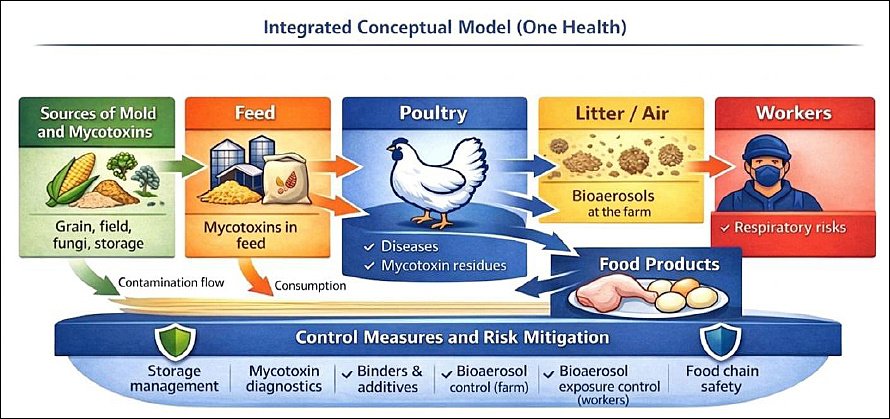
Figure 2. Integrated One Health conceptual model of mold and mycotoxin exposure pathways and risk mitigation in poultry production.
Future research directions
Future research should prioritize large-scale, multi-farm validation of broad-spectrum detoxification strategies under realistic commercial poultry conditions, including feeds contaminated with multi-mycotoxin mixtures and masked forms. Particular attention should be given to the safety assessment of detoxification by-products and efficacy against emerging and modified mycotoxins.
Omics-based approaches, including metabolomics, mycotoxinomics, and microbiome profiling, are needed to identify unknown metabolites, secondary transformation products, and gut–liver axis responses to chronic exposure and mitigation interventions.
Integrated, multi-level strategies that combine feed hygiene, precision diagnostics, microbiome-targeted additives, and adaptive detoxification technologies will be essential for managing the evolving complexity of mycotoxin contamination under climate change and intensive poultry production conditions.
RESEARCH GAPS
Despite significant progress in understanding fungal contamination and the impact of mycotoxins on poultry production, several critical knowledge gaps remain. Most existing data are derived from single toxin studies, whereas real poultry diets typically contain complex mixtures. Moreover, a major limitation of current toxicological research is the predominance of high-dose experimental models, which do not adequately reflect real-world poultry production conditions characterized by chronic, low-dose, multi-mycotoxin exposure below regulatory thresholds. Little is known about synergistic or additive effects, dose–response relationships under co-exposure, or cumulative risks under field conditions.
Subclinical and real-world exposure scenarios
Increasing evidence indicates that poultry production systems are predominantly characterized by chronic exposure to low-to-moderate concentrations of multiple co-occurring mycotoxins, often below current regulatory or guidance limits. Unlike high-dose experimental models, these realistic exposure scenarios may lead to cumulative and subclinical effects, including impaired feed efficiency, gut dysbiosis, reduced vaccine responsiveness, immunomodulation, and increased susceptibility to enteric diseases such as necrotic enteritis. Recent meta-analyses and field-based studies presented in contemporary poultry science forums emphasize that current no-observed-adverse-effect level and lowest-observed-adverse-effect level thresholds derived from single toxin laboratory trials may not accurately reflect multi-toxin exposure under commercial conditions.
Current regulatory and guidance limits are largely based on single toxin assessments and vary substantially between regions. There is a need for globally harmonized, mixture-aware risk thresholds that reflect realistic multi-mycotoxin exposure scenarios and updated toxicological evidence from chronic low-dose studies. Notably, accumulating evidence suggests that prolonged exposure to mixtures of mycotoxins at concentrations considered individually safe may still result in additive or synergistic adverse effects, challenging current regulatory frameworks that are largely based on single toxin risk assessment. Long-term cohort studies on farms linking exposure to physiological and productivity parameters are largely absent.
Masked, modified, and emerging mycotoxins
The identification of conjugated and modified toxin forms remains limited, and their toxicological significance, bioavailability, and impact on tissue residues are insufficiently studied. In particular, poultry-specific toxicokinetic data on masked and emerging mycotoxins, including absorption, hydrolysis, metabolic transformation, and residue transfer to eggs and meat, remain critically scarce, limiting accurate risk assessment under realistic feeding conditions.
Special emphasis is warranted for emerging Fusarium and Alternaria metabolites, including enniatins, beauvericin, moniliformin, and alternariol, whose increasing detection in poultry feeds contrasts with the scarcity of avian-specific toxicological and toxicokinetic data. Moreover, the toxicokinetics of masked and emerging mycotoxins in poultry remain poorly characterized, including their absorption, biotransformation, tissue distribution, and potential reconversion into parent toxins in the gastrointestinal tract, which may lead to underestimation of internal exposure and food safety risks.
Occupational exposure and One Health surveillance gaps
Mycotoxins and fungal aerosols in poultry houses remain underinvestigated, and their effects on respiratory organs and overall worker health have not been quantitatively assessed. Future research should prioritize quantitative occupational exposure assessment for poultry workers, including standardized air sampling, personal exposure monitoring, biomarker-based monitoring, and dose–response modeling. Integrating these data into cross-sectoral One Health surveillance systems would significantly improve risk characterization at the animal–environment–human interface.
In addition, cross-sectoral surveillance systems integrating veterinary diagnostics, food safety monitoring, occupational health assessment, and environmental contamination data remain fragmented. The absence of harmonized One Health surveillance platforms for chemical hazards such as mycotoxins limits coordinated risk management and early warning capacity at regional and global levels.
Food safety and tissue residue assessment
Comprehensive data on the transfer of mycotoxins and metabolites into eggs and meat remain inadequate for reliable food safety assessment. Future studies should evaluate the carry-over of regulated, masked, modified, and emerging mycotoxins into poultry-derived food products under realistic chronic exposure conditions. Such studies should also assess how feed composition, bird age, production type, toxin mixture, and mitigation strategy influence residue accumulation and consumer exposure risk.
Mitigation validation and sustainability assessment
Although many binders, enzymes, and biological agents show efficacy in controlled experiments, real-world multi-farm evaluations are scarce, particularly those assessing economic aspects and integration across multiple exposure-reduction steps. Few studies integrate contamination scenarios into full cradle-to-farm-gate LCAs to quantify cumulative greenhouse gas emissions, nitrogen losses, water use, and land-use impacts associated with reduced performance and compensatory feeding. Future research should prioritize scenario-based LCA modeling to compare contaminated and mitigated feed systems and to inform evidence-based policy decisions on permissible limits and preventive investments.
Analytical standardization and advanced monitoring
Variability in extraction protocols, detection methods, and reporting formats hinders global comparisons. There is a pressing need for internationally standardized multi-mycotoxin LC-MS/MS protocols capable of simultaneously detecting regulated, emerging, and masked forms with validated performance characteristics across diverse feed matrixes. Integration of non-targeted HRMS and omics-based workflows will be essential to detect masked and previously unrecognized mycotoxins.
Longitudinal field studies and realistic safety thresholds
Particular priority should be given to longitudinal, field-based investigations conducted under commercial poultry production conditions, focusing on chronic low-dose exposure to multiple co-occurring mycotoxins. Establishing realistic no-observed-adverse-effect level and lowest-observed-adverse-effect level values for multi-toxin mixtures is essential because current regulatory benchmarks are largely derived from single toxin experimental models that may not reflect real-world feeding scenarios. Integrative studies assessing cumulative effects on nutrient digestibility, gut health, immune competence, vaccine efficacy, and long-term productivity are urgently needed to redefine safety thresholds for modern poultry feeds.
Hidden hazard framework for poultry One Health systems
Conceptually, masked and emerging mycotoxins should be viewed as a unifying hidden hazard framework within poultry One Health systems, where undetected feed contamination leads to chronic subclinical exposure, potential residue transfer to animal-derived foods, occupational inhalation of contaminated dust, and cumulative public health risks. This perspective shifts the focus from regulated single toxin monitoring toward holistic multi-toxin and non-targeted surveillance strategies aligned with modern One Health risk assessment.
Predictive modeling and climate-adaptive risk management
Future research should adopt a predictive modeling framework that integrates climate projections, meteorological data, trends in crop contamination, and poultry production parameters to forecast mycotoxin outbreaks under changing environmental conditions. Weather-based risk forecasting models, increasingly used in global feed monitoring programs, offer promising tools for early warning systems and proactive mitigation in poultry production. Such interdisciplinary approaches would enable early warning systems, proactive feed sourcing decisions, and climate-adaptive risk management before contamination reaches critical thresholds.
Addressing these knowledge gaps requires a transition from reactive detoxification toward predictive, integrated, and precision-based mitigation paradigms that combine climate-informed forecasting, advanced analytics, longitudinal field validation, and One Health-oriented surveillance to safeguard poultry health, food safety, and environmental sustainability.
CONCLUSION
Mycotoxins remain a major and evolving threat to poultry production systems worldwide, affecting animal health, productivity, food safety, occupational exposure, and environmental sustainability within a unified One Health framework. The present review synthesizes recent evidence demonstrating that poultry feeds are consistently contaminated with multiple co-occurring mycotoxins, particularly aflatoxins, DON, fumonisins, OTA, and ZEN, while emerging and masked mycotoxins are increasingly detected in modern feed systems. Current evidence indicates that contamination is strongly influenced by climatic variability, fungal ecology, storage conditions, and global feed supply dynamics, leading to persistent exposure risks across poultry production environments.
The reviewed studies collectively demonstrate that chronic and multi-mycotoxin exposure contributes to hepatotoxicity, nephrotoxicity, oxidative stress, gut dysbiosis, immunosuppression, impaired vaccine responsiveness, reduced growth performance, compromised reproductive function, and tissue residue accumulation in poultry. In addition, aerosolized fungal spores and toxin-associated particulates within poultry houses represent an under-recognized occupational hazard for farm workers and veterinarians. Increasing evidence also suggests that masked and modified mycotoxins may evade conventional detection while remaining biologically active after gastrointestinal hydrolysis, thereby contributing to underestimated exposure and food safety risks.
A major practical implication of these findings is that conventional single toxin management approaches are insufficient under realistic commercial poultry conditions characterized by chronic low-dose exposure to complex mycotoxin mixtures. Therefore, integrated mitigation strategies combining feed hygiene, environmental monitoring, optimized storage management, adsorbents, biological detoxifiers, phytogenic additives, microbiome-targeted interventions, and precision analytical surveillance are essential for sustainable poultry production. The integration of LC-MS/MS, HRMS, biosensors, IoT-based environmental monitoring, and predictive analytics offers promising opportunities for early detection and proactive risk management in climate-sensitive production systems.
One of the major strengths of this review is its comprehensive integration of recent evidence from fungal ecology, toxicology, occupational exposure, food safety, environmental sustainability, analytical detection, and mitigation strategies, all within a One Health perspective. The review additionally highlights the growing significance of emerging, masked, and modified mycotoxins as hidden hazards in poultry systems and emphasizes the importance of multi-mycotoxin contamination scenarios rather than isolated toxin exposure. Furthermore, the inclusion of climate-related risk dynamics, occupational bioaerosol exposure, and sustainability implications broadens the current understanding of mycotoxin-associated risks beyond conventional feed toxicology.
Nevertheless, several limitations remain within the available literature. Most toxicological studies continue to rely on controlled high-dose experimental models rather than realistic chronic field exposure scenarios involving multiple toxins. Poultry-specific toxicokinetic data for emerging and masked mycotoxins remain limited, and standardized global surveillance systems integrating food safety, occupational health, and environmental monitoring are lacking. In addition, quantitative data regarding cumulative inhalation exposure, long-term biomonitoring, and the safety of detoxification by-products remain insufficient.
Future research should prioritize longitudinal field-based investigations under commercial poultry conditions, focusing on chronic low-dose multi-mycotoxin exposure, realistic mixture toxicity, and the establishment of updated mixture-aware safety thresholds. Greater emphasis should also be placed on omics-based profiling, non-targeted HRMS approaches, microbiome–gut–liver axis interactions, predictive climate-linked risk modeling, and integrated One Health surveillance systems. Validation of broad-spectrum detoxification strategies under multi-farm conditions, together with economic and sustainability assessments, will be critical to translating experimental mitigation approaches into practical applications in the poultry industry.
In conclusion, mycotoxin contamination in poultry production should no longer be viewed solely as a feed quality issue but rather as a complex One Health challenge involving interconnected animal, human, occupational, and environmental health dimensions. The increasing prevalence of multi-mycotoxin contamination, masked toxins, and climate-driven fungal shifts underscores the urgent need for integrated surveillance, precision diagnostics, predictive risk management, and coordinated multi-hurdle mitigation strategies. Strengthening these approaches will be essential to protect poultry productivity, food safety, worker health, and environmental sustainability under modern intensive poultry production systems.
DATA AVAILABILITY
The data generated during the study are included in the manuscript.
AUTHORS’ CONTRIBUTIONS
NM: Conceptualization, literature search, and writing – original draft, supervision. BN: Literature search and writing – original draft. AK: Literature analysis, visualization, and writing – review and editing. GN: Writing – review and editing, critical revision. ZK: Supervision and writing – review and editing. All authors have read and approved the final version of the manuscript.
COMPETING INTERESTS
The authors declare that they have no competing interests.
PUBLISHER’S NOTE
Veterinary World remains neutral with regard to jurisdictional claims in the published institutional affiliations.
ACKNOWLEDGMENTS
The authors express their gratitude to West Kazakhstan Agrarian and Technical University named after Zhangir Khan for institutional support and assistance in the preparation of this manuscript. This research was supported by the Grant Financing Project for 2025–2027 of the Committee of Science of the Ministry of Science and Higher Education of the Republic of Kazakhstan (Grant No. AP26198945), project title: “Development of mineral sorbents and evaluation of their therapeutic effect in mold toxin intoxications in poultry”.
REFERENCES
- Battilani P, Palumbo R, Giorni P, Dall'Asta C, Dellafiora L, Gkrillas A. Mycotoxin mixtures in food and feed: Holistic, innovative, flexible risk assessment modelling approach. EFSA Support Publ 2020;17(1). [Google Scholar]
- Juan-García A. Introduction to the Toxins Special Issue on Toxicological Effects of Mycotoxin on Target Cells. Toxins 2020;12(7):446. [Google Scholar]
- Mishra SK, Swain BK, Assaf JC. Aflatoxin occurrence, detection, and novel strategies to reduce toxicity in poultry species. Aflatoxins - occurrence, detection and novel detoxification strategies. IntechOpen 2022. [Google Scholar]
- Pickova D, Ostry V, Toman J, Malir F. Aflatoxins: History, significant milestones, recent data on their toxicity and ways to mitigation. Toxins 2021;13(6):399. [Google Scholar]
- Casu A, Camardo Leggieri M, Toscano P, Battilani P. Changing climate, shifting mycotoxins: A comprehensive review of climate change impact on mycotoxin contamination. Compr Rev Food Sci Food Saf 2024;23(2):e13323. [Google Scholar]
- Pandey AK, Samota MK, Kumar A, Silva AS, Dubey NK. Fungal mycotoxins in food commodities: Present status and future concerns. Front Sustain Food Syst 2023;7:1162595. [Google Scholar]
- Gomes B, Dias M, Cervantes R, Pena P, Twarużek M, Kosicki R. Toxicogenic fungi and mycotoxins seasonality in poultry farms: Implications for animal health and food safety. J Agric Food Res 2025;24:102399. [Google Scholar]
- Nazareth TDM, Soriano Pérez E, Luz C, Meca G, Quiles JM. Comprehensive review of aflatoxin and ochratoxin A dynamics: Emergence, toxicological impact, and advanced control strategies. Foods 2024;13(12):1920. [Google Scholar]
- Okasha H, Song B, Song Z. Hidden hazards revealed: Mycotoxins and their masked forms in poultry. Toxins 2024;16(3):137. [Google Scholar]
- Olariu RM, Fiţ NI, Bouari CM, Nadăş GC. Mycotoxins in broiler production: Impacts on growth, immunity, vaccine efficacy, and food safety. Toxins 2025;17(6):261. [Google Scholar]
- Goda AA, Shi J, Xu J, Liu X, Zhou Y, Xiao L. Global health and economic impacts of mycotoxins: A comprehensive review. Environ Sci Eur 2025;37(1):122. [Google Scholar]
- Kolawole O, Valliere C, Krska R, David M, Lorran G, Schatzmayr D. Potential economic and environmental impacts of mycotoxins in poultry: A meta-analysis and life cycle assessment approach. Environ Impact Assess Rev 2025;115:107989. [Google Scholar]
- Yohannis E, Urugo MM, Teka TA, Getachew P, Tola YB, Forsido SF. Aflatoxin contamination in agri-food systems: A comprehensive review of toxicity, food security, economic impacts, and sustainable mitigation across the value chain. Food Sci Nutr 2025;13(10):e71104. [Google Scholar]
- World mycotoxin survey 2025: January–June. Heerlen, The Netherlands: DSM Animal Nutrition &Health; 2025. [Google Scholar]
- 2024 global mycotoxin review findings. Amersfoort, The Netherlands: Nutreco; 2025. [Google Scholar]
- Kolawole O, Siri-Anusornsak W, Petchkongkaew A, Elliott C. A systematic review of global occurrence of emerging mycotoxins in crops and animal feeds, and their toxicity in livestock. Emerg Contam 2024;10(3):100305. [Google Scholar]
- Njaramba JK, Muloi DM, Velde MV, Saeger SD, Ibayi EL, Moodley A. Multi-mycotoxin occurrence and their risk to poultry health in semi-intensive broiler farms in Kenya. Poult Sci 2025;104(5):105008. [Google Scholar]
- Dos Anjos Magri C, Garófallo Garcia R, Binotto E, Duarte Da Silva Lima N, De Alencar Nääs I, Sgavioli S. Occupational risk factors in health of broiler-farm workers: A systematic review. Arch Environ Occup Health 2021;76(8):482-493. [Google Scholar]
- Gomes B, Dias M, Cervantes R, Pena P, Santos J, Vasconcelos Pinto M. One Health approach to tackle microbial contamination on poultries—A systematic review. Toxics 2023;11(4):374. [Google Scholar]
- Suleman S, Qureshi JA, Rasheed M, Farooq W, Yasmin F, Khan RY. Poultry feed contamination and its potential hazards on human health. Biomed Lett 2022;8(1):70-81. [Google Scholar]
- Gómez-Osorio LM, Vasiljevic M, Raj J, Chaparro-Gutierréz JJ, López-Osorio S. Mycotoxins and coccidiosis in poultry –Co-occurrence, interaction, and effects. Front Vet Sci 2024;11:1387856. [Google Scholar]
- Gherbawy YA, Abdel Fattah KE, Altalhi A, Ioan P, Hussein MA. Detection of mycotoxins and aflatoxigenic fungi associated with compound poultry feedstuffs in Saudi Arabia. Microbiol Res 2025;16(1):11. [Google Scholar]
- Benkerroum N. Aflatoxins: Producing-molds, structure, health issues and incidence in Southeast Asian and Sub-Saharan African countries. Int J Environ Res Public Health 2020;17(4):1215. [Google Scholar]
- Levitin MM. Toxigenic fungi on cereal crops in Russia. Mikol Fitopatol 2024;58(5):341-347. [Google Scholar]
- Dettman JR, Eggertson QA, Kim NE. Species diversity and molecular characterization of Alternaria section Alternaria isolates collected mainly from cereal crops in Canada. Front Microbiol 2023;14:1194911. [Google Scholar]
- Gherbawy YA, Elhariry HM, Alamri SA, El-Dawy EGA. Molecular characterization of ochratoxigenic fungi associated with poultry feedstuffs in Saudi Arabia. Food Sci Nutr 2020;8(10):5298-5308. [Google Scholar]
- Haque MA, Wang Y, Shen Z, Li X, Saleemi MK, He C. Mycotoxin contamination and control strategy in human, domestic animal and poultry: A review. Microb Pathog 2020;142:104095. [Google Scholar]
- Kemboi DC, Ochieng PE, Antonissen G, Croubels S, Scippo ML, Okoth S. Multi-mycotoxin occurrence in dairy cattle and poultry feeds and feed ingredients from Machakos Town, Kenya. Toxins 2020;12(12):762. [Google Scholar]
- Lăpuşneanu DM, Petrescu SI, Radu-Rusu CG, Matei M, Pop IM. Mycotoxicological assessment of broiler compound feed: A multi-year analysis of five mycotoxins in a Romanian feed mill. Agriculture 2025;15(1):84. [Google Scholar]
- Muñoz-Solano B, Lizarraga Pérez E, González-Peñas E. Monitoring mycotoxin exposure in food-producing animals (cattle, pig, poultry, and sheep). Toxins 2024;16(5):218. [Google Scholar]
- Muñoz-Solano B, González-Peñas E. Co-occurrence of mycotoxins in feed for cattle, pigs, poultry, and sheep in Navarra, a region of Northern Spain. Toxins 2023;15(3):172. [Google Scholar]
- Nakavuma JL, Kirabo A, Bogere P, Nabulime MM, Kaaya AN, Gnonlonfin B. Awareness of mycotoxins and occurrence of aflatoxins in poultry feeds and feed ingredients in selected regions of Uganda. Int J Food Contam 2020;7(1):1. [Google Scholar]
- Ochieng PE, Scippo ML, Kemboi DC, Croubels S, Okoth S, Kang'ethe EK. Mycotoxins in poultry feed and feed ingredients from Sub-Saharan Africa and their impact on the production of broiler and layer chickens: A review. Toxins 2021;13(9):633. [Google Scholar]
- Polak-Śliwińska M, Paszczyk B. Trichothecenes in food and feed, relevance to human and animal health and methods of detection: A systematic review. Molecules 2021;26(2):454. [Google Scholar]
- Sarwat A, Rauf W, Majeed S, De Boevre M, De Saeger S, Iqbal M. LC-MS/MS based appraisal of multi-mycotoxin co-occurrence in poultry feeds from different regions of Punjab, Pakistan. Food Addit Contam B 2022;15(2):106-122. [Google Scholar]
- Jalilzadeh-Amin G, Dalir-Naghadeh B, Ahmadnejad-Asl-Gavgani M, Fallah AA, Mousavi Khaneghah A. Prevalence and concentration of mycotoxins in animal feed in the Middle East and North Africa (MENA): A systematic review and meta-analysis. Toxins 2023;15(3):214. [Google Scholar]
- Penagos-Tabares F, Todorov A, Raj J, Farkaš H, Grubješić G, Jakovčević Z. Multi-mycotoxin contamination in Serbian maize during 2021–2023: Climatic influences and implications for food and feed safety. Toxins 2025;17(5):227. [Google Scholar]
- Olariu RM, Crăciun S, Fiţ NI, Macri AM, Szakacs AR, Nadăş GC. Quantitative assessment of the most common mycotoxins found in commercial poultry feed. Rom J Vet Sci 2024;58(1):59-69. [Google Scholar]
- Hassan M, Wang Y, Rajput SA, Shaukat A, Yang P, Farooq MZ. Ameliorative effects of luteolin and activated charcoal on growth performance, immunity function, and antioxidant capacity in broiler chickens exposed to deoxynivalenol. Toxins 2023;15(8):478. [Google Scholar]
- Mikula P, Blahova J, Honzlova A, Kalinova J, Macharackova P, Rosmus J. Occurrence of mycotoxins in complete poultry feeds in the Czech Republic - Multiannual survey (2013-2018). Vet Med 2020;65(11):487-494. [Google Scholar]
- Wang Y, Quan H, Li X, Li Q, Haque MA, Shi Q. Contamination with fumonisin B and deoxynivalenol is a threat to egg safety and contributes to gizzard ulcerations of newborn chickens. Front Microbiol 2021;12:676671. [Google Scholar]
- Wang Y, Sun J, Zhang M, Pan K, Liu T, Zhang T. Detoxification of fumonisins by three novel transaminases with diverse enzymatic characteristics coupled with carboxylesterase. Foods 2023;12(2):416. [Google Scholar]
- Ogbebor AS, Imoni AA, Ohiorenoya OR. Fungal composition and proximate analysis of poultry feeds sold in Benin City, Nigeria. Afr J Health Saf Environ 2021;2(2):109-115. [Google Scholar]
- Bonerba E, Manfredi A, Dimuccio MM, Lorusso P, Pandiscia A, Terio V. Ochratoxin A in poultry supply chain: Overview of feed occurrence, carry-over, and pathognomonic lesions in target organs to promote food safety. Toxins 2024;16(11):487. [Google Scholar]
- Zhang S, Cao Y, Shan Y, Zhang X, Xia L, Wang H. Wnt/β-catenin pathway activation confers fumonisin B1 tolerance in chicken intestinal organoid monolayers by enhancing intestinal stem cell function. Animals 2025;15(19):2850. [Google Scholar]
- Esan OO, Okanlawon AA, Ogunro BN, Abiola JO, Olaogun SC, Aliyu VA. Seasonal variation of mycotoxin levels in poultry feeds and feed ingredients in Oyo State, Nigeria. Mycotoxin Res 2024;40(2):319-325. [Google Scholar]
- Alm Eldin N, Aidaros H, Khalafallah S, Diab M, El Bahgy H. An application study for monitoring and evaluation of the hygienic status of poultry farms. Benha Vet Med J 2023;43(2):51-57. [Google Scholar]
- Gueye R, Sandefo VC, Beye B, Faye EO, Diop A, Sarr SO. Assessment of poultry feed contamination level by aflatoxin B1: Quantification by two chromatographic analysis methods. Food Nutr Sci 2022;13(11):950-961. [Google Scholar]
- Ong JY, Tan LL, Goh CT. Mycotoxin mitigation approaches in selected developed and developing countries. Int Food Res J 2023;30(6):1370-1391. [Google Scholar]
- Alnaemi H, Dawood T, Algwari Q. Plasma-activated water application for detoxification of aflatoxin B1, ochratoxin A, and fumonisin B1 in poultry feeds. Open Vet J 2023;13(12):1654. [Google Scholar]
- Alnaemi H, Dawood T, Algwari Q. Investigation of aflatoxin B1, ochratoxin A, and fumonisin B1 in poultry feeds in Nineveh Province. Iraqi J Vet Med 2023;47(2):37-43. [Google Scholar]
- Liu J, Applegate T. Zearalenone (ZEN) in livestock and poultry: Dose, toxicokinetics, toxicity and estrogenicity. Toxins 2020;12(6):377. [Google Scholar]
- Governorate B, Ghada H, Emtenan M. Incidence of aflatoxin and ochratoxin in some poultry ration with trial for control in Beni-Suef Governorate. Egypt J Anim Health 2023;3(3):159-168. [Google Scholar]
- Hunchak AV, Stefanyshyn OM, Sirko YaM, Kyryliv BYa, Ratych IB. Influence of exogenous enzymes and different forms of sulfur in the diets of broiler chickens on productivity and quality of poultry products. Anim Biol 2024;26(4):49-54. [Google Scholar]
- Schrenk D, Bodin L, Chipman JK, del Mazo J, Grasl-Kraupp B, Hogstrand C. Risks for animal health related to the presence of ochratoxin A (OTA) in feed. EFSA J 2023;21(11). [Google Scholar]
- Zhang Y, Liu C, Van Der Fels-Klerx HJ. Occurrence, toxicity, dietary exposure, and management of Alternaria mycotoxins in food and feed: A systematic literature review. Compr Rev Food Sci Food Saf 2025;24(1):e70085. [Google Scholar]
- Suman M. Fate of free and modified forms of mycotoxins during food processing. Toxins 2020;12(7):448. [Google Scholar]
- Abdulhameed MF, Sayhood MH, Al-wan NA. Mycotoxins hazard assessment of feedstuffs from multiple sources products commercially imported for Iraq. Al-Mustansiriyah J Sci 2023;33(5):101-107. [Google Scholar]
- Gomes B, Dias M, Pena P, Cervantes R, Viegas S, Viegas C. Poultry farms as a One Health priority for Aspergillus section Fumigati surveillance. Eur J Public Health 2024;34(Suppl 3):ckae144.1214. [Google Scholar]
- Spanamberg A, Casagrande RA, Araujo R, Driemeier D, Ferreiro L. Airsacculitis - Molds isolated from lungs of broilers from slaughterhouse under control of the Federal Inspection Service. Acta Sci Vet 2025;53. [Google Scholar]
- Gomes B, Dias M, Cervantes R, Pena P, Viegas C. Wood shavings: From an occupational hazard in poultry facilities to a global health concern. Ann Work Expo Health 2024;68(Suppl 1):1-1. [Google Scholar]
- Molnár K, Rácz C, Dövényi-Nagy T, Bakó K, Pusztahelyi T, Kovács S. The effect of environmental factors on mould counts and AFB1 toxin production by Aspergillus flavus in maize. Toxins 2023;15(3):227. [Google Scholar]
- Lashari MH, Karim S, Alhussein M, Hoshu AA, Aurangzeb K, Anwar MS. Internet of Things-based sustainable environment management for large indoor facilities. PeerJ Comput Sci 2023;9:e1623. [Google Scholar]
- Penagos-Tabares F, Khiaosa-ard R, Nagl V, Faas J, Jenkins T, Sulyok M. Mycotoxins, phytoestrogens and other secondary metabolites in Austrian pastures: Occurrences, contamination levels and implications of geo-climatic factors. Toxins 2021;13(7):460. [Google Scholar]
- Freitag S, Sulyok M, Reiter E, Lippl M, Mechtler K, Krska R. Influence of regional and yearly weather patterns on multi-mycotoxin occurrence in Austrian wheat: A liquid chromatographic–tandem mass spectrometric and multivariate statistics approach. J Sci Food Agric 2024;104(13):7788-7796. [Google Scholar]
- Umar A, Qanita S, Zada N, Honey SF. From feed-to-food –Understanding the impact of aflatoxins consumption by Pakistani livestock. CABI One Health 2025:0021. [Google Scholar]
- Mylostyvyi R, Vysokos M, Timoshenko V, Muzyka A, Vtoryi V, Vtoryi S. Features of the formation and monitoring of the microclimate in non-insulated barns: Unresolved issues. Theor Appl Vet Med 2020;8(2):73-85. [Google Scholar]
- Chen G, Ma D, Huang Q, Tang W, Wei M, Li Y. Aerosol concentrations and fungal communities within broiler houses in different broiler growth stages in summer. Front Vet Sci 2021;8:775502. [Google Scholar]
- Gunashev S, Abduragimova R, Mikhailov M, Lemiasheuski V, Melnikova D, Padilo L. Ecological and mycological assessment of the air environment of poultry houses and methods of its improvement. BIO Web Conf 2024;149:01013. [Google Scholar]
- Szablewski T, Stuper-Szablewska K, Cegielska-Radziejewska R, Tomczyk Ł, Szwajkowska-Michałek L, Nowaczewski S. Comprehensive assessment of environmental pollution in a poultry farm depending on the season and the laying hen breeding system. Animals 2022;12(6):740. [Google Scholar]
- Kolawole O, Siri-Anusornsak W, Petchkongkaew A, Elliott C. One Health and mycotoxins: Bridging environmental contamination, food safety, and public health risks. Front Public Health 2025;13:1450021. [Google Scholar]
- Basinas I, Sigsgaard T, Erlandsen M, Andersen NT, Takai H, Heederik D. Exposure-affecting factors of airborne endotoxin concentrations in livestock farms. Ann Occup Hyg 2015;59(5):568-580. [Google Scholar]
- Cambra-López M, Aarnink AJA, Zhao Y, Calvet S, Torres AG. Airborne particulate matter from livestock production systems: A review of an air pollution problem. Environ Pollut 2010;158(1):1-17. [Google Scholar]
- Samadi S, Wouters IM, Houben R, Jamshidifard AR, Van Eerdenburg FJCM, Heederik DJJ. Exposure to inhalable dust, endotoxins, and microorganisms in poultry and pig farms of the Netherlands. Ann Occup Hyg 2013;57(5):573-580. [Google Scholar]
- Górny RL, Reponen T, Grinshpun SA, Willeke K. Source strength of fungal spore aerosolization from moldy building material. Atmos Environ 2001;35(29):4853-4862. [Google Scholar]
- Mohd Shaufi MA, Sieo CC, Chong CW, Gan HM, Ho YW. Deciphering chicken gut microbial dynamics based on high-throughput 16S rRNA metagenomics analyses. Gut Pathog 2015;7:4. [Google Scholar]
- Ammar AM, Abd El-Hamid MI, Eid SE, El Oksh AS. Insights into the prevalence and antimicrobial resistance of pathogenic fungi in poultry farms in Egypt. Vet World 2021;14(1):239-246. [Google Scholar]
- Pereira VL, Fernandes JO, Cunha SC. Mycotoxins in cereals and related foodstuffs: A review on occurrence and recent methods of analysis. Trends Food Sci Technol 2014;36(2):96-136. [Google Scholar]
- Rodrigues I, Naehrer K. A three-year survey on the worldwide occurrence of mycotoxins in feedstuffs and feed. Toxins 2012;4(9):663-675. [Google Scholar]
- Streit E, Naehrer K, Rodrigues I, Schatzmayr G. Mycotoxin occurrence in feed and feed raw materials worldwide: Long-term analysis with special focus on Europe and Asia. J Sci Food Agric 2013;93(12):2892-2899. [Google Scholar]
- Grenier B, Applegate TJ. Modulation of intestinal functions following mycotoxin ingestion: Meta-analysis of published experiments in animals. Toxins 2013;5(2):396-430. [Google Scholar]
- Lillehoj H, Liu Y, Calsamiglia S, Fernandez-Miyakawa ME, Chi F, Cravens RL. Phytochemicals as antibiotic alternatives to promote growth and enhance host health. Vet Res 2018;49(1):76. [Google Scholar]
- Yadav S, Jha R. Strategies to modulate the intestinal microbiota and their effects on nutrient utilization, performance, and health of poultry. J Anim Sci Biotechnol 2019;10:2. [Google Scholar]
- Redweik GAJ, Jochum J, Stephens CB. Oral administration of plant extracts and phytochemicals in poultry. J Appl Poult Res 2020;29(4):1081-1095. [Google Scholar]
- Levkut M, Revajová V, Lauková A, Ševčíková Z, Spišáková V, Faix Š. Leukocytic responses and intestinal mucin dynamics of broilers protected with probiotic and prebiotic additives. Poult Sci 2012;91(9):2127-2133. [Google Scholar]
- Markowiak P, Śliżewska K. The role of probiotics, prebiotics and synbiotics in animal nutrition. Gut Pathog 2018;10:21. [Google Scholar]
- Santin E, Maiorka A, Macari M, Grecco M, Sanchez JC, Okada TM. Performance and intestinal mucosa development of broiler chickens fed diets containing Saccharomyces cerevisiae cell wall. J Appl Poult Res 2001;10(3):236-244. [Google Scholar]
- Chukwuemeka IC. The use of prebiotics and probiotics in poultry production. Int J Res Publ 2022;92(1):48-59. [Google Scholar]
- Kana JR, Gnonlonfin BGJ, Harvey J, Wainaina J, Wanjuki I, Skilton RA. Efficacy of a novel multicomponent mycotoxin-detoxifying agent in alleviating aflatoxicosis in broiler chicks. Poult Sci 2015;94(5):935-946. [Google Scholar]
- Hassan ZU, Khan MZ, Khan A, Javed I, Sadique U, Ashraf K. Efficacy of activated charcoal against ochratoxin A-induced immunosuppression in broiler chickens. J Immunotoxicol 2010;7(1):13-20. [Google Scholar]
- Manyi-Loh C, Mamphweli S, Meyer E, Okoh A. Antibiotic use in agriculture and its consequential resistance in environmental sources: Potential public health implications. Molecules 2018;23(4):795. [Google Scholar]
- Roth N, Käsbohrer A, Mayrhofer S, Zitz U, Hofacre C, Domig KJ. The application of antibiotics in broiler production and the resulting antibiotic resistance in Escherichia coli: A global overview. Poult Sci 2019;98(4):1791-1804. [Google Scholar]
- Elwan HAM, Elnesr SS, Xu Q, Xie C, Dong XY, Zou XT. Effects of in ovo methionine-cysteine administration on embryonic development, antioxidant status, IGF-I and TLR4 gene expression, and jejunum histomorphometry in newly hatched broiler chicks exposed to heat stress during incubation. Animals 2019;9(1):25. [Google Scholar]
- Han X, Huang QC, Li WF, Xu ZR. Changes in growth performance, digestive enzyme activities and nutrient digestibility of cherry valley ducks in response to aflatoxin B1 levels. Livest Sci 2008;119(1-3):216-220. [Google Scholar]
- Meerpoel C, Vidal A, Tangni EK, Huybrechts B, Couck L, De Boevre M. Development and validation of a UHPLC-MS/MS method for the simultaneous determination of citrinin and ochratoxin A in food and feed. Food Addit Contam A Chem Anal Control Expo Risk Assess 2018;35(7):1277-1289. [Google Scholar]
- Wang Y, Deng Q, Liang N, Yang X, Jiang J, Xie M. Ochratoxin A induces liver inflammation: Involvement of intestinal microbiota. Microbiome 2019;7(1):151. [Google Scholar]
- Grenier B, Bracarense APFL, Schwartz HE, Trumel C, Cossalter AM, Schatzmayr G. Biotransformation approaches to alleviate the effects induced by fusariotoxins in swine. J Agric Food Chem 2013;61(28):6711-6719. [Google Scholar]
- Zhao LH, Lei YP, Wang X, Zhang NY, Yang JF, Chen ML. Ameliorative effects of bile acids on chronic aflatoxin B1-induced liver injury in broilers. Poult Sci 2020;99(11):5936-5948. [Google Scholar]
- Cheng YH, Shen TF, Pang VF, Chen BJ. Effects of aflatoxin and carotenoids on growth performance and immune response in mule ducklings. Comp Biochem Physiol C Toxicol Pharmacol 2001;128(1):19-26. [Google Scholar]
- Ringot D, Chango A, Schneider YJ, Larondelle Y. Toxicokinetics and toxicodynamics of ochratoxin A, an update. Chem Biol Interact 2006;159(1):18-46. [Google Scholar]
- He Y, Zhu X, Song H, Liu Y, Cao C. Sodium butyrate alleviates T-2 toxin–induced liver toxicity and renal toxicity in quails by modulating oxidative stress–related Nrf2 signaling pathway, inflammation, and CYP450 enzyme system. J Food Sci 2024;89(11):8036-8053. [Google Scholar]
- Attia YA, Ebeid TA, Shafi ME, Zabermawi NM, Abdulsalam NM, Hijazi MA. Strategies for Decontamination and Alleviation of Mycotoxins for Sustainable Poultry Farming –A Review. Ann Anim Sci 2025;25(1):139-157. [Google Scholar]
- Ibrahim AH, Taher DD, Abbas OS, Abdul-Shaheed DA-K. Determination of some mycotoxins from poultry feed in Baghdad city. Asia Pac J Mol Biol Biotechnol 2024:10-15. [Google Scholar]
- Kolawole O, Graham A, Donaldson C, Owens B, Abia WA, Meneely J. Low doses of mycotoxin mixtures below EU regulatory limits can negatively affect the performance of broiler chickens: a longitudinal study. Toxins 2020;12(7):433. [Google Scholar]
- Ochieng PE, Croubels S, Kemboi D, Okoth S, De Baere S, Cavalier E. Effects of aflatoxins and fumonisins, alone or in combination, on performance, health, and safety of food products of broiler chickens, and mitigation efficacy of bentonite and fumonisin esterase. J Agric Food Chem 2023;71(36):13462-13473. [Google Scholar]
- Tamilmani T, Biswas A, Mandal A. Performance, immune response and blood biochemical traits of broiler chickens fed graded levels of dietary aflatoxin and ochratoxin combination. Indian J Anim Res. 2020(Of). [Google Scholar]
- Shanmugasundaram R, Lourenco J, Hakeem WA, Dycus MM, Applegate TJ. Subclinical doses of dietary fumonisins and deoxynivalenol cause cecal microbiota dysbiosis in broiler chickens challenged with Clostridium perfringens. Front Microbiol 2023;14:1106604. [Google Scholar]
- Zhao L, Feng Y, Wei J-T, Zhu M-X, Zhang L, Zhang J-C. Mitigation effects of bentonite and yeast cell wall binders on AFB1, DON, and OTA induced changes in laying hen performance, egg quality, and health. Toxins 2021;13(2):156. [Google Scholar]
- Ochieng PE, Kemboi DC, Okoth S, De Baere S, Cavalier E, Kang'ethe E. Aflatoxins and fumonisins co-contamination effects on laying hens and use of mycotoxin detoxifiers as a mitigation strategy. Mycotoxin Res 2024;41(1):63-75. [Google Scholar]
- Hou L, Qiu H, Li A, Dong J, Zhu L, Liu G. Effects of aflatoxin B1 on growth performance, antioxidant status, immune response, and pro-inflammatory cytokine mRNA expression in ISA chicks. Front Vet Sci 2022;9:993039. [Google Scholar]
- Schrenk D, Bodin L, Chipman JK, del Mazo J, Grasl-Kraupp B, Hogstrand C. Risk assessment of aflatoxins in food. EFSA J 2020;18(3). [Google Scholar]
- Al-Taee ZTh, Saeed MGh. Correlation incidence between infectious bursal disease and aflatoxicosis in broilers chicken farms in Nineveh province, Iraq. Iraqi J Vet Sci 2023;37(1):183-190. [Google Scholar]
- Damiano S, Jarriyawattanachaikul W, Girolami F, Longobardi C, Nebbia C, Andretta E. Curcumin Supplementation Protects Broiler Chickens Against the Renal Oxidative Stress Induced by the Dietary Exposure to Low Levels of Aflatoxin B1. Front Vet Sci 2022;8:822227. [Google Scholar]
- Ruhnau D, Hess C, Grenier B, Doupovec B, Schatzmayr D, Hess M. The mycotoxin deoxynivalenol (don) promotes Campylobacter jejuni multiplication in the intestine of broiler chickens with consequences on bacterial translocation and gut integrity. Front Vet Sci 2020;7:573894. [Google Scholar]
- Ia Mostafa D, N El Shamy E, Sa Mostafa E, A Rasheed N. The Use of Biological antimycotoxin in amelioration of ochratoxicosis in broiler chicken and decrease of toxin residues in the breast muscles. Adv Anim Vet Sci 2020;9(3). [Google Scholar]
- Ricci FG, Venancio EJ, Baptista AAS, Flaiban KKMDC, Bracarense APFRL, Oba A. Acute intoxication with single oral dose of ochratoxin A (OTA) causes leukopenia, heteropenia, lymphopenia and lymphoid depletion in the bursa of Fabricius in broiler chicks. Semina Ciênc Agrár 2022;43(6):2453-2448. [Google Scholar]
- Insawake K, Songserm T, Songserm O, Rattanakreetakul C, Theapparat Y, Adeyemi KD. Influence of phytochemicals on growth performance, gut morphology and ceca microbiome in broilers fed aflatoxin-contaminated diet and raised under high stocking density and heat stress. Poult Sci 2025;104(8):105293. [Google Scholar]
- Khatoon A, Ul Abidin Z. An extensive review of experimental ochratoxicosis in poultry: II. Hemato-biochemical and immunological alterations along with other health issues. Toxin Rev 2021;40(3):361-369. [Google Scholar]
- Izco M, Vettorazzi A, De Toro M, Sáenz Y, Alvarez-Erviti L. Oral Sub-Chronic Ochratoxin a Exposure Induces Gut Microbiota Alterations in Mice. Toxins 2021;13(2):106. [Google Scholar]
- Kudupoje MB, Malathi V, Yiannikouris A. Impact of a natural fusarial multi-mycotoxin challenge on broiler chickens and mitigation properties provided by a yeast cell wall extract and a postbiotic yeast cell wall-based blend. Toxins 2022;14(5):315. [Google Scholar]
- Weaver AC, King WD, Verax M, Fox U, Kudupoje MB, Mathis G. Impact of Chronic Levels of Naturally Multi-Contaminated Feed with Fusarium Mycotoxins on Broiler Chickens and Evaluation of the Mitigation Properties of Different Titers of Yeast Cell Wall Extract. Toxins 2020;12(10):636. [Google Scholar]
- Jin J, Fall M, Liu Q, Rietjens IMCM, Xing F. Comparative Microbial Conversion of Deoxynivalenol and Acetylated Deoxynivalenol in Different Parts of the Chicken Intestine as Detected In Vitro and Translated to the In Vivo Situation. J Agric Food Chem 2021;69(50):15384-15392. [Google Scholar]
- Qing H, Huang S, Zhan K, Zhao L, Zhang J, Ji C. Combined Toxicity Evaluation of Ochratoxin A and Aflatoxin B1 on Kidney and Liver Injury, Immune Inflammation, and Gut Microbiota Alteration Through Pair-Feeding Pullet Model. Front Immunol 2022;13:920147. [Google Scholar]
- Kuai Y, Yao Z, Pang T, Wang L, Gong X, Cheng Y. Chronic dietary deoxynivalenol exposure interferes the intestinal microbial community structure and antibiotic resistome in laying hens. Ecotoxicol Environ Saf 2024;286:117213. [Google Scholar]
- Crudo F, Aichinger G, Mihajlovic J, Dellafiora L, Varga E, Puntscher H. Gut microbiota and undigested food constituents modify toxin composition and suppress the genotoxicity of a naturally occurring mixture of Alternaria toxins in vitro. Arch Toxicol 2020;94(10):3541-3552. [Google Scholar]
- Daud N, Currie V, Duncan G, Farquharson F, Yoshinari T, Louis P. Prevalent Human Gut Bacteria Hydrolyse and Metabolise Important Food-Derived Mycotoxins and Masked Mycotoxins. Toxins 2020;12(10):654. [Google Scholar]
- Li F, Jin J, Rietjens IMCM, Xing F. Interindividual Differences in In Vitro Human Intestinal Microbial Conversion of 3-Acetyl-DON and 15-Acetyl-DON. Toxins 2022;14(3):199. [Google Scholar]
- Guo H, Wang P, Liu C, Chang J, Yin Q, Wang L. Compound mycotoxin detoxifier alleviating aflatoxin B1 toxic effects on broiler growth performance, organ damage and gut microbiota. Poult Sci 2023;102(3):102434. [Google Scholar]
- Putra RP, Astuti D, Respati AN, Ningsih N, Triswanto, Yano AA. Protective effects of feed additives on broiler chickens exposed to aflatoxins-contaminated feed: a systematic review and meta-analysis. Vet Res Commun 2024;48(1):225-244. [Google Scholar]
- Hassan M, Rahman M, Ali M, Yousuf M, Akther S, Rahman M. An overview of Mycotoxin contamination of animal feeds. Bangladesh J Livest Res 2020:1-9. [Google Scholar]
- Kępińska-Pacelik J, Biel W. Mycotoxins—Prevention, Detection, Impact on Animal Health. Processes 2021;9(11):2035. [Google Scholar]
- Chiminelli I, Spicer LJ, Maylem ERS, Caloni F. Emerging mycotoxins and reproductive effects in animals: A short review. J Appl Toxicol 2022;42(12):1901-1909. [Google Scholar]
- Assersohn K, Brekke P, Hemmings N. Physiological factors influencing female fertility in birds. R Soc Open Sci 2021;8(7):202274. [Google Scholar]
- Crump D, Boulanger E, Farhat A, Williams KL, Basu N, Hecker M. Effects on Apical Outcomes of Regulatory Relevance of Early-Life Stage Exposure of Double-Crested Cormorant Embryos to 4 Environmental Chemicals. Environ Toxicol Chem 2020;40(2):390-401. [Google Scholar]
- Khaleefah I. Aspects on the Influences of Mycotoxicosis in Domestic Birds: Reviewl. Basrah J Vet Res 2023;22(3):88-101. [Google Scholar]
- Gómez Verduzco GG, Ávila González E, Téllez Isaías G, Del Río García JC, Uribe Rivera J. Implicación de las Fusariotoxinas en la producción avícola. Revisión (Implication of Fusariotoxins in poultry production. Review). Rev Mex Cienc Pecu 2024;15(2):425-445. [Google Scholar]
- Yang X, Liu P, Cui Y, Xiao B, Liu M, Song M. Review of the Reproductive Toxicity of T-2 Toxin. J Agric Food Chem 2020;68(3):727-734. [Google Scholar]
- Yang Y, He Z, Mu L, Xie Y, Wang L. Simultaneous Determination of 23 Mycotoxins in Broiler Tissues by Solid Phase Extraction UHPLC-Q/Orbitrap High Resolution Mass Spectrometry. Separations 2021;8(12):236. [Google Scholar]
- Bozzo G, Pugliese N, Samarelli R, Schiavone A, Dimuccio MM, Circella E. Ochratoxin A and Aflatoxin B1 Detection in Laying Hens for Omega 3-Enriched Eggs Production. Agriculture 2023;13(1):138. [Google Scholar]
- Kazemi D, Nosrati AC, Modiri L, Shahriyari A. A Comparative Investigation on Egg Yolk Total Antioxidant Capacity Influencing Relativities to Mycotoxins - Ochratoxins. J Evol Med Dent Sci 2021;10(10):700-704. [Google Scholar]
- Tatfo Keutchatang FDP, Tchuenchieu AK, Nguegwouo E, Mouafo HT, Bouelet Ntsama IS, Kansci G. Occurrence of Total Aflatoxins, Aflatoxin B1, and Ochratoxin A in Chicken and Eggs in Some Cameroon Urban Areas and Population Dietary Exposure. J Environ Public Health 2022;2022(1):5541049. [Google Scholar]
- Laouni C, Lara FJ, Messai A, Redouane-Salah S, Hernández-Mesa M, Gámiz-Gracia L. Emerging mycotoxin occurrence in chicken feed and eggs from Algeria. Mycotoxin Res 2024;40(3):447-456. [Google Scholar]
- Agriopoulou S, Smaoui S, Varzakas T. Postharvest management of mycotoxins in supply chains of agricultural produces. CABI Rev 2025:0011. [Google Scholar]
- Bočarov-Stančić A, Lopičić Z, Krstović S, Krulj J, Milojković J, Maslovarić M. Agents of Different Origins for Reduction of Mycotoxins'Level in Feed. Ann Anim Sci 2024;24(3):707-729. [Google Scholar]
- Deng L-Z, Sutar PP, Mujumdar AS, Tao Y, Pan Z, Liu Y-H. Thermal Decontamination Technologies for Microorganisms and Mycotoxins in Low-Moisture Foods. Annu Rev Food Sci Technol 2021;12(1):287-305. [Google Scholar]
- Galluzzo F, Cammilleri G, Pulvirenti A, Mannino E, Pantano L, Calabrese V. Determination of Mycotoxins in Plant-Based Meat Alternatives (PBMAs) and Ingredients after Microwave Cooking. Foods 2024;13(2):339. [Google Scholar]
- Kotsiou K, Terzidis MA, Papageorgiou M. Effect of Baking Conditions on Mycotoxin Levels in Flatbreads Prepared from Artificially Contaminated Doughs. Foods 2025;14(6):910. [Google Scholar]
- Liu Y, Galani Yamdeu JH, Gong YY, Orfila C. A review of postharvest approaches to reduce fungal and mycotoxin contamination of foods. Compr Rev Food Sci Food Saf 2020;19(4):1521-1560. [Google Scholar]
- Schaarschmidt S, Fauhl-Hassek C. The fate of mycotoxins during secondary food processing of maize for human consumption. Compr Rev Food Sci Food Saf 2021;20(1):91-148. [Google Scholar]
- Suman M. Last decade studies on mycotoxins'fate during food processing: an overview. Curr Opin Food Sci 2021;41:70-80. [Google Scholar]
- Li L, Bai Y, Zhang Y, Qin X, Wang X, Zhang J. Rational design of an engineered zearalenone lactone hydrolase with enhanced thermostability and acid tolerance for zearalenone degradation in food. Food Chem 2025;497:147005. [Google Scholar]
- Bryła M, Ksieniewicz-Woźniak E, Waśkiewicz A, Yoshinari T, Szymczyk K, Podolska G. Transformations of Selected Fusarium Toxins and Their Modified Forms During Malt Loaf Production. Toxins 2020;12(6):385. [Google Scholar]
- Wang Y, Shang J, Cai M, Liu Y, Yang K. Detoxification of mycotoxins in agricultural products by non-thermal physical technologies: a review of the past five years. Crit Rev Food Sci Nutr 2023;63(33):11668-11678. [Google Scholar]
- Liu M, Zhang X, Luan H, Zhang Y, Xu W, Feng W. Bioenzymatic detoxification of mycotoxins. Front Microbiol 2024;15:1434987. [Google Scholar]
- Brückner L, Neuendorff F, Hadenfeldt K, Behrens M, Cramer B, Humpf H-U. Thermal Stability and Matrix Binding of Citrinin in the Thermal Processing of Starch-Rich Foods. Toxins 2025;17(2):86. [Google Scholar]
- Brückner L, Cramer B, Humpf H-U. Reactions of citrinin with amino compounds modelling thermal food processing. Mycotoxin Res 2024;40(4):709-720. [Google Scholar]
- Afsah-Hejri L, Hajeb P, Ehsani RJ. Application of ozone for degradation of mycotoxins in food: A review. Compr Rev Food Sci Food Saf 2020;19(4):1777-1808. [Google Scholar]
- Hamad GM, Mehany T, Simal-Gandara J, Abou-Alella S, Esua OJ, Abdel-Wahhab MA. A review of recent innovative strategies for controlling mycotoxins in foods. Food Control 2023;144:109350. [Google Scholar]
- Wang F, Chen Y, Hu H, Liu X, Wang Y, Saleemi MK. Protocatechuic acid: A novel detoxication agent of fumonisin B1 for poultry industry. Front Vet Sci 2022;9:923238. [Google Scholar]
- Khan R, Anwar F, Ghazali FM. A comprehensive review of mycotoxins: Toxicology, detection, and effective mitigation approaches. Heliyon 2024;10(8):e28361. [Google Scholar]
- Vicens-Sans A, Marín S, Sanchis V, Ramos AJ, Molino F. Kinetics of Fumonisins B1 and B2, Deoxynivalenol, and Deoxynivalenol-3-β- D -glucoside during baking of wheat–maize bread. J Agric Food Chem 2025;73(37):23607-23616. [Google Scholar]
- Gu K, Ryu D, Lee HJ. Ochratoxin A and its reaction products affected by sugars during heat processing. Food Chem 2021;348:129038. [Google Scholar]
- Teixido-Orries I, Molino F, Aragonés-Millán Á, Ramos AJ, Marín S. Thermal stability of deoxynivalenol, zearalenone, and their modified forms during baking in oat biscuits. Food Control 2025;173:111223. [Google Scholar]
- Lešić T, Pleadin J, Kudumija N, Tomašković D, Vulić A. Mycotoxin residues in chicken breast muscle and liver. Foods 2025;14(12):2017. [Google Scholar]
- Peris-Camarasa B, Coscollà C, Dualde P, Pardo O. Urinary biomonitoring of mycotoxins in spanish adults: predictors of exposure and health risk evaluation. Toxics 2025;13(10):856. [Google Scholar]
- Durão J, Eiríksdóttir AV, Halldórsson Þ, Ólafsdóttir K, Twarużek M, Kosicki R. Risk assessment of exposure to multiple mycotoxins in the Icelandic population. Eur J Public Health 2023;33(Supplement_2):ckad160.1076. [Google Scholar]
- Moore TC, Fong J, Rosa Hernández AM, Pogreba-Brown K. CAFOs, novel influenza, and the need for One Health approaches. One Health 2021;13:100246. [Google Scholar]
- Chelenga M, Matumba L, Sitali MC, Kachala B, Nambuzi V, Mwenifumbo M. Are aflatoxin residues in chicken products a real or perceived human dietary risk?. Toxins 2025;17(4):179. [Google Scholar]
- Farkas Z, Kerekes K, Ambrus Á, Süth M, Peles F, Pusztahelyi T. Probabilistic modeling and risk characterization of the chronic aflatoxin M1 exposure of Hungarian consumers. Front Microbiol 2022;13:1000688. [Google Scholar]
- Ndaw S, Remy A, Jargot D, Antoine G, Denis F, Robert A. Mycotoxins Exposure of French Grain Elevator Workers: Biomonitoring and Airborne Measurements. Toxins 2021;13(6):382. [Google Scholar]
- Golah HA, Al-Kubati A, Badi F, AlMaswari S. Determination of mycotoxins level in poultry feeds at Dhamar Governorate, Yemen. Yemeni J Agric Vet Sci 2024;5(2):1-11. [Google Scholar]
- Gomes B, Pena P, Cervantes R, Dias M, Viegas C. Microbial Contamination of Bedding Material: One Health in Poultry Production. Int J Environ Res Public Health 2022;19(24):16508. [Google Scholar]
- Hegazy A. A, El Sisi M, K, El Bendari E, M, Abd-Allah E, M. N, Toliba H. Problems of Some Mycotoxins in Broiler Farms in Egypt. Kafrelsheikh Vet Med J 2022;20(1):25-32. [Google Scholar]
- Wang X, Cui H, Li Z, Yang Z, Liu H, Wang J. Distribution of aerosol bacteria in broiler houses at different growth stages during winter. Animals 2025;15(19):2859. [Google Scholar]
- Haverkamp THA, Spilsberg B, Johannessen GS, Torp M, Sekse C. Detection of Campylobacter in air samples from poultry houses using shot-gun metagenomics –a pilot study. Microbiology 2021. [Google Scholar]
- Haverkamp THA, Spilsberg B, Johannessen GS, Torp M, Sekse C. Detection and characterization of Campylobacter in air samples from poultry houses using shot-gun metagenomics –a pilot study. BMC Microbiol 2024;24(1):399. [Google Scholar]
- Akilapa OA, Jegede AV, Fafiolu AO. The Use of Biochar in Broiler Production: A Review Paper. Int J Res Sci Innov 2025;XII(VII):1738-1743. [Google Scholar]
- Ibrahim A. S, Khalefa H, Aboul-Ella H, Moubarak ST. Efficacy of disinfection on airborne and waterborne fungal load in broiler chicken houses. J Anim Health Prod 2021;9(3). [Google Scholar]
- Ahmed MFE, Ramadan H, Seinige D, Kehrenberg C, Abd El-Wahab A, Volkmann N. Occurrence of extended-spectrum beta-lactamase-producing Enterobacteriaceae, microbial loads, and endotoxin levels in dust from laying hen houses in Egypt. BMC Vet Res 2020;16(1):301. [Google Scholar]
- Friesen MC, Beane Freeman LE, Locke SJ, Josse PR, Xie S, Viet SM. An algorithm for quantitatively estimating occupational endotoxin exposure in the biomarkers of exposure and effect in agriculture study: II. Application to the study population. Am J Ind Med 2023;66(7):573-586. [Google Scholar]
- Pronk A, Loh M, Kuijpers E, Albin M, Selander J, Godderis L. Applying the exposome concept to working life health: The EU EPHOR project. Environ Epidemiol 2022;6(2):e185. [Google Scholar]
- Majumder N, Goldsmith WT, Kodali VK, Velayutham M, Friend SA, Khramtsov VV. Oxidant-induced epithelial alarmin pathway mediates lung inflammation and functional decline following ultrafine carbon and ozone inhalation co-exposure. Redox Biol 2021;46:102092. [Google Scholar]
- Mba AN. Pathogénicitéde champignons filamenteux isolés dans des élevages avicoles sur le système gastrointestinal de poussins d'un jour dans l'État d'Anambra, au Nigéria (Pathogenicity of filamentous fungi isolated from poultry farms on gastrointestinal system of day-old chicks in Anambra State, Nigeria). Afr J Clin Exp Microbiol 2025;26(2):172-181. [Google Scholar]
- Nesterenko OM. Aspects of biosafety and biosecurity in poultry. Sci Messenger LNU Vet Med Biotechnol 2024;26(114):27-32. [Google Scholar]
- Kabeta T, Tolosa T, Nagara A, Chantziaras I, Croubels S, Van Immerseel F. Awareness of Poultry Farmers of Interconnected Health Risks: A Cross-Sectional Study on Mycotoxins, Biosecurity, and Salmonellosis in Jimma, Ethiopia. Animals 2024;14(23):3441. [Google Scholar]
- Nelson A, Manandhar S, Ruzante J, Gyawali A, Dhakal B, Dulal S. Antimicrobial drug resistant non-typhoidal Salmonella enterica in commercial poultry value chain in Chitwan, Nepal. In Review 2020. [Google Scholar]
- Tresha AO, Arif M, Islam SS, Haque AKMZ, Rahman MdT, Kabir SML. Investigation of Clostridium perfringens in small-scale commercial broiler flocks in Mymensingh district of Bangladesh. Vet World 2021:2809-2816. [Google Scholar]
- Ciko K, Kola S, Bacu A. Extraction and Analysis of Mycotoxins from Whole Wheat Flour - A Methods Efficiency Comparison. EuroBiotech J 2024;8(4):195-212. [Google Scholar]
- Elsaadani M. A, Abdel-Hakeem M, Gamal N, Montet D. Advancements in Mycotoxin Detection Technologies: Safeguarding Beverage Quality and Consumer Health. In:Emerging Trends in Beverage Industry [Working Title]. IntechOpen 2025. [Google Scholar]
- Jin L, Liu W, Xiao Z, Yang H, Yu H, Dong C. Recent Advances in Electrochemiluminescence Biosensors for Mycotoxin Assay. Biosensors 2023;13(6):653. [Google Scholar]
- Zhang K, Zhang L. Determination of Patulin in Apple Juice and Apple-Derived Products Using a Robotic Sample Preparation System and LC-APCI-MS/MS. Toxins 2024;16(6):238. [Google Scholar]
- Ma J, Guo X. A comprehensive review on optical and electrochemical aptasensor for detection of fumonisin B1. Front Nutr 2025;12:1596673. [Google Scholar]
- Pradanas-González F, Peltomaa R, Lahtinen S, Luque-Uría Á, Rodríguez Y, Navarro-Villoslada F. Upconversion-Linked Immunosorbent Assay for the Biomimetic Detection of the Mycotoxin Cyclopiazonic Acid. Anal Chem 2024;96(50):20115-20122. [Google Scholar]
- Cao J, Wang T, Wu K, Zhou F, Feng Y, Li J. A Highly Sensitive and Group-Specific Enzyme-Linked Immunosorbent Assay (ELISA) for the Detection of AFB1 in Agriculture and Aquiculture Products. Molecules 2024;29(10):2280. [Google Scholar]
- Maggira M, Sakaridis I, Ioannidou M, Samouris G. Comparative Evaluation of Three Commercial ELISA Kits Used for the Detection of Aflatoxins B1, B2, G1, and G2 in Feedstuffs and Comparison with an HPLC Method. Vet Sci 2022;9(3):104. [Google Scholar]
- Song Z, Feng L, Leng Y, Huang M, Fang H, Tong W. Dramatically Enhancing the Sensitivity of Immunoassay for Ochratoxin A Detection by Cascade-Amplifying Enzyme Loading. Toxins 2021;13(11):781. [Google Scholar]
- Xing K-Y, Peng J, Shan S, Liu D-F, Huang Y-N, Lai W-H. Green Enzyme-Linked Immunosorbent Assay Based on the Single-Stranded Binding Protein-Assisted Aptamer for the Detection of Mycotoxin. Anal Chem 2020;92(12):8422-8426. [Google Scholar]
- Chen C, Luo L, Shen J, Wang Z, Pan Y. Metal–Organic Framework-Based Cascade Catalysis-Enabled Fluorescent ELISA with Higher Enzymatic Stability for Zearalenone Detection in Maize. J Agric Food Chem 2025;73(1):790-797. [Google Scholar]
- Sang P, Lu G, Yu D, Song X, Guo Y, Xie Y. Simultaneous Determination of Antibiotics, Mycotoxins, and Hormones in Milk by an 8–17 DNAzyme-Based Enzyme-Linked Immunosorbent Assay. J Agric Food Chem 2022;70(39):12681-12688. [Google Scholar]
- Horváth E, Pusztahelyi T, Adácsi C, Tanyi E, Pócsi I. Optimization and Validation of ELISA for Aflatoxin B1 Detection in Fermented Forages and Feeds. Scientifica 2022;2022:1-6. [Google Scholar]
- Cammerata A, Del Frate V, Monforte T, Scarfone A, Romano E. Enhancing mycotoxin detection in table olives: The role of enzyme-linked immunosorbent assay and method optimization. Appl Sci 2024;14(23):10936. [Google Scholar]
- Zhu F, Zhang B, Zhu L. An up-converting phosphor technology-based lateral flow assay for rapid detection of major mycotoxins in feed: Comparison with enzyme-linked immunosorbent assay and high-performance liquid chromatography-tandem mass spectrometry. PLOS ONE 2021;16(4):e0250250. [Google Scholar]
- Carrell C, Jang I, Link J, Terry JS, Call Z, Panraksa Y. Capillary driven microfluidic sequential flow device for point-of-need ELISA: COVID-19 serology testing. Anal Methods 2023;15(22):2721-2728. [Google Scholar]
- Wu Y, Yu J, Li F, Li J, Shen Z. A calibration curve implanted enzyme-linked immunosorbent assay for simultaneously quantitative determination of multiplex mycotoxins in cereal samples, soybean and peanut. Toxins 2020;12(11):718. [Google Scholar]
- Gámiz-Gracia L, García-Campaña AM, Arroyo-Manzanares N. Application of LC-MS/MS in the mycotoxins studies. Toxins 2020;12(4):272. [Google Scholar]
- Nualkaw K, Poapolathep S, Zhang Z, Zhang Q, Giorgi M, Li P. Simultaneous determination of multiple mycotoxins in swine, poultry and dairy feeds using ultra high-performance liquid chromatography-tandem mass spectrometry. Toxins 2020;12(4):253. [Google Scholar]
- Yang S, Luo Y, Mu L, Yang Y, Yang Y. Risk screening of mycotoxins and their derivatives in dairy products using a stable isotope dilution assay and LC-MS/MS. J Sep Sci 2021;44(4):782-792. [Google Scholar]
- Dasí-Navarro N, Lozano M, Llop S, Esplugues A, Cimbalo A, Font G. Development and validation of LC-Q-TOF-MS methodology to determine mycotoxin biomarkers in human urine. Toxins 2022;14(10):651. [Google Scholar]
- Choi B, Kim JH, Lee K, Kim C, Lee JY, Park HM. Analytical method for detecting multimycotoxins in roasted coffee samples using liquid chromatography-tandem mass spectrometry. Int Food Res J 2023;30(2):487-496. [Google Scholar]
- Seo H, Jang S, Jo H, Kim H, Lee S, Yun H. Optimization of the QuEChERS-based analytical method for investigation of 11 mycotoxin residues in feed ingredients and compound feeds. Toxins 2021;13(11):767. [Google Scholar]
- Mbisana M, Rebagamang T, Mogopodi D, Chibua I. Development and validation of a QuEChERS-LC-MS/MS method for determination of multiple mycotoxins in maize and sorghum from Botswana. Front Fungal Biol 2023;4:1141427. [Google Scholar]
- Pantano L, La Scala L, Olibrio F, Galluzzo FG, Bongiorno C, Buscemi MD. QuEChERS LC-MS/MS screening method for mycotoxin detection in cereal products and spices. Int J Environ Res Public Health 2021;18(7):3774. [Google Scholar]
- Leeman D, Allan AB, Cameron H, Donelly C, Tramaseur A, Stratton J. Validation of the 11+Myco MS-PREP®method for determination of aflatoxins, fumonisins, deoxynivalenol, ochratoxin A, zearalenone, HT-2, and T-2 toxins in cereals, baby food, spices, and animal feed by immunoaffinity column with LC-MS/MS: AOAC Performance Tested Method SM 112401. J AOAC Int 2024;108(2):207-252. [Google Scholar]
- Liu Y, Jin Y, Guo Q, Wang X, Luo S, Yang W. Immunoaffinity cleanup and isotope dilution-based liquid chromatography-tandem mass spectrometry for the determination of six major mycotoxins in feed and feedstuff. Toxins 2022;14(9):631. [Google Scholar]
- Pavicich MA, Compagnoni S, Meerpoel C, Raes K, De Saeger S. Ochratoxin A and AFM1 in cheese and cheese substitutes: LC-MS/MS method validation, natural occurrence, and risk assessment. Toxins 2024;16(12):547. [Google Scholar]
- Siri-anusornsak W, Kolawole O, Mahakarnchanakul W, Greer B, Petchkongkaew A, Meneely J. The occurrence and co-occurrence of regulated, emerging, and masked mycotoxins in rice bran and maize from Southeast Asia. Toxins 2022;14(8):567. [Google Scholar]
- Nihal MP, Mohapatra D, Mohd S, Harish V, Singh SK, Singh G. Nanotechnology-based approaches for mycotoxin detection in food and feed. J Food Saf 2024;44(4):e13155. [Google Scholar]
- Shaizadinova A, Amanzholova M, Rukavitsina I, Abeldenov S, Zhumakayev AR. CRISPR/Cas12a-based method coupled with isothermal amplification to identify Alternaria spp. isolated from wheat grain samples. Front Microbiol 2025;15:1468336. [Google Scholar]
- Yoshioka I, Nakagawa H, Kirimura K. Non-production of mycotoxins by citric acid hyperproducer Aspergillus tubingensis (A. niger) WU-2223L: Evidence for its biosafety based on genome sequence and metabolite analyses. JSM Mycotoxins 2022;72(2):75-83. [Google Scholar]
- Rani M, Kaddoura MJ, Samsatly J, Chamberland G, Jabaji S, George S. Detection of mycotoxigenic fungi and residual mycotoxins in cannabis buds following gamma irradiation. Toxins 2025;17(11):528. [Google Scholar]
- Ábrahám R, Baka E, Al-Nussairawi M, Táncsics A, Farkas M, Nagy I. Molecular insights into ochratoxin A biodegradation. Biol Futura 2025;76(3):315-328. [Google Scholar]
- Guo X, Wen F, Zheng N, Saive M, Fauconnier ML, Wang J. Aptamer-based biosensor for detection of mycotoxins. Front Chem 2020;8:195. [Google Scholar]
- Hou Y, Jia B, Sheng P, Liao X, Shi L, Fang L. Aptasensors for mycotoxins in foods: Recent advances and future trends. Compr Rev Food Sci Food Saf 2021;21(2):2032-2073. [Google Scholar]
- Zhou X. Fluorescent biosensors in the detection of mycotoxins: Working principles and applications. Trans Mater Biotechnol Life Sci 2024;7:293-298. [Google Scholar]
- Dong S, Yan J, Zhou S, Zhou Q. Mycotoxins detection based on electrochemical approaches. Electroanalysis 2021;34(2):132-147. [Google Scholar]
- Kaur M, Gaba J, Singh K, Bhatia Y, Singh A, Singh N. Recent advances in recognition receptors for electrochemical biosensing of mycotoxins—A review. Biosensors 2023;13(3):391. [Google Scholar]
- Ong JY, Pike A, Tan LL. Recent advances in conventional methods and electrochemical aptasensors for mycotoxin detection. Foods 2021;10(7):1437. [Google Scholar]
- Lin X, Li C, He C, Zhou Y, Wang Z, Duan N. Upconversion nanoparticles assembled with gold nanourchins as luminescence and surface-enhanced Raman scattering dual-mode aptasensors for detection of ochratoxin A. ACS Appl Nano Mater 2021;4(8):8231-8240. [Google Scholar]
- Hernández-García F, Ibarra-Ortega IS, Serrano-García J, Cruz-Navarro JA, Álvarez-Romero GA. Metal-organic frameworks as innovative platforms in the design of electrochemical sensors for mycotoxin detection. J Electrochem Soc 2025;172(9):097502. [Google Scholar]
- Gao S, Zhou R, Zhang D, Zheng X, El-Seedi HR, Chen S. Magnetic nanoparticle-based immunosensors and aptasensors for mycotoxin detection in foodstuffs: An update. Compr Rev Food Sci Food Saf 2023;23(1):e13266. [Google Scholar]
- Ma X, Li X, Zhang W, Meng F, Wang X, Qin Y. Carbon-based nanocomposite smart sensors for the rapid detection of mycotoxins. Nanomaterials 2021;11(11):2851. [Google Scholar]
- Laza A, Pereira SV, Messina GA, Fernández-Baldo MA, Raba J, Regiart MD. Origami paper-based electrochemical immunosensor with carbon nanohorns-decorated nanoporous gold for zearalenone detection. Chemosensors 2024;12(1):10. [Google Scholar]
- Singh AK, Dhiman TK, Lakshmi GBVS, Raj R, Jha SK, Solanki PR. Rapid and label-free detection of aflatoxin-B1 via microfluidic electrochemical biosensor based on manganese (III) oxide (Mn3O4) synthesized by co-precipitation route at room temperature. Nanotechnology 2022;33(28):285501. [Google Scholar]
- Ma X, Zhang Y, Qiao X, Yuan Y, Sheng Q, Yue T. Target-induced AIE effect coupled with CRISPR/Cas12a system dual-signal biosensing for the ultrasensitive detection of gliotoxin. Anal Chem 2023;95(31):11723-11731. [Google Scholar]
- Agriopoulou S, Stamatelopoulou E, Varzakas T. Advances in analysis and detection of major mycotoxins in foods. Foods 2020;9(4):518. [Google Scholar]
- Szelenberger R, Cichoń N, Zajaczkowski W, Bijak M. Application of biosensors for the detection of mycotoxins for the improvement of food safety. Toxins 2024;16(6):249. [Google Scholar]
- Abraham N, Chan ETS, Zhou T, Seah SYK. Microbial detoxification of mycotoxins in food. Front Microbiol 2022;13:957148. [Google Scholar]
- Focardi S. Decontamination and detoxification of mycotoxins in feed by pre- and postharvest methods, including the use of microorganisms. Corpus J Dairy Vet Sci CJDVS 2022;3(2):1-7. [Google Scholar]
- Gong A, Song M, Zhang J. Current strategies in controlling Aspergillus flavus and aflatoxins in grains during storage: A review. Sustainability 2024;16(8):3171. [Google Scholar]
- Ndiaye S, Zhang M, Fall M, Ayessou NM, Zhang Q, Li P. Current review of mycotoxin biodegradation and bioadsorption: Microorganisms, mechanisms, and main important applications. Toxins 2022;14(11):729. [Google Scholar]
- Kinyoro IS, Kaale L. Technologies to decontaminate aflatoxins in foods: A review. Int J Food Sci Technol 2024;59(10):6783-6796. [Google Scholar]
- Peng Z, Zhang Y, Ai Z, Pandiselvam R, Guo J, Kothakota A. Current physical techniques for the degradation of aflatoxins in food and feed: Safety evaluation methods, degradation mechanisms and products. Compr Rev Food Sci Food Saf 2023;22(5):4030-4052. [Google Scholar]
- Summia K, Yasmeen R, Zahra N. Detection of aflatoxins B1 from layer and broiler feed samples collected from different cities of Punjab, Pakistan. J Anim Health Prod 2021;9(4). [Google Scholar]
- Abdolmaleki K, Javanmardi F, Gavahian M, Phimolsiripol Y, Ruksiriwanich W, Mir SA. Emerging technologies in combination with probiotics for aflatoxins removal: An updated review. Int J Food Sci Technol 2022;57(9):5712-5721. [Google Scholar]
- Chen Y, Liu H, An T, Wu Q, Zhang H, Loor JJ. Lactobacillus intestinalis/Lactobacillus rhamnosus protects against AFB1-induced liver damage: Involvement of intestinal mucosal barrier. One Health Adv 2023;1(1):24. [Google Scholar]
- Zhang Y, Ren X, Xu B, Fan L, Guo C, Zhang B. Green solutions for food safety: The emerging applications of zearalenone-degrading enzymes. Foods 2025;14(17):3010. [Google Scholar]
- Li Y, Gao H, Wang R, Xu Q. Deoxynivalenol in food and feed: Recent advances in decontamination strategies. Front Microbiol 2023;14:1141378. [Google Scholar]
- Ruhnau D, Hess C, Doupovec B, Grenier B, Schatzmayr D, Hess M. Deepoxy-deoxynivalenol (DOM-1), a derivative of deoxynivalenol (DON), exhibits less toxicity on intestinal barrier function, Campylobacter jejuni colonization and translocation in broiler chickens. Gut Pathog 2021;13(1):44. [Google Scholar]
- Azizi T, Daneshyar M, Allymehr M, Tukmechi A, Behroozyar HK, Jalali AS. Effect of a probiotic (Lactobacillus sp.), yeast (Saccharomyces cerevisiae) and mycotoxin detoxifier alone or in combination on performance, immune response and serum biochemical parameters in broilers fed deoxynivalenol-contaminated diets. Anim Prod Sci 2021;61(15):1553-1563. [Google Scholar]
- Hosseini S, Brenig B, Winitchakorn S, Kanmanee C, Srinual O, Tapingkae W. Genetic assessment of the effect of red yeast (Sporidiobolus pararoseus) as a feed additive on mycotoxin toxicity in laying hens. Front Microbiol 2023;14:1254569. [Google Scholar]
- Stefanović D, Marinković D, Trailović S, Vasiljević M, Farkaš H, Raj J. Evaluation of effectiveness of a novel multicomponent mycotoxins detoxification agent in the presence of AFB1 and T-2 toxin on broiler chicks. Microorganisms 2023;11(3):574. [Google Scholar]
- Riahi I, Ramos AJ, Raj J, Jakovčević Z, Farkaš H, Vasiljević M. Effect of a mycotoxin binder (MMDA) on the growth performance, blood and carcass characteristics of broilers fed ochratoxin A and T-2 mycotoxin-contaminated diets. Animals 2021;11(11):3205. [Google Scholar]
- Nurgaliyev B, Kushmukhanov Z, Kereyev AK, Taubaev U, Sengaliyev Y, Bayantassova S. The efficacy of licorice root extract on meat amino acid, fatty acid, vitamin, and mineral composition and productivity of quail. Vet World 2024:1017-1025. [Google Scholar]
- Montayeva NS, Nametov AM, Makhimova ZN. Method for producing a composite mineral feed additive for poultry. Kazakhstan 2023. [Google Scholar]
- Montayeva NS, Montayev SA, Nametov AM, Montaeva AS. Method for obtaining a modified mineral sorbent for veterinary medicine. Kazakhstan 2025. [Google Scholar]
- Makarski M, Piotrowska K, Żbikowski A, Pawłowski K, Rygało-Galewska A, Szmidt M. Silica–calcite sedimentary rock (Opoka) enhances the immunological status and improves the growth rate in broilers exposed to ochratoxin A in feed. Animals 2023;14(1):24. [Google Scholar]
- Montayeva N, Nagimova G, Kereyev AK, Sengaliyev Y, Kozhayeva A, Zakirova F. Effect of Opoka use on meat productivity, nutritional, biological value and quality of broiler meat. Int J Vet Sci 2024. [Google Scholar]
- Karklis MFB, Lopes B, Bueno BDS, Manhoso FFR, Gaion LA, Contes MJ. One Health as a resource for cost reduction and improvement of results in the poultry industry. Interf J AUDIO Cult 2025;11(2):2509-2527. [Google Scholar]
- Marcelloni AM, Pigini D, Chiominto A, Gioffrè A, Paba E. Exposure to airborne mycotoxins: The riskiest working environments and tasks. Ann Work Expo Health 2024;68(1):19-35. [Google Scholar]
- Rakhman A, Sutanto A, Hernowo R. Pemanfaatan Narrowband IoT (NB-IoT) dalam peningkatan produktivitas peternakan melalui monitoring otomatis (The Use of Narrowband IoT (NB-IoT) to Improve Farm Productivity Through Automated Monitoring). J Inform J Pengemb IT 2023;8(3):275-280. [Google Scholar]
- Olufemi OI, Ayeni O, Komolafe OEO. A systems dynamics model to mitigate the risk of contaminated feed in egg production systems in the USA. Int J Res Innov Soc Sci 2025;9(1):1756-1771. [Google Scholar]
- Betiku E, Ogundipe TT, Kalapala T, Obe T. A mini-review on multi-hurdle control of Salmonella along poultry production continuum. Animals 2025;15(6):875. [Google Scholar]
- Hendriks S, Soussana JF, Cole M, Kambugu A, Zilberman D, Von Braun J, Afsana K, Fresco LO, Hassan MHA. Ensuring access to safe and nutritious food for all through the transformation of food systems. Cham: Springer International Publishing; 2023. p. 31-58. [Google Scholar]