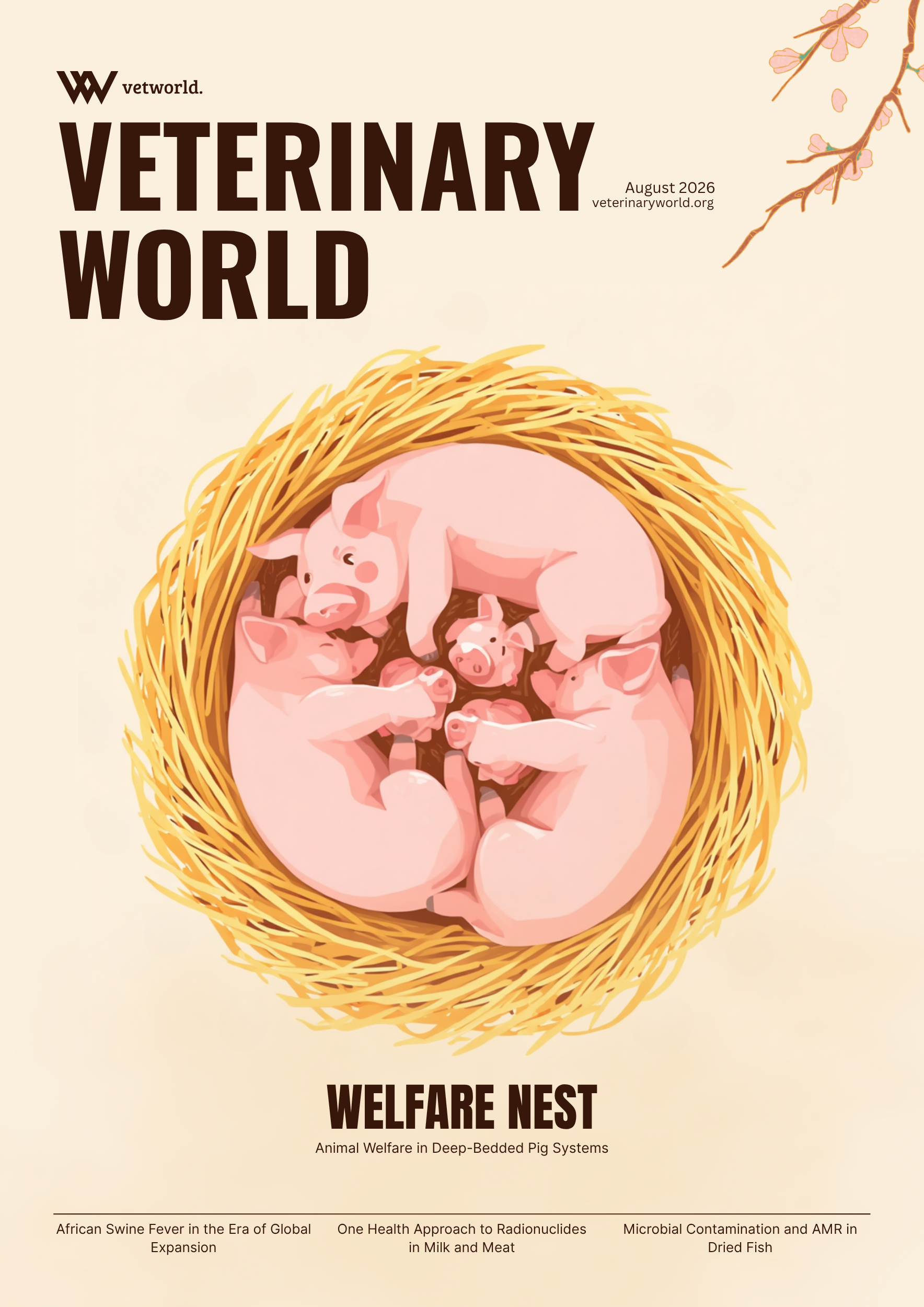

ABSTRACT
Background and Aim: Deep-bedded housing systems have been increasingly adopted as alternatives to conventional pig production because they provide manipulable substrates, improve behavioral opportunities, and support circular manure management. However, their effects on animal welfare, production performance, and environmental sustainability remain inconsistent across production stages, bedding materials, and management systems. Furthermore, evidence comparing individual bedding materials is fragmented, particularly for tropical substrates such as rice husk. This systematic review aimed to critically evaluate the effects of deep-bedded pig systems on animal welfare, productivity, environmental sustainability, and economic performance through qualitative evidence synthesis and quantitative meta-analysis, and to develop practical translational frameworks to support veterinary decision-making.
Materials and Methods: A systematic review was conducted according to the PRISMA 2020 guidelines using Web of Science, Scopus, and PubMed to identify studies published between January 2000 and March 2026. A total of 790 records were retrieved, of which 221 comparative studies met the eligibility criteria for qualitative synthesis. Pairwise random-effects meta-analyses were performed for average daily gain (ADG), feed conversion ratio (FCR), and mortality when sufficient quantitative data were available. Risk-of-bias was assessed using Risk-of-bias In Non-randomized Studies of Interventions (ROBINS)-I and RoB 2 principles, whereas certainty of evidence was evaluated using the Grading of Recommendations Assessment, Development and Evaluation. The feasibility of network meta-analysis was also examined. Two translational frameworks, the Healthy Pig Production Framework and the Sustainable Deep-Bedding Model, were developed to integrate scientific evidence into veterinary practice.
Results: Deep-bedding consistently improved behavioral welfare by increasing rooting, exploratory activity, and resting comfort compared with conventional housing. Meta-analysis demonstrated no overall effect on ADG (mean difference: +9.8 g/day; 95% confidence interval: −58.3 to 77.9; p = 0.78), although subgroup analysis indicated improved growth in nursery-growing pigs and reduced performance in growing-finishing pigs. Evidence for FCR and mortality remained inconclusive because of incomplete reporting and substantial heterogeneity. Environmental outcomes indicated improved manure recycling potential but greater risks of ammonia emissions and greenhouse gas production when bedding moisture and ventilation were poorly managed. Material-specific evidence was insufficient to support a formal network meta-analysis, highlighting a major research gap. Rice husk emerged as a promising bedding material for tropical production systems, although current evidence remains predominantly qualitative.
Conclusion: Deep-bedded housing should be regarded as a management-dependent strategy for welfare and sustainability rather than a simple flooring alternative. Although welfare benefits were consistently observed, production and environmental outcomes varied by production stage, substrate type, and management quality. The proposed translational frameworks provide practical tools for veterinary assessment and sustainable pig production while identifying priorities for future substrate-specific comparative research.
Keywords: animal welfare, deep-bedding, evidence synthesis, meta-analysis, pig production, rice husk, sustainable livestock production, veterinary medicine.