


ABSTRACT
Background and Aim: Enteric methane emission from dairy cows contributes substantially to greenhouse gas production and represents an inefficient loss of dietary energy. Phytosterols are plant-derived bioactive compounds with lipid-modulating and rumen fermentation-regulating properties; however, their effects on methane emission intensity and rumen microbial ecology in lactating dairy cows remain insufficiently explored. This study evaluated the effects of dietary phytosterols supplementation on lactation performance, nutrient digestibility, serum biochemical parameters, rumen fermentation characteristics, methane emission intensity, and rumen microbial composition in mid-lactation Holstein dairy cows.
Materials and Methods: Thirty-four multiparous Holstein dairy cows with similar days in milk and milk yield were randomly assigned to either a control (CON) group or a phytosterols (PHY) group receiving 15 g/d of a commercial phytosterols product containing 5% active phytosterols. The experimental period lasted 50 days, including 7 days of adaptation and 43 days of data collection. Feed intake and milk yield were recorded daily. Milk composition, apparent nutrient digestibility, serum biochemical indices, rumen fermentation parameters, methane emission intensity, quantitative polymerase chain reaction, and 16S rRNA gene sequencing were analyzed. Methane and carbon dioxide emissions were measured using an automated head-chamber system.
Results: Dietary phytosterols supplementation significantly improved milk yield, milk fat percentage, milk protein percentage, energy-corrected milk, and 3.5% fat-corrected milk compared with the CON group (p < 0.05). Apparent digestibility of organic matter, crude protein, neutral detergent fiber, and ether extract was also significantly enhanced. Serum glucose and blood urea nitrogen concentrations increased, whereas total cholesterol and low-density lipoprotein cholesterol concentrations decreased in the PHY group. Phytosterols supplementation significantly reduced methane emission intensity per kilogram of energy-corrected milk. Ruminal acetate proportion and acetate-to-propionate ratio decreased, whereas microbial crude protein and branched-chain volatile fatty acids increased. In addition, phytosterols altered rumen microbial composition by increasing the abundance of beneficial bacterial genera, including
Conclusion: High-dose phytosterols supplementation improved lactation performance, enhanced nutrient utilization, modulated rumen microbial communities, and reduced methane emission intensity in mid-lactation dairy cows. These findings indicate that phytosterols may serve as a promising natural feed additive for improving dairy production efficiency while supporting methane mitigation strategies in sustainable dairy farming.
Keywords: digestibility, lactation performance, methane mitigation, Phytosterols, rumen fermentation, volatile fatty acids.
INTRODUCTION
Methane (CH4), a potent greenhouse gas, has a global warming potential approximately 28 times greater than that of carbon dioxide (CO2) [1]. Ruminants represent the primary source of CH4 emissions in livestock production [2]. In particular, methane emitted from the gastrointestinal tract of dairy cows accounts for approximately 31.6% of total global agricultural methane emissions [3]. In the anaerobic rumen environment, a diverse microbial consortium ferments carbohydrates into volatile fatty acids (VFAs) and hydrogen (H2), whereas methanogenic archaea utilize H2 to reduce CO2 or other one-carbon substrates into CH4 [4]. This interspecies H2 transfer is thermodynamically essential because it prevents H2 accumulation and supports efficient fiber digestion; however, it also represents a substantial loss of dietary energy for the host animal [3]. During ruminal fermentation, approximately 2%–12% of gross dietary energy may be lost as CH4 [5]. Therefore, enteric methane production not only contributes significantly to global climate change but also decreases feed energy utilization efficiency, making methane mitigation a major priority in ruminant nutrition research.
To date, nutritional and management interventions have achieved only moderate reductions in enteric CH4 emissions, generally ranging from 2% to 15% [6]. Most currently available feed additives provide less than 20% methane mitigation, with the exception of certain chemical inhibitors such as 3-nitrooxypropanol, which can reduce methane emissions by approximately 20%–40% [5]. In contrast, phytogenic feed additives have gained increasing attention as sustainable alternatives for methane mitigation. Several plant-derived compounds, including tannins, saponins, and essential oils, have demonstrated the ability to reduce enteric CH4 production by redirecting fermentation hydrogen toward propionate synthesis and altering methanogen and protozoal populations within the rumen ecosystem [7-9]. Jadhav
Among these phytogenic compounds, phytosterols are naturally occurring bioactive steroid molecules found in plant cell membranes. Major phytosterol components include β-sitosterol, campesterol, and brassicasterol, which are abundant in oilseeds and forage crops [11]. Structurally similar to cholesterol, phytosterols competitively inhibit intestinal cholesterol absorption through interference with mixed micelle formation [12]. In both humans and animals, phytosterols are recognized for their cholesterol-lowering, anti-inflammatory, and lipid-modulating properties [13]. Although phytosterols are poorly absorbed in the gastrointestinal tract, they may exert substantial local effects on gut microbial activity and host metabolism [14]. Previous studies in ruminants have suggested that phytosterols may positively influence rumen fermentation characteristics and nutrient utilization. Xi
Despite the growing interest in phytosterols as functional phytogenic feed additives, substantial knowledge gaps remain regarding their application in lactating dairy cows under practical production conditions. Most previous investigations have primarily focused on
In addition, earlier studies mainly evaluated limited parameters such as nutrient digestibility, serum metabolites, or general microbial abundance, whereas integrated evaluation of methane emission intensity, ruminal fermentation characteristics, lactation performance, and ruminal microbial ecology has rarely been performed simultaneously within a single
Another important limitation in previous research is the lack of comprehensive microbial profiling using both quantitative polymerase chain reaction and
Therefore, the present study aimed to evaluate the effects of dietary supplementation with a β-sitosterol-rich commercial phytosterols product at 15 g/d on lactation performance, nutrient digestibility, serum biochemical parameters, rumen fermentation characteristics, methane emission intensity, and ruminal microbial composition in mid-lactation Holstein dairy cows. In addition, this study aimed to characterize the shifts in ruminal bacterial and archaeal communities using quantitative polymerase chain reaction and
MATERIALS AND METHODS
Ethical approval
All study procedures were reviewed and approved by the Animal Care and Use Committee of Nanjing Agricultural University, Jiangsu, China (Approval No. SYXK 2024-0196). To minimize pain and stress to the cows during the experiment, all sampling procedures were performed by professional personnel with more than 15 years of on-farm experience, following standardized non-invasive or minimally invasive operating procedures. Ruminal intubation was performed gently throughout the process to avoid damage to the esophagus and rumen wall of the cows. During the experiment, the cows were housed in a temperature-controlled barn with comfortable stalls, manure was cleaned twice daily, sufficient clean drinking water was guaranteed, and continuous health monitoring was performed. No illness or culling occurred during the entire experimental period, and animal welfare was fully maintained throughout the study.
Study period and location
This experiment was conducted from May 2024 to August 2024 at Changzhou Mingyuan Animal Husbandry Co., Ltd., China. The total experimental period lasted 50 days, including a 7-day adaptation period and a 43-day formal experimental period. Data regarding feed intake and milk yield were collected daily throughout the study period. Feed, fecal, and milk samples were obtained on days 30–35 for milk composition analysis and determination of apparent digestibility. Blood samples were collected on day 36 for serum biochemical analysis. Methane and carbon dioxide measurements were conducted until day 43. On day 37, ruminal fluid was collected through the oral cavity for evaluation of ruminal fermentation parameters, qPCR amplification, and
Study design and dietary treatments
Thirty-four multiparous Holstein dairy cows with similar days in milk (207 ± 23 d), milk yield (35.4 ± 2.7 kg/d), initial body weight (676 ± 35 kg), and body condition score (3.35 ± 0.24) were selected for this study. The cows were stratified according to days in milk, milk yield, and parity and randomly assigned into two groups using a random number table, with 17 cows per group, receiving either 0 g (control [CON]) or 15 g/d of commercial phytosterols [16].
The phytosterols product used in this study was Noricon (Nanjing Nature Bio-Tech Co., Ltd., Jiangsu, China). The product contained 95% attapulgite carrier and 5% active phytosterols. The active phytosterol fraction consisted of β-sitosterol ≥ 44.71%, campesterol ≥ 27.23%, brassicasterol ≥ 16.63%, and total phytosterols ≥ 5%. All cows had unrestricted access to drinking water and total mixed ration (TMR) formulated according to NRC recommendations [18]. The composition of the TMR is presented in Table 1.
Table 1. Composition and nutrient levels of the basal diet (air-dry basis).
| Item | Content (%) |
|---|---|
| Ingredient | |
| Barley ensilage¹ | 51.61 |
| Beer vinasse | 15.48 |
| Alfalfa haylage² | 9.68 |
| Soybean and rapeseed meal | 8.39 |
| Concentrate supplement D-50³ | 8.39 |
| Steam-flaked corn | 5.45 |
| Sodium bicarbonate (rumen buffer) | 1.00 |
| Nutrient level | |
| DM | 45.74 |
| CP | 16.66 |
| NDF | 44.03 |
| ADF | 24.86 |
| EE | 2.60 |
| Ca | 0.89 |
| P | 0.51 |
1. Barley ensilage contained 34.8% DM and, on a DM basis, 10.1% CP and 49.7% NDF.
2. Alfalfa haylage contained 35.2% DM and, on a DM basis, 20.5% CP and 35.6% NDF.
3. Concentrate supplement D-50 pellets contained (% of grain mix, 100% basis): corn (31.00%), soybean hulls (6.00%), barley (10.00%), distillers dried grains with soluble (14.00%), double-low rapeseed meal (30.0%), laminated adsorbate (1.00%), calcium phosphate (1.00%), sodium bicarbonate (2.00%), limestone (5.00%), magnesium oxide (0.50%), and salt (2.50%). Per kilogram of premix, vitamins and minerals included: vitamin A, 65,000 IU; vitamin D, 6,000 IU; vitamin E, 1,100 IU; Fe, 1,800 mg; Cu, 95 mg; Zn, 480 mg; Mn, 170 mg; Se, 3.6 mg; I, 7.2 mg; and Co, 1.3 mg.
4. DM = Dry matter; OM = Organic matter; CP = Crude protein; NDF = Neutral detergent fiber; ADF = Acid detergent fiber; EE = Ether extract.
Data regarding feed intake and milk yield were collected daily. Feed, fecal, and milk samples were obtained on days 30–35 for milk composition analysis and determination of apparent digestibility. Blood samples were collected on day 36 for serum biochemical analysis. Seven dairy cows per group were randomly selected for methane and carbon dioxide measurement, which was conducted until day 43. On day 37, ruminal fluid was collected through the oral cavity to evaluate ruminal fermentation parameters, qPCR amplification, and
Feed and milk samples
TMR samples were collected once weekly, thoroughly mixed, and stored at −80°C for subsequent nutrient composition analysis. Moisture, crude protein (CP), ether extract (EE), and ash contents were assayed according to the standard methods of Official Analytical Chemists (AOAC) [19]. Neutral detergent fiber (NDF) and acid detergent fiber were determined according to the protocols outlined by Van Soest
From morning feeding on day 30 to evening feeding on day 35, fresh fecal samples were obtained from each experimental cow and weighed at 4-h intervals (08:30, 12:30, 16:30, and 20:30), with four daily samplings covering the full 24-h period. The weight of each fecal sample per cow was recorded, and 100 g of the pooled and homogenized daily sample was transferred into petri dishes containing 10% nitrogen fixation sulfate, oven-dried at 65°C, and retained for subsequent nutrient analyses. The same analytical methods used for feed samples were applied for nutrient composition analysis of fecal samples.
The apparent digestibility of dietary nutrients was calculated using the endogenous indicator method with acid-insoluble ash as the endogenous marker according to the protocol outlined by Van Keulen and Young [21]. The specific calculation method was as follows:
Nutrient apparent digestibility = [1 − (dietary acid-insoluble ash content × fecal nutrient content)/(fecal acid-insoluble ash content × dietary nutrient content)] × 100%.
The experimental dairy cows were mechanically milked three times daily at 0630 h, 1430 h, and 2230 h, and daily milk yield was recorded. Starting on day 30 of the experiment, sampling of early, middle, and late milk fractions from each cow was initiated and continued for five consecutive days. Mixed milk samples were prepared according to the milk yield ratio (morning:noon:evening = 4:3:3). These mixed samples were placed into 50 mL centrifuge tubes containing potassium dichromate and stored at 4°C for subsequent determination of milk fat percentage, milk protein percentage, lactose, total solids, and non-fat solids using the FOSS-4000 analyzer (Foss, Hillerød, Denmark). The average milk composition values obtained over the 5-day sampling period for each cow were used for statistical analysis.
The formulas used for calculating 3.5% fat-corrected milk (FCM) and energy-corrected milk (ECM) were as follows:
3.5% FCM = 0.432 × milk yield + 16.216 × fat yield [22].
ECM = 12.96 × fat yield + 7.04 × protein yield + 0.3246 × milk yield [23].
Blood collection and analyses
On day 36 of the trial, before morning feeding, 10 mL of blood was collected from the caudal vein of each experimental cow. The samples were left undisturbed at 4°C for 15 min and then centrifuged at 3,000 rpm (approximately 1,000 ×
Serum biomarkers analyzed included total protein, albumin, glucose, triglycerides, total cholesterol, low-density lipoprotein cholesterol, high-density lipoprotein cholesterol, blood urea nitrogen, glutamic oxalacetic transaminase, total antioxidant capacity, glutathione peroxidase, superoxide dismutase, and malondialdehyde. All indices were measured using commercial kits provided by Nanjing Jiancheng Bioengineering Institute, Nanjing, China.
Rumen fluid collection and analyses
On day 37 of the experiment, before morning feeding, a large rumen tube was inserted orally and extended into the rumen. Initially, 30 mL of rumen fluid was extracted and discarded to avoid contamination from oral fluids or other external factors. Subsequently, 50 mL of rumen fluid was collected, and half of the sample was filtered through four layers of gauze and transferred into a beaker.
The pH of rumen fluid was measured using a portable pH meter calibrated with standard buffers (pH 4.0, 7.4, and 9.0), and the mean of three replicate readings was used for analysis. The lactic acid concentration was determined using a commercial lactic acid assay kit (Nanjing, China) through chemical colorimetry. Ammonia nitrogen concentration was determined using the phenol-sodium hypochlorite colorimetric method. Microbial CP concentration was determined using the Coomassie Brilliant Blue staining method [24].
The concentrations of VFAs, including acetate, propionate, butyrate, isobutyrate, valerate, and isovalerate, were determined using the internal standard method with an Agilent 7890B gas chromatograph (Agilent Technologies, Santa Clara, CA, USA). Thawed samples (1 mL) were mixed with 200 μL of 25% metaphosphoric acid solution, vortexed, and stored at −20°C for 24 h to precipitate proteins and other interfering substances. Before analysis, samples were thawed under running water, centrifuged at 4°C and 12000 rpm for 10 min, and the supernatant was filtered through a 0.22 μm syringe filter into a vial for gas chromatographic injection. Qualitative analysis was performed according to the retention times of characteristic peaks, and quantitative analysis was conducted using the internal standard method to obtain the absolute concentration and molar proportion of each VFA component.
Enteric gas emissions
Enteric gas emissions (CH4 and CO2) were measured using an automated head-chamber (AHC) system developed by the Institute of Subtropical Agriculture, Chinese Academy of Sciences. The operating principle of this system was consistent with that of the GreenFeed system [25]. Based on the methodology described by Wang
One week before formal measurements, the selected seven cows per group were trained to adapt to the system. Cows were guided to enter the head chamber and consume bait feed three times daily for 5–10 min each session until all cows could voluntarily enter the chamber without stress and complete feeding, thereby ensuring that no stress response interfered with measurement accuracy.
Seven cows from each group were randomly selected for testing, and each cow underwent two measurement rounds with eight time points recorded per round. The measurement schedule was as follows: 06:00 and 18:00 on day 1; 03:00 and 15:00 on day 2; 00:00 and 12:00 on day 3; and 09:00 and 21:00 on day 4. This time-point sequence was repeated from day 5 to day 8. This eight-time-point sampling strategy has been experimentally validated to represent more than 98% of the daily enteric methane emission pattern in dairy cows, thereby ensuring the reliability and representativeness of the gas measurement data obtained in this trial [25].
During AHC operation, granular bait feed consisting of corn (60%), carex (11.5%), alfalfa (20%), sugar (7%), salt (0.5%), and soybean oil (1%) was used to attract cows into the chamber and ensure proper head positioning during measurement. The bait feed was delivered from the feeding chamber at approximately 100 g/min and was used solely to attract cows into the chamber. Because the bait feed had no significant effect on nutrient intake or total feed intake, it was not included in feed intake calculations.
Methane concentration values were averaged over a 5-min measurement period for each cow, followed by a 2-min environmental gas measurement period. The AHC system was calibrated each morning using methane standard gas to ensure measurement accuracy. For comparative analysis, methane yield was normalized relative to average milk yield, 3.5% FCM, and ECM yields.
Only valid measurements in which the cow’s head remained completely inside the head chamber for more than 80% of the measurement period were retained. Ambient gas background concentrations measured simultaneously were subtracted from the sample gas concentration values. Outliers beyond ± 2 standard deviations from the mean concurrent measurements of the same cow were excluded. The coefficient of variation of repeated methane measurements in this experiment was 5.2%, indicating good repeatability of the measurements.
Ruminal DNA isolation and qPCR amplification
Total DNA from ruminal microorganisms was isolated according to the protocol proposed by Xu
The qPCR reaction system was prepared using ChamQ Universal SYBR qPCR Premix (Vazyme Biotech Co., Ltd., Nanjing, China) and consisted of 10 μL Master Mix, 0.4 μL forward primer, 0.4 μL reverse primer, 7.2 μL double-distilled water, and 2 μL DNA template. The specific primer pairs targeting the
The recombinant plasmid standard containing the target
16S rRNA gene amplicon sequencing analysis
Microbial DNA was extracted from ruminal fluid samples using the E.Z.N.A.® Stool DNA Kit (Omega Bio-tek, Norcross, GA, USA) according to the manufacturer’s instructions. Polymerase chain reaction amplification of bacterial
Sequencing libraries were generated and sequenced in PE300 mode using the MGI-G99 next-generation sequencing platform (Shanghai BIOZERON Biotech Co., Ltd., Shanghai, China) according to standard protocols. Raw sequencing reads were deposited in the NCBI Sequence Read Archive under accession number PRJNA1346834 and are publicly available.
Raw FASTQ files were initially processed for de-duplication using Trimmomatic [28], and high-quality sequences were analyzed using the DADA2 algorithm to identify insertion, deletion, and substitution errors [29]. During filtering and trimming, the expected error rate limit for each read segment was set to 2 (maxEE = 2). After sequence merging and chimera removal, representative sequence variants were classified using the RDP classifier with an 80% confidence threshold based on the Silva SSU132 database.
After standardized quality control, the average number of valid clean reads per sample was 51,761, with average read retention rates of 80.94% for the bacterial V3–V4 library and 60.99% for the archaeal V4–V5 library. A total of 6494 raw amplicon sequence variants were obtained for bacteria, with 5256 high-quality amplicon sequence variants retained after filtering. For archaea, 2233 raw amplicon sequence variants were obtained, with 1362 high-quality amplicon sequence variants retained after filtering. The rarefaction depth for diversity analysis was set to 50,000 reads to ensure complete sequencing saturation for all samples.
Rarefaction analysis was performed using Mothur software (v1.21.1) to quantify α-diversity indices including Chao1, ACE, and Shannon indices [30]. Venn diagrams were constructed using the online tool “Draw Venn Diagram” to characterize shared and unique features of amplicon sequence variants. β-diversity was assessed based on UniFrac distances, and principal coordinate analysis was conducted using the vegan package in R software.
Based on the Bray–Curtis distance matrix, the Mantel test was used to investigate correlations between microbial genera and milk production performance, fermentation characteristics, and methane-related parameters. A correlation was considered statistically significant when |Spearman’s r| > 0.6 and p < 0.05. The complete raw data matrix for Spearman correlation analysis is provided in Supplementary Table 3.
All statistical analyses were performed using the stats package in R software. One-way analysis of variance was applied to evaluate differences in diversity indices among samples, with p < 0.05 considered statistically significant. Differential abundance analysis of microorganisms was conducted using the Wilcoxon rank-sum test with Benjamini–Hochberg false discovery rate correction for multiple testing, and adjusted p < 0.05 was considered statistically significant. The complete results of microbial differential abundance analysis are presented in Supplementary Table 2.
Statistical analysis
After preliminary organization of the data using Excel, independent sample t-tests were performed to evaluate milk production performance, apparent nutrient digestibility, serum biochemical parameters, and ruminal fermentation characteristics of dairy cows using SPSS version 27.0 (IBM Corp., Armonk, NY, USA). Data are presented as mean ± standard error of the mean, and differences were considered statistically significant at p < 0.05.
RESULTS
Effects of phytosterols supplementation on lactation performance and nutrient digestibility
The ingredients and nutrient composition of the diets are presented in Table 1. The effects of phytosterols supplementation on milk yield and milk composition are shown in Table 2 [22, 23]. Milk production in the PHY group was significantly higher than that in the CON group (p < 0.01). Milk fat percentage and milk protein percentage increased by 17.11% (p < 0.05) and 5.22% (p < 0.05), respectively. The addition of phytosterols had no significant effect on lactose content. Total milk solids and non-fat solids also increased by 7.10% (p < 0.05) and 3.16% (p < 0.05), respectively. ECM and 3.5% FCM in the PHY group also increased significantly (p < 0.01).
Table 2. Effect of feeding phytosterols on lactation performance.
| Item¹ | Treatment | SEM² | p-value | |
|---|---|---|---|---|
|
| ||||
| CON | PHY | |||
| DMI, kg/d | 21.39 | 21.91 | 0.153 | 0.087 |
| Milk yield, kg/d | 25.73ᵇ | 29.55ᵃ | 0.640 | 0.002 |
| Milk composition (%) | ||||
| Milk fat | 2.98ᵇ | 3.49ᵃ | 0.124 | 0.041 |
| Milk protein | 3.45ᵇ | 3.63ᵃ | 0.042 | 0.029 |
| Milk sugar | 4.95 | 5.03 | 0.031 | 0.250 |
| Total milk solids | 12.25ᵇ | 13.12ᵃ | 0.176 | 0.011 |
| Non-fat solids | 9.17ᵇ | 9.46ᵃ | 0.060 | 0.014 |
| 3.5% FCM³, kg/d | 23.56ᵇ | 29.38ᵃ | 0.863 | <0.001 |
| ECM⁴, kg/d | 24.54ᵇ | 30.44ᵃ | 0.822 | <0.001 |
1. DMI = Dry matter intake; FCM = Fat-corrected milk; ECM = Energy-corrected milk.
2. SEM = Standard error of least squares means.
3. 3.5% FCM = 0.432 × milk yield + 16.216 × fat yield [22].
4. ECM = 12.95 × fat yield + 7.04 × protein yield + 0.3246 × milk yield [23].
5. ᵃ,ᵇValues within the same row with different superscripts differ significantly (p < 0.05).
As shown in Table 3, dry matter intake did not differ significantly between the PHY and CON groups (p > 0.05). There were no significant differences in feed refusals and sorting behavior between the groups (p > 0.05). However, organic matter digestibility was 3.44% higher in the PHY group compared with the CON group (p < 0.05). In addition, the digestibility of CP, NDF, and EE increased by 2.80% (p < 0.05), 11.22% (p < 0.05), and 4.00% (p < 0.05), respectively.
Table 3. Effect of feeding phytosterols on nutrient digestibility and nitrogen metabolism.
| Item¹ | Treatment | SEM² | p-value | |
|---|---|---|---|---|
|
| ||||
| CON | PHY | |||
| Intake3, Kg/d | ||||
| DM | 21.39 | 21.91 | 0.153 | 0.087 |
| OM | 20.21 | 20.71 | 0.145 | 0.087 |
| CP | 3.56 | 3.65 | 0.025 | 0.087 |
| NDF | 9.42 | 9.65 | 0.065 | 0.087 |
| ADF | 5.32 | 5.45 | 0.038 | 0.087 |
| EE | 0.56 | 0.53 | 0.017 | 0.087 |
| Digestibility, % | ||||
| DM | 66.98 | 69.07 | 0.643 | 0.105 |
| OM | 71.50b | 73.96a | 0.562 | 0.026 |
| CP | 72.08b | 74.10a | 0.460 | 0.025 |
| NDF | 48.05ᵇ | 53.44ᵃ | 1.077 | 0.010 |
| ADF | 42.20 | 44.12 | 1.050 | 0.369 |
| EE | 77.04ᵇ | 80.12ᵃ | 0.676 | 0.020 |
1. DM = Dry matter; OM = Organic matter; CP = Crude protein; NDF = Neutral detergent fiber; ADF = Acid detergent fiber; EE = Ether extract.
2. SEM = Standard error of least squares means.
3. ᵃ,ᵇValues within the same row with different superscripts differ significantly (p < 0.05).
Effects of phytosterols supplementation on serum biochemical parameters
As presented in Table 4, dietary supplementation with phytosterols altered serum biochemical parameters in dairy cows. Serum glucose concentration increased by 16.92% (p < 0.05), and blood urea nitrogen increased by 38.91% (p < 0.01). Total cholesterol decreased by 20.99% (p < 0.01), and low-density lipoprotein cholesterol decreased by 31.97% (p < 0.05). Phytosterols supplementation had no significant effect on serum antioxidant indicators (p > 0.05).
Table 4. Effect of feeding phytosterols on serum biochemical indices and antioxidant indexes.
| Item¹ | Treatment | SEM² | p-value | |
|---|---|---|---|---|
|
| ||||
| CON | PHY | |||
| Biochemical index | ||||
| TP (mg/mL) | 92.58 | 99.26 | 2.854 | 0.248 |
| ALB (g/L) | 24.64 | 25.34 | 0.438 | 0.433 |
| GLU (mmol/L) | 5.62ᵇ | 6.57ᵃ | 0.306 | 0.016 |
| BUN (mmol/L) | 2.75ᵇ | 3.82ᵃ | 0.168 | 0.001 |
| TG (mmol/L) | 0.15 | 0.17 | 0.009 | 0.193 |
| TC (mmol/L) | 5.48ᵃ | 4.33ᵇ | 0.179 | 0.001 |
| LDL-C (mmol/L) | 2.44ᵃ | 1.66ᵇ | 0.187 | 0.035 |
| HDL-C (mmol/L) | 3.41 | 3.26 | 0.215 | 0.729 |
| Antioxidant index | ||||
| T-AOC (mM) | 0.81 | 0.82 | 0.007 | 0.405 |
| MDA (nmol/mL) | 2.32 | 2.59 | 0.252 | 0.603 |
| SOD (U/mL) | 67.51 | 68.54 | 1.186 | 0.671 |
| GSH-PX (U/mL) | 110.35 | 109.49 | 5.988 | 0.944 |
1. TP = Total protein; ALB = Albumin; GLU = Glucose; BUN = Blood urea nitrogen; TG = Triglyceride; TC = Total cholesterol; LDL-C = Low-density lipoprotein cholesterol; HDL-C = High-density lipoprotein cholesterol; T-AOC = Total antioxidant capacity; MDA = Malondialdehyde; SOD = Superoxide dismutase; GSH-PX = Glutathione peroxidase.
2. SEM = Standard error of least squares means.
3. ᵃ,ᵇValues within the same row with different superscripts differ significantly (p < 0.05).
Effects of phytosterols supplementation on rumen fermentation characteristics
As shown in Table 5, phytosterols supplementation significantly increased ruminal microbial CP concentration by 17.71% (p < 0.01). It had no significant effect on fermentation indicators such as pH, ammonia nitrogen, and lactic acid concentration (p > 0.05). Among the individual VFAs, acetate decreased significantly by 5.66% (p < 0.01), whereas propionate showed an increasing trend (p > 0.05). Isobutyrate, valerate, and isovalerate increased significantly by 21.92% (p < 0.01), 31.62% (p < 0.01), and 48.18% (p < 0.01), respectively. The acetate-to-propionate ratio decreased significantly by 13.25% (p < 0.05), whereas no significant changes were observed in butyrate or total VFA concentrations. Phytosterols supplementation increased ruminal bacterial copy number by 2.81% (p < 0.05), whereas archaeal copy number concentration decreased by 2.27% (p < 0.01).
Table 5. Effect of feeding phytosterols on rumen fermentation parameters and microbial populations.
| Item¹ | Treatment | SEM² | p-value | |
|---|---|---|---|---|
|
| ||||
| CON | PHY | |||
| pH | 6.46 | 6.38 | 0.044 | 0.347 |
| NH₃-N (mg/mL) | 8.39 | 8.51 | 0.902 | 0.92 |
| Total VFA (mmol/L) | 111.51 | 115.91 | 3.188 | 0.499 |
| Acetate (mmol/L) | 67.01 | 65.88 | 1.965 | 0.778 |
| Propionate (mmol/L) | 27.52 | 30.96 | 0.935 | 0.065 |
| Butyrate (mmol/L) | 13.47 | 14.04 | 0.711 | 0.697 |
| Isobutyrate (mmol/L) | 0.81ᵇ | 1.03ᵃ | 0.041 | 0.004 |
| Valerate (mmol/L) | 1.50ᵇ | 2.01ᵃ | 0.08 | 0.001 |
| Isovalerate (mmol/L) | 1.21ᵇ | 1.93ᵃ | 0.138 | 0.007 |
| VFA, % molar proportion | ||||
| Acetate | 60.12ᵃ | 56.72ᵇ | 0.525 | 0.001 |
| Propionate | 24.7 | 27.07 | 0.666 | 0.075 |
| Butyrate | 11.98 | 11.9 | 0.42 | 0.922 |
| Isobutyrate | 0.73ᵇ | 0.89ᵃ | 0.029 | 0.004 |
| Valerate | 1.36ᵇ | 1.79ᵃ | 0.054 | 0.001 |
| Isovalerate | 1.10ᵇ | 1.63ᵃ | 0.084 | 0.001 |
| Acetate:Propionate | 2.49ᵃ | 2.16ᵇ | 0.078 | 0.034 |
| Lactic acid (mmol/L) | 1.88 | 1.76 | 0.109 | 0.603 |
| MCP (mg/dL) | 154.34ᵇ | 181.68ᵃ | 4.422 | 0.001 |
| Bacteria Total (log10⁸/mL) | 11.37ᵇ | 11.69ᵃ | 0.068 | 0.013 |
| Archaea Total (log10⁶/mL) | 7.48ᵃ | 7.31ᵇ | 0.034 | 0.008 |
1. NH₃-N = Ammonia nitrogen; VFA = Volatile fatty acid; MCP = Microbial crude protein.
2. SEM = Standard error of least squares means.
3. ᵃ,ᵇValues within the same row with different superscripts differ significantly (p < 0.05).
Effects of phytosterols supplementation on enteric gas emissions
This part of the experiment was conducted using seven cows per group. Compared with the CON group, CH4 production per kilogram of ECM in the PHY group decreased by 14.42% (p < 0.05). Similarly, CH4 (p > 0.05) and CO2 (p > 0.05) emissions per kilogram of milk yield also showed a decreasing trend (Table 6).
Table 6. Effect of feeding phytosterols on methane emission parameters.
| Item¹ | Treatment | SEM² | p-value | |
|---|---|---|---|---|
|
| ||||
| CON | PHY | |||
| CH₄, g/d | 424.34 | 415.43 | 14.303 | 0.769 |
| CO2, g/d | 16,057.84 | 15,893.55 | 495.237 | 0.876 |
| Methane-equivalent emissions, g/kg | ||||
| CH4/DMI | 19.71 | 19.35 | 0.690 | 0.808 |
| CH4/MY | 14.97 | 13.19 | 0.492 | 0.068 |
| CH4/ECM | 15.39a | 13.17b | 0.573 | 0.048 |
| Carbon dioxide-equivalent emissions, g/kg | ||||
| CO2/DMI | 747.42 | 740.97 | 26.63 | 0.909 |
| CO2/MY | 566.03 | 504.93 | 16.486 | 0.060 |
| CO2/ECM | 583.21 | 507.26 | 23.693 | 0.111 |
1. CH₄ = Methane; DMI = Dry matter intake; CO₂ = Carbon dioxide; H₂ = Hydrogen; GE = Gross energy.
2. SEM = Standard error of least squares means.
3. ᵃ,ᵇValues within the same row with different superscripts differ significantly (p < 0.05).
Effects of phytosterols supplementation on ruminal microbial diversity
As shown in Figure 1A, α-diversity indices were lower in the PHY group than in the CON group. The PHY group exhibited reduced Shannon diversity, observed species richness, and Simpson index values. The Venn diagram illustrated that the CON and PHY groups shared 1,024 amplicon sequence variants, whereas 2,240 amplicon sequence variants were unique to the CON group and 1,930 amplicon sequence variants were unique to the PHY group (Figure 1B). β-diversity analysis based on principal coordinate analysis (Figure 1C) revealed clear separation between the CON and PHY groups along PC1, which accounted for 43.05% of the total variance. Permutational multivariate analysis of variance confirmed that the overall ruminal microbial community structure differed significantly between treatments (R² = 0.1903; p = 0.032).
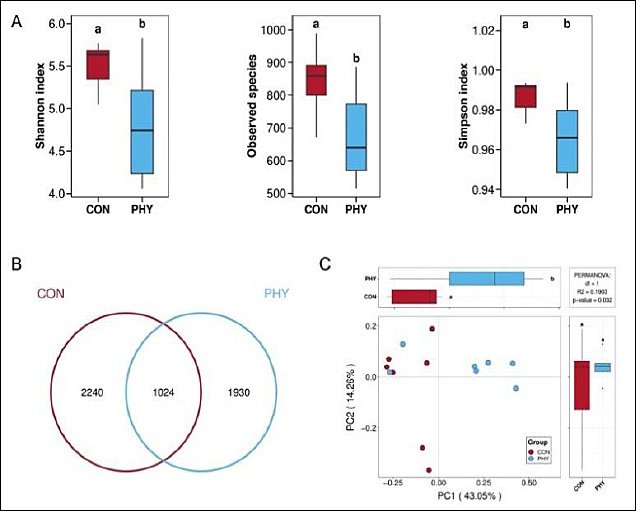
Figure 1. Effects of phytosterols supplementation on ruminal microbial diversity and community structure in dairy cows. (A) Comparison of α-diversity indices between the CON and PHY groups, including Shannon index, observed species richness, and Simpson index. Different lowercase letters indicate significant differences within each index (p < 0.05). (B) Venn diagram showing the shared and unique amplicon sequence variants between the CON and PHY groups. (C) Principal coordinate analysis based on Bray–Curtis dissimilarity illustrating β-diversity differences between microbial communities of the CON and PHY groups. Boxplots on the right represent the distribution of samples along PC1 and PC2.
Effects of phytosterols supplementation on ruminal bacterial composition
Figure 2A illustrates the dominant bacterial phyla in the CON and PHY groups, with Bacteroidota, Bacillota, and Pseudomonadota representing the top three phyla. As shown in Figure 2C, the relative abundance of Pseudomonadota was significantly higher in the PHY group, whereas Patescibacteria, Spirochaetota, and Thermodesulfobacteriota exhibited significantly lower relative abundances compared with the CON group.
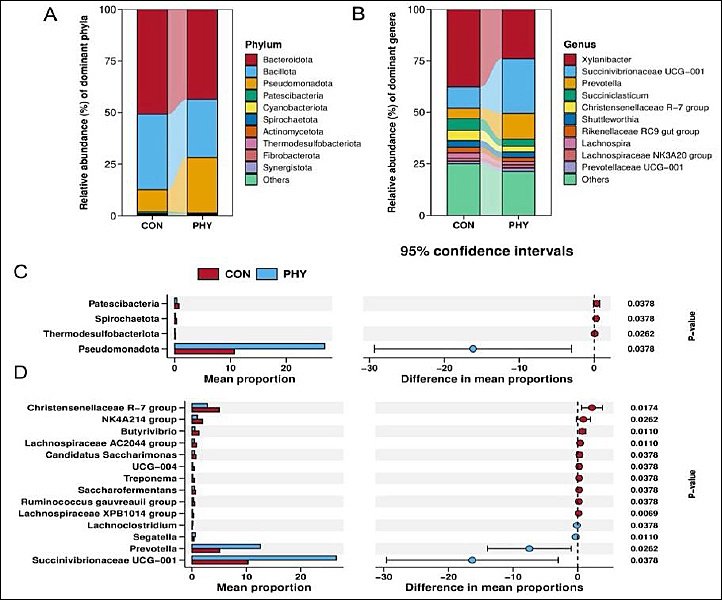
Figure 2. Effects of phytosterols supplementation on ruminal bacterial composition and differential abundance in dairy cows. (A–B) Relative abundance of dominant bacterial phyla and genera in the CON and PHY groups. (C–D) Differential abundance analyses at the phylum and genus levels showing mean proportions (left) and differences in mean proportions with 95% confidence intervals (right) between the two dietary treatments. Points located to the left or right of the zero line indicate lower or higher abundance, respectively, in the PHY group compared with the CON group.
Figure 2B presents the dominant genera in both groups, with
Effects of phytosterols supplementation on ruminal archaeal composition
As illustrated in Figure 3A, the dominant archaeal phyla in the rumen were primarily Methanobacteriota and Thermoplasmatota. At the genus level, the major representatives included
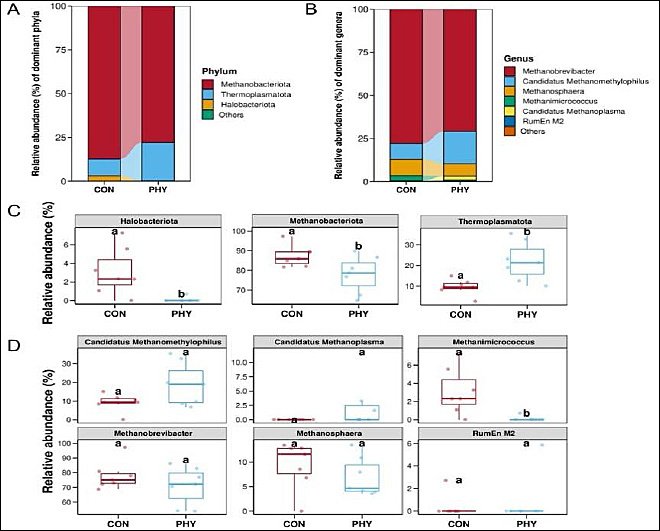
Figure 3. Effects of phytosterols supplementation on ruminal archaeal composition and differential abundance in dairy cows. (A–B) Relative abundance of dominant archaeal phyla and genera in the CON and PHY groups. (C–D) Boxplots showing between-group differences in archaeal relative abundances at the phylum and genus levels. Statistical comparisons were performed using t-tests. Different lowercase letters above the boxes indicate significant differences between the CON and PHY groups (p < 0.05).
Correlation analysis between ruminal microorganisms and production traits
Correlation heatmaps were constructed using abundance data of the top 20 bacterial genera and archaeal genera in relation to dairy production performance, ruminal fermentation characteristics, and methane-related parameters, as presented in Figure 4.
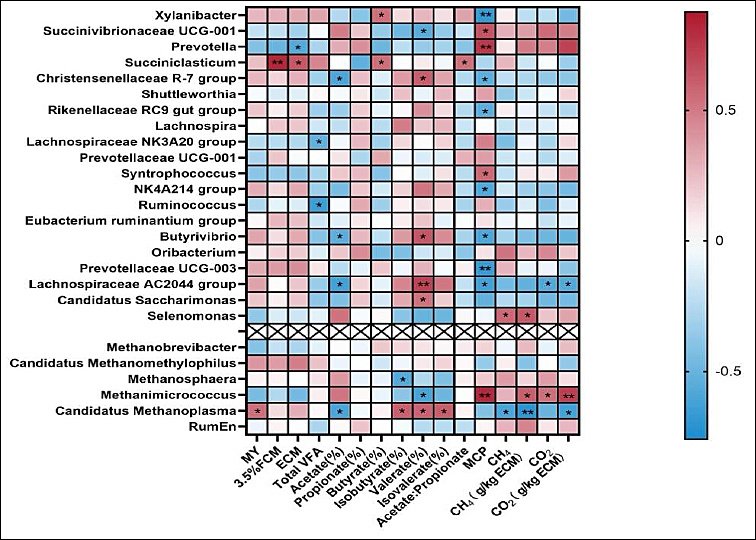
Figure 4. Spearman correlation analysis of ruminal bacterial and archaeal genera with dairy production performance, ruminal fermentation characteristics, and methane-related parameters.
In the heatmap, positive and negative correlations are represented by blue and red gradients, respectively, with color intensity increasing according to correlation strength. Statistically significant correlations are indicated by asterisks (*p < 0.05; **p < 0.01). Taxa above the crosshatched diagonal cells represent bacterial genera, whereas taxa below the diagonal represent archaeal genera.
DISCUSSION
Effects of phytosterols supplementation on lactation performance and serum biochemical parameters
According to Lv
The results of the present study demonstrated that the concurrent increases in milk yield and apparent nutrient digestibility suggest that phytosterols may optimize the partitioning of dietary energy toward lactation rather than adipose tissue deposition. Gao
Interestingly, the acetate proportion in the PHY group showed a marked reduction (p = 0.001), which appears paradoxical considering the concurrent increase in milk fat content. However, this apparent discrepancy may be explained by alterations in ruminal fermentation dynamics and microbial–host metabolic interactions. A lower acetate proportion does not necessarily indicate a decrease in its absolute concentration because the absolute ruminal acetate concentration did not differ significantly between groups (p = 0.778). Additional support is provided by previous
These observations suggest that phytosterols may simultaneously enhance acetate synthesis and promote acetate absorption and utilization by the host animal. Under
Available evidence suggests that alteration of the phytosterol profile of bovine milk through dietary supplementation has only a limited effect, with total phytosterol concentrations in milk remaining extremely low (<0.12 mg/100 mL) even under high-phytosterol feeding conditions [32]. Therefore, substantial phytosterol enrichment of milk is unlikely under practical feeding conditions. However, because milk sterol profiles were not quantified in the present study, future investigations should determine whether phytosterols or their metabolites are transferred into milk and whether such alterations may provide nutritional, marketing, or consumer perception advantages [32].
Biochemical analysis demonstrated that phytosterols supplementation increased the availability of gluconeogenic substrates and improved lipid metabolism. Phytosterols may indirectly influence glucose metabolism by enhancing the availability of gluconeogenic precursors such as propionate [14, 16]. The significantly increased abundance of
The elevated blood urea nitrogen concentration observed in the PHY group suggests enhanced nitrogen flux resulting from increased ruminal microbial proteolysis and subsequent ammonia absorption [35]. The increase in milk protein percentage and improved protein digestibility further support this interpretation. In combination with the observed increases in NDF and organic matter digestibility, these findings suggest that phytosterols improved overall nitrogen recycling efficiency and nitrogen utilization, thereby supporting milk protein synthesis.
Regarding lipid metabolism, the significant reductions in serum total cholesterol and low-density lipoprotein cholesterol are consistent with the established cholesterol-lowering properties of phytosterols. Mechanistically, phytosterols compete with cholesterol for incorporation into mixed micelles within the intestinal lumen, thereby reducing cholesterol absorption and potentially increasing hepatic low-density lipoprotein receptor expression to enhance cholesterol clearance [13, 36].
In contrast to previous studies that reported significant antioxidant effects of phytosterols, including increased superoxide dismutase and glutathione peroxidase activities together with decreased malondialdehyde concentrations [37, 38], the present study did not observe significant alterations in antioxidant indices. This discrepancy may be associated with differences in the physiological status of the experimental animals. Most studies reporting antioxidant benefits involved animals exposed to specific stress conditions such as heat stress, lipopolysaccharide challenge, or high-grain feeding, where basal oxidative stress levels are elevated.
In the present study, the cows were maintained under relatively stable physiological conditions without severe oxidative stress challenges. Therefore, endogenous antioxidant enzyme activities may already have been maintained at normal physiological levels, reducing the requirement for additional antioxidant support from phytosterols [39]. Furthermore, the dose-response relationship of phytosterols appears to be complex. Although 200 mg/d phytosterols has previously been shown to be effective [14], higher supplementation levels such as the 750 mg/d active phytosterols used in the present study may trigger different metabolic feedback mechanisms. Consequently, the absence of significant changes in antioxidant enzyme activities in the present study likely reflects physiological redox homeostasis rather than lack of phytosterol bioactivity.
Effects of phytosterols supplementation on rumen fermentation characteristics
Dietary supplementation with phytosterols can alter ruminal fermentation patterns and modulate the ruminal microbial community [14]. Xi
Phytosterols may enhance ammonia nitrogen utilization efficiency by stimulating the growth of proteolytic bacteria such as
This hydrogen competition mechanism is further supported by previous reviews indicating that propionate synthesis competes directly with methanogenesis for metabolic hydrogen in the rumen, and that redirecting hydrogen toward propionate production may represent an effective strategy for methane mitigation while maintaining productivity [42, 43]. The observed shift in fermentation pattern was closely associated with the increased abundance of
Furthermore, the relative abundance of Pseudomonadota increased significantly in the PHY group. This phylum contains several taxa involved in propionate metabolism, such as
For comparison, a meta-analysis evaluating a commercial essential-oil blend in lactating cows reported an average 10% reduction in methane production intensity without affecting dry matter intake, whereas 3-nitrooxypropanol generally achieves >30% reductions in CH4 yield and intensity. However, very high doses of 3-nitrooxypropanol may negatively affect dry matter intake and ECM production in some studies [47–49].
Isobutyric acid and isovaleric acid are branched-chain VFAs derived from amino acid deamination and generally indicate accelerated microbial fermentation of protein substrates [50]. Increased isobutyric acid concentration may reflect enhanced protein fermentation and microbial turnover associated with peptide and amino acid catabolism [47]. The significant increase in branched-chain VFA concentrations observed in the present study may indirectly enhance NDF digestibility by functioning as growth factors for fibrolytic bacteria.
The increased abundance of
Regulatory effects of phytosterols supplementation on ruminal bacterial and archaeal communities
One of the most important findings of the present study was the reduction in methane emission intensity (CH4/ECM), which was associated with substantial alterations in ruminal fermentation characteristics and microbial community structure. Because absolute CH4 output (g/d) did not differ significantly between treatments, the primary response should be interpreted as improved production efficiency through reduced CH4 intensity rather than direct suppression of total methane production.
Phytosterols may reduce methane production through dual mechanisms. First, the reduction in acetate proportion may decrease the abundance of hydrogen-utilizing methanogens, whereas competitive hydrogen utilization by propionate-producing bacteria such as
Lv
β-diversity analysis using principal coordinate analysis revealed clear separation between the PHY and CON groups, indicating that phytosterols supplementation substantially remodeled the ruminal microbial community. These changes were directly associated with shifts in the abundance of core microbial taxa [52].
At the bacterial community level, although
Meanwhile, enhanced metabolism of branched-chain VFAs further consumes reducing equivalents such as H2 [55]. This shift in metabolic hydrogen utilization may reduce hydrogen accumulation available for methane production, thereby contributing directly to reduced methane emission intensity [56]. Hydrogen-producing bacterial taxa such as
Methane production in the rumen is primarily driven by hydrogenotrophic archaea belonging to the phylum
The present study provides novel evidence that phytosterols can serve as an effective feed additive for mid-lactation dairy cows by simultaneously enhancing productive performance and reducing enteric methane intensity through modulation of ruminal microbial pathways. Unlike previous studies limited to perinatal cows or
Compared with essential oils or 3-nitrooxypropanol, which may achieve larger reductions in methane emissions but occasionally depress feed intake or milk production, phytosterols supplementation achieved moderate methane mitigation together with positive lactation responses [48, 49]. The tested supplementation level (750 mg active phytosterols/d) was substantially higher than doses used in previous ruminant studies (200 mg/d), suggesting that stronger microbial modulation and methane-related responses may require higher supplementation levels than previously evaluated.
Study limitations and future directions
Several limitations of the present study should be acknowledged. First, the relatively short experimental duration precluded evaluation of long-term effects on reproductive performance, animal health, and sustained methane mitigation responses. Second, the relatively small subsample size used for methane measurements and microbial sequencing may have limited statistical power and reduced the generalizability of the findings.
Furthermore, only a single phytosterols product and supplementation level were evaluated, preventing establishment of a definitive dose-response relationship. The bioavailability of supplemented phytosterols was also not determined, and the absence of a separate vehicle control group made it difficult to completely exclude potential confounding effects associated with the carrier material.
Future studies should therefore include larger sample sizes, longer experimental durations, and optimized experimental designs to further clarify the mechanisms underlying phytosterols-mediated methane mitigation. Integration of multi-omics approaches may also improve understanding of the molecular interactions between phytosterols, ruminal microorganisms, and host metabolism. In addition, future investigations should include economic evaluations under commercial dairy farming conditions to determine the practical feasibility of phytosterols supplementation strategies.
CONCLUSION
Dietary supplementation with a β-sitosterol-rich phytosterols product at 15 g/d positively influenced lactation performance, nutrient digestibility, ruminal fermentation characteristics, and ruminal microbial composition in mid-lactation Holstein dairy cows. Phytosterols supplementation significantly increased milk yield, milk fat percentage, milk protein percentage, ECM, and FCM without affecting dry matter intake. Improvements in apparent digestibility of organic matter, CP, NDF, and EE further indicated enhanced nutrient utilization efficiency. In addition, serum glucose concentration increased, whereas total cholesterol and low-density lipoprotein cholesterol decreased, suggesting improved energy metabolism and lipid regulation.
Phytosterols supplementation also altered ruminal fermentation patterns by decreasing acetate proportion and acetate-to-propionate ratio while increasing microbial CP concentration and branched-chain VFA production. These fermentation shifts were accompanied by substantial remodeling of the ruminal bacterial and archaeal communities. Increased abundances of
From a practical perspective, the present findings suggest that phytosterols may represent a promising nutritional strategy for improving dairy production efficiency while simultaneously reducing the environmental impact of enteric methane emissions. Unlike several methane mitigation additives that may negatively affect feed intake or milk production, phytosterols supplementation in this study improved productive performance without depressing dry matter intake, highlighting its potential applicability under commercial dairy production systems.
One of the major strengths of this study was the integrated experimental approach combining production performance evaluation, nutrient digestibility assessment, serum biochemical analysis, methane emission measurement, ruminal fermentation characterization, qPCR quantification, and
Nevertheless, several limitations should be considered. The relatively short experimental period limited evaluation of long-term physiological responses and production sustainability. In addition, the relatively small sample size for methane measurements and microbial sequencing may have reduced statistical power. Furthermore, only a single phytosterols dose and product formulation were evaluated, preventing establishment of a definitive dose-response relationship.
Future studies should therefore investigate the long-term effects of phytosterols supplementation under commercial dairy production conditions, evaluate multiple supplementation levels, and integrate multi-omics approaches to further elucidate the molecular and microbial mechanisms involved in methane mitigation. Additional studies examining economic feasibility, ruminal epithelial metabolism, and potential transfer of phytosterols into milk would also strengthen the practical application value of phytosterols supplementation strategies.
In conclusion, supplementation with high-dose phytosterols improved lactation performance, enhanced nutrient utilization, modulated ruminal microbial communities, and reduced methane emission intensity in mid-lactation dairy cows. These findings provide important evidence supporting phytosterols as a potentially sustainable feed additive for simultaneously improving dairy productivity and mitigating environmental impacts associated with enteric methane emissions.
DATA AVAILABILITY
The
AUTHOR’S CONTRIBUTIONS
DL, MW and YC: Study conception and design. YK, QW, JG, RW, MW, CD and DLv: Performed material preparation, data collection and analysis, and revised the manuscript. DL: Drafted the manuscript. MW, WZ and YC: Supervised and designed the study and reviewed the manuscript. All authors have read and approved the final version of the manuscript.
COMPETING INTERESTS
The authors declare that they have no competing interests.
PUBLISHER’S NOTE
Veterinary World remains neutral with regard to jurisdictional claims in the published institutional affiliations.
ACKNOWLEDGMENTS
This study was funded by the National Key Research and Development Program of China (2023YFD1300903), the Fundamental Research Funds for the Central Universities (KYLH20025012), the Postgraduate Research & Practice Innovation Program of Jiangsu Province (SJCX25_0279) and the financial support of Fundamental Fund (FF) 2026, Project no. 69-218474. The authors gratefully acknowledge the owners and staff of Inner Changzhou Mingyuan Animal Husbandry Co. (Jiangsu, China) for animal care, feeding, and laboratory work. The authors also gratefully acknowledge Nanjing Nature Bio-Tech Co. (Jiangsu, China) for supplying the research products.
REFERENCES
- Climate Change 2014: Synthesis Report. Geneva, Switzerland: IPCC; 2014. [Google Scholar]
- Islam M, Lee SS. Advanced estimation and mitigation strategies: a cumulative approach to enteric methane abatement from ruminants. J Anim Sci Technol 2019;61(3):122. [Google Scholar] | [Crossref]
- Patra A, Park T, Kim M. Rumen methanogens and mitigation of methane emission by anti-methanogenic compounds and substances. J Anim Sci Biotechnol 2017;8:13. [Google Scholar] | [Crossref]
- Alazzeh AY, Sultana H, Beauchemin KA, Wang Y, Holo H, Harstad OM. Using strains of Propionibacteria to mitigate methane emissions
in vitro . Acta Agric Scand A Anim Sci 2012;62(4):263-272. [Google Scholar] | [Crossref] - Beauchemin KA, Ungerfeld EM, Eckard RJ, Wang M. Review: Fifty years of research on rumen methanogenesis:lessons learned and future challenges for mitigation. Animal 2020;14(S1):S2-S16. [Google Scholar] | [Crossref]
- Knapp JR, Laur GL, Vadas PA, Weiss WP, Tricarico JM. Invited review: Enteric methane in dairy cattle production:quantifying the opportunities and impact of reducing emissions. J Dairy Sci 2014;97(6):3231-3261. [Google Scholar] | [Crossref]
- Ku-Vera JC, Jiménez-Ocampo R, Valencia-Salazar SS, Montoya-Flores MD, Molina-Botero IC, Arango J. Role of secondary plant metabolites on enteric methane mitigation in ruminants. Front Vet Sci 2020;7:584. [Google Scholar] | [Crossref]
- Antonius A, Pazla R, Putri EM, Alma'i MI, Laconi EB, Diapari D. Effects of herbal plant supplementation on rumen fermentation profiles and protozoan population
in vitro . Vet World 2024;17(5):1139-1148. [Google Scholar] | [Crossref] - Ryazanov V, Duskaev G, Sheida E, Nurzhanov B, Kurilkina M. Rumen fermentation, methane concentration, and blood metabolites of cattle receiving dietetical phytobiotic and cobalt (II) chloride. Vet World 2022;15(11):2551-2557. [Google Scholar] | [Crossref]
- Jadhav RV, Kannan A, Bhar R, Sharma OP, Gulati A, Rajkumar K. Effect of tea (
Camellia sinensis ) seed saponins onin vitro rumen fermentation, methane production and true digestibility at different forage to concentrate ratios. J Appl Anim Res 2018;46(1):118-124. [Google Scholar] | [Crossref] - Jones PJH, Shamloo M, MacKay DS, Rideout TC, Myrie SB, Plat J. Progress and perspectives in plant sterol and plant stanol research. Nutr Rev 2018;76(10):725-746. [Google Scholar] | [Crossref]
- Ling WH, Jones PJ. Dietary phytosterols: a review of metabolism, benefits and side effects. Life Sci 1995;57(3):195-206. [Google Scholar] | [Crossref]
- Cedó L, Santos D, Ludwig IA. Phytosterol-mediated inhibition of intestinal cholesterol absorption in mice is independent of liver X receptor. Mol Nutr Food Res 2017;61(9):1700055. [Google Scholar] | [Crossref]
- Gao J, Lv D, Wu Z, Sun Z, Sun X, Liu S. Dietary phytosterols improves the metabolic status of perinatal cows as evidenced by plasma metabolomics and faecal microbial metabolism. Anim Biosci 2024;37(10):1759-1769. [Google Scholar] | [Crossref]
- Xi YM, Jin ZH, Lin LJ, Han ZY. Effect of phytosterols on rumen fermentation
in vitro . Genet Mol Res 2014;13(2):3869-3875. [Google Scholar] | [Crossref] - Lv D, Gao J, Wu Z, Sun Z, Hao L, Liu S. Multiomic analyses reveal the effects of supplementing phytosterols on the metabolic function of the rumen microbiota in perinatal cows. Appl Environ Microbiol 2022;88(15):e0099222. [Google Scholar] | [Crossref]
- Zhao J, Zhao X, Gao J, Lv D, Bai B, Bao Y. Effects of phytosterol licking blocks on growth performance, serum biochemical parameters and rumen fermentation in Tibetan sheep. J Anim Physiol Anim Nutr 2025;109(4):1025-1035. [Google Scholar] | [Crossref]
- Nutrient Requirements of Dairy Cattle. Washington, DC: National Academies Press; 2012. [Google Scholar]
- Official Methods of Analysis. Gaithersburg, MD: Association of Official Analytical Chemists; 2007. [Google Scholar]
- Van Soest PJ, Robertson JB, Lewis BA. Methods for dietary fiber, neutral detergent fiber, and nonstarch polysaccharides in relation to animal nutrition. J Dairy Sci 1991;74:3583-3597. [Google Scholar] | [Crossref]
- Van Keulen J, Young BA. Evaluation of acid insoluble ash as a natural marker in ruminant digestibility studies. J Anim Sci 1977;44:282-287. [Google Scholar] | [Crossref]
- Erdman RA. Monitoring feed efficiency in dairy cows using fat-corrected milk per unit dry matter intake. University of Maryland, College Park; 2011. p. 69-79. [Google Scholar]
- Jaunja LO, Baevre L, Junkkarinen L, Pedersen J, Setala J. A Nordic proposal for an energy corrected milk (ECM) formula. In: EAAP publication 50 1991:156-157. [Google Scholar] | [Crossref]
- Makkar HP, Sharma OP, Dawra RK, Negi SS. Simple determination of microbial protein in rumen liquor. J Dairy Sci 1982;65(11):2170-2173. [Google Scholar] | [Crossref]
- Wang R, Wang M, Zhang XM, Yang HM, Wen JN, Ma ZY. Technical note: Evaluation of interval between measurements and calculation method for the quantification of enteric methane emissions measured by respiration chamber. J Dairy Sci 2019;102(7):6242-6247. [Google Scholar] | [Crossref]
- Wang R, Cao YR, Zhang XM, Zhang F, Tian X, Zhong RZ. Relationship between daily variations of methane emissions and eructation peaks in dairy cows measured with an automated head-chamber system. Anim Feed Sci Technol 2023;303:115714. [Google Scholar] | [Crossref]
- Xu Y, Aung M, Sun Z, Zhou Y, Xue T, Cheng X. Ensiling of rice straw enhances the nutritive quality, improves average daily gain, reduces
in vitro methane production and increases ruminal bacterial diversity in growing Hu lambs. Anim Feed Sci Technol 2023;295:115513. [Google Scholar] | [Crossref] - Bolger AM, Lohse M, Usadel B. Trimmomatic: a flexible trimmer for Illumina sequence data. Bioinformatics 2014;30(15):2114-2120. [Google Scholar] | [Crossref]
- Lin L, Ma H, Zhang J, Yang H, Zhang J. Lignocellulolytic microbiomes orchestrating degradation cascades in the rumen of dairy cattle and their diet-influenced key degradation phases. Anim Adv 2024;1:e002. [Google Scholar] | [Crossref]
- Wang K, Suo Y, Li X, Nagaoka K, Li Y, Li C. Improvement of seminal quality and microbiota diversity in heat-stressed boars through dietary L-arginine supplementation. Anim Adv 2024;1:e006. [Google Scholar] | [Crossref]
- Loften JR, Linn JG, Drackley JK, Jenkins TC, Soderholm CG, Kertz AF. Invited review: palmitic and stearic acid metabolism in lactating dairy cows. J Dairy Sci 2014;97:4661-4674. [Google Scholar] | [Crossref]
- Duong S, Strobel N, Buddhadasa S, Auldist MJ, Wales WJ, Moate PJ. Modification of the sterol profile in milk through feeding. J Dairy Sci 2019;102(7):5933-5944. [Google Scholar] | [Crossref]
- Chen J, Wang S, Yin X, Duan C, Li J, Liu Y. Relationship between rumen microbiota and pregnancy toxemia in ewes. Front Vet Sci 2024;11:1472334. [Google Scholar] | [Crossref]
- Yu J, Liu C, Wang D, Wan P, Cheng L, Yan X. Integrated microbiome and metabolome analysis reveals altered gut microbial communities and metabolite profiles in dairy cows with subclinical mastitis. BMC Microbiol 2025;25(1):115. [Google Scholar] | [Crossref]
- Abdelsattar MM, Su M, Kang L, Chen D, Zhang N, Tu Y. Effects of
Rhodobacter sphaeroides protein on growth performance, nutrient digestibility, rumen fermentation, and serum metabolites in dairy calves during the pre- and postweaning periods. J Dairy Sci 2025;108. [Google Scholar] | [Crossref] - Gessner DK, Brock C, Hof LM. Effects of supplementation of green tea extract on the milk performance of peripartal dairy cows and the expression of stress response genes in the liver. J Anim Sci Biotechnol 2020;11(4):1163-1174. [Google Scholar] | [Crossref]
- Ding XQ, Yuan CC, Huang YB, Jiang L, Qian LC. Effects of phytosterol supplementation on growth performance, serum lipid, proinflammatory cytokines, intestinal morphology, and meat quality of white feather broilers. Poult Sci 2021;100(7):101096. [Google Scholar] | [Crossref]
- Fan Y, Shen J, Liu X, Cui J, Liu J, Peng D. β-Sitosterol suppresses lipopolysaccharide-induced inflammation and lipogenesis disorder in bovine mammary epithelial cells. Int J Mol Sci 2023;24(19):14644. [Google Scholar] | [Crossref]
- Yang W, Tian Y, Yang M, Mauck J, Loor JJ, Jia B. β-sitosterol alleviates high fatty acid-induced lipid accumulation in calf hepatocytes by regulating cholesterol metabolism. J Steroid Biochem Mol Biol 2024;243:106543. [Google Scholar] | [Crossref]
- Li Y, Wei J, Dou M, Liu S, Yan B, Li C. Effects of rumen-protected methionine supplementation on production performance, apparent digestibility, blood parameters, and ruminal fermentation of lactating Holstein dairy cows. Front Vet Sci 2022;9:981757. [Google Scholar] | [Crossref]
- Li J, Zhao S, Meng Z, Gao Y, Miao J, Mao S. Effects of fumarate and nitroglycerin on
in vitro rumen fermentation, methane and hydrogen production, and on microbiota. Biology 2023;12(7):1011. [Google Scholar] | [Crossref] - Wang K, Xiong B, Zhao X. Could propionate formation be used to reduce enteric methane emission in ruminants?. Sci Total Environ 2022;855:158867. [Google Scholar] | [Crossref]
- Ungerfeld EM. Shifts in metabolic hydrogen sinks in the methanogenesis-inhibited ruminal fermentation: a meta-analysis. Front Microbiol 2015;6:37. [Google Scholar] | [Crossref]
- Zhao Y, Zhang Y, Khas E, Ao C, Bai C. Effects of
Allium mongolicum Regel ethanol extract on three flavor-related rumen branched-chain fatty acids, rumen fermentation and rumen bacteria in lambs. Front Microbiol 2022;13:978057. [Google Scholar] | [Crossref] - Zhou X, Fu S, Li G, Yao Z, Du X, Zhang Y. Enteric methane emissions, rumen fermentation, and milk composition of dairy cows fed 3-nitrooxypropanol and L-malate supplements. Front Vet Sci 2024;11:1479535. [Google Scholar] | [Crossref]
- Hristov AN. Invited review: Advances in nutrition and feed additives to mitigate enteric methane emissions. J Dairy Sci 2024;107(7):4129-4146. [Google Scholar] | [Crossref]
- Belanche A, Newbold CJ, Morgavi DP, Bach A, Zweifel B, Yáñez-Ruiz DR. A meta-analysis describing the effects of the essential oils blend Agolin Ruminant on performance, rumen fermentation and methane emissions in dairy cows. Animals 2020;10(4):620. [Google Scholar] | [Crossref]
- Kebreab E, Bannink A, Pressman EM, Walker N, Karagiannis A, van Gastelen S. A meta-analysis of effects of 3-nitrooxypropanol on methane production, yield, and intensity in dairy cattle. J Dairy Sci 2023;106(2):927-936. [Google Scholar] | [Crossref]
- Maigaard M, Weisbjerg MR, Ohlsson C, Walker N, Lund P. Effects of different doses of 3-nitrooxypropanol combined with varying forage composition on feed intake, methane emission, and milk production in dairy cows. J Dairy Sci 2025;108(3):2489-2502. [Google Scholar] | [Crossref]
- Waters SM, Roskam E, Smith PE, Kenny DA, Popova M, Eugène M. International Symposium on Ruminant Physiology: The role of rumen microbiome in the development of methane mitigation strategies for ruminant livestock. J Dairy Sci 2025;108(7):7591-7606. [Google Scholar] | [Crossref]
- Guo X, Liu Y, Jiang Y, Yao J, Li Z. Ruminal bacterial community successions in response to monensin supplementation in goats. Animals 2022;12(17):2291. [Google Scholar] | [Crossref]
- Wang Y, Nan X, Zhao Y, Jiang L, Wang H, Zhang F. Dietary supplementation of inulin ameliorates subclinical mastitis via regulation of rumen microbial community and metabolites in dairy cows. Microbiol Spectr 2021;9(2):e00105-21. [Google Scholar] | [Crossref]
- Hristov AN, Callaway TR, Lee C, Dowd SE. Rumen bacterial, archaeal, and fungal diversity of dairy cows in response to ingestion of lauric or myristic acid. J Anim Sci 2012;90(12):4449-4457. [Google Scholar] | [Crossref]
- Stepanchenko N, Stefenoni H, Hennessy M, Nagaraju I, Wasson DE, Cueva SF. Microbial composition, rumen fermentation parameters, enteric methane emissions, and lactational performance of phenotypically high and low methane-emitting dairy cows. J Dairy Sci 2023;106(9):6146-6170. [Google Scholar] | [Crossref]
- Rabee AE, Ghandour MM, Sallam A, Elwakeel EA, Mohammed RS, Sabra EA. Rumen fermentation and microbiota in Shami goats fed on condensed tannins or herbal mixture. BMC Vet Res 2024;20(1):35. [Google Scholar] | [Crossref]
- Matra M, Suriyapha C, Dagaew G, Prachumchai R, Phupaboon S, Sommai S. Advantageous effects of rumen-protected phytonutrients from tropical plant extracts on rumen fermentation efficiency and methane mitigation using
in vitro fermentation technique. Anim Biosci 2025;38(3):489-500. [Google Scholar] | [Crossref] - Ruaud A, Esquivel-Elizondo S, de la Cuesta-Zuluaga J, Waters JL, Angenent LT, Youngblut ND. Syntrophy via interspecies H2 transfer between
Christensenella andMethanobrevibacter underlies their global cooccurrence in the human gut. mBio 2020;11:e03235-19. [Google Scholar] | [Crossref] - Zhao X, Sukhbaatar O, Kou L, Cheng X, Wanapat M, Kamal M. Effects of Mongolian
Bergenia crassifolia L. (root) extract on rumen methane emission and microbial community. Anim Biosci 2025;38(10):2155-2172. [Google Scholar] | [Crossref] - Henderson G, Cox F, Ganesh S, Jonker A, Young W. Rumen microbial community composition varies with diet and host, but a core microbiome is found across a wide geographical range. Sci Rep 2015;5:14567. [Google Scholar] | [Crossref]