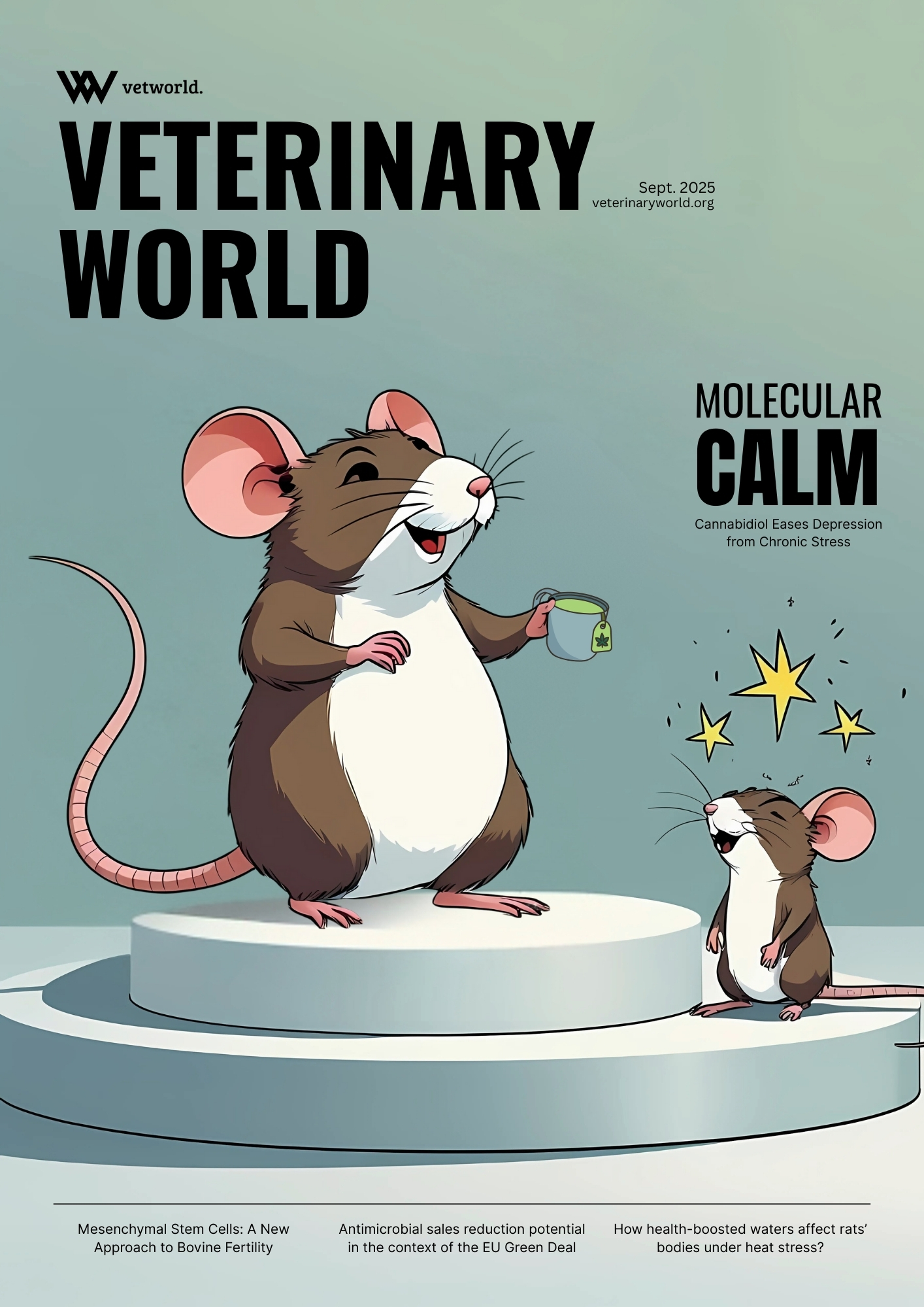


ABSTRACT
Background and Aim: Major depressive disorder is a prevalent psychiatric condition associated with impaired neuroplasticity, particularly in the hippocampus. Although selective serotonin reuptake inhibitors (SSRIs) are commonly prescribed, their delayed onset and adverse effects highlight the need for alternative therapies. Cannabidiol (CBD), a non-psychotomimetic cannabinoid, has shown antidepressant-like properties, but its mechanistic link to hippocampal synaptic plasticity remains unclear. This study aimed to evaluate the effects of CBD on depression-like behaviors and hippocampal neuroplasticity in rats subjected to chronic restraint stress (CRS).
Materials and Methods: Sixty male Wistar rats were randomly divided into six groups: Non-stressed vehicle (NV), CRS vehicle (SV), escitalopram-treated CRS (SE, 10 mg/kg), and CBD-treated CRS at 10, 30, or 100 mg/kg (SC10, SC30, and SC100). Rats were subjected to CRS for 28 days and treated daily through intraperitoneal injection. Depression-like behaviors were assessed using the forced swim test (FST) and sucrose preference test (SPT). Locomotor activity was evaluated through the open-field test (OFT). Hippocampal dendritic spine density (Golgi–Cox staining) and long-term potentiation (LTP, electrophysiology) were measured on day 28.
Results: CRS induced behavioral despair (↑ immobility in FST) and anhedonia (↓ sucrose preference in SPT), accompanied by reduced hippocampal spine density. At all doses, CBD significantly reduced immobility, comparable to escitalopram. Notably, only CBD at 100 mg/kg and escitalopram reversed anhedonia. All CBD-treated groups showed an increase in dendritic spine density, with SC10 producing the greatest enhancement. Moreover, CBD at 100 mg/kg markedly improved hippocampal LTP at 1 h and 2 h post-stimulation, an effect not observed with escitalopram. Locomotor activity remained unaffected.
Conclusion: CBD demonstrated potent antidepressant-like effects in a CRS rat model, alleviating behavioral despair and anhedonia while enhancing hippocampal dendritic spine density and synaptic strength. These findings suggest CBD as a promising candidate for stress-related mood disorders, with mechanistic actions distinct from conventional SSRIs and potential utility in patients unresponsive to current therapies.
Keywords: cannabidiol, chronic stress, depression, hippocampus, long-term potentiation, synaptic plasticity.