

ABSTRACT
Background and Aim: Ectoparasites are a major constraint to cattle productivity, welfare, and health under pasture conditions. Conventional chemical control methods are increasingly limited by the development of resistance, environmental contamination, and residue accumulation in animal products. Plant-derived insecticidal formulations combined with precision livestock technologies represent a promising alternative. This study aimed to evaluate the field effectiveness and safety of a
Materials and Methods: A total of 145 clinically healthy cattle maintained under uniform pasture conditions were included in a prospective field trial. The biopreparation contained
Results: Laboratory assays demonstrated significant concentration-dependent insecticidal activity, with mortality reaching approximately 86.0%–87.7% across the tested ectoparasites at higher concentrations, comparable to that of a synthetic reference insecticide. Under field conditions, complete suppression of detectable ectoparasite infestation was observed at days 7 and 14 following completion of the cumulative dose. Partial re-infestation occurred by day 21, with efficacy ranging from 66.7% to 88.6% depending on parasite species. Seasonal dynamics indicated high baseline infestation levels, particularly for
Conclusion: Automated cumulative application of an
Keywords: automated spraying system, cattle, ectoparasites, digital livestock management, hematological safety, insecticidal biopreparation,
INTRODUCTION
Organic farming in the Republic of Kazakhstan has been actively developing since the early 2000s and is regulated by the Law “On Organic Production” (2015). Its objectives include improving food quality, conserving natural resources, and promoting environmentally sustainable livestock production. Within this framework, effective prevention of parasitic diseases, particularly ectoparasite infestations under pasture conditions, remains essential for maintaining animal health and productivity [1–3].
Ectoparasites represent a major veterinary and economic challenge in cattle production systems worldwide. More than 100 insect species interact with livestock in grazing environments, causing irritation, reduced productivity, impaired physiological condition, and economic losses [4]. Despite the high level of development of veterinary medicine, the problem of arachnoentomoses persists even in economically developed countries, including the United States, European Union countries, and East Asian countries, creating year-round invasive pressure [5]. Infestation can reduce live weight gain in young cattle by up to 40% and decrease milk fat content by 25–50% [6]. In addition to direct damage, blood-feeding insects act as vectors of infectious diseases and contribute to the spread of parasitic infections [7–10]. In several regions, including Northern Kazakhstan, horsefly-associated diseases, such as hypodermosis, are widespread, with high prevalence and significant epizootiological risk [11].
Control strategies primarily rely on synthetic insecticidal and acaricidal compounds; however, prolonged use of pyrethroids and macrocyclic lactones has resulted in increasing parasite resistance, environmental contamination, and residue accumulation in animal products [12–14]. These limitations are particularly critical in organic livestock production systems, where the use of chemical treatments is restricted. Consequently, plant-based insecticides and essential oils have gained attention as potential alternatives. Essential oils possess lipophilic properties, penetrate insect cuticles, and affect arthropod nervous systems, including inhibition of acetylcholinesterase [15, 16]. Among these,
In parallel, digital technologies and smart livestock systems are increasingly applied to automate animal management and improve monitoring of production processes [23–26]. Automated spraying systems enable stress-free treatment of animals and allow controlled delivery of veterinary preparations under field conditions. Despite these advancements, studies integrating plant-based insecticidal formulations with automated application systems for ectoparasite control in grazing cattle remain limited.
Although the insecticidal and repellent properties of
Therefore, the aim of the present study was to evaluate the effectiveness and safety of controlling cattle ectoparasites using a biological preparation containing
MATERIALS AND METHODS
Ethical approval
All experimental procedures involving animals were conducted in accordance with high standards of biosafety and animal welfare. Experimental protocols complied with the Ethical Guidelines for the Use of Animals in Research (2019), approved by the National Committee for Ethics in Scientific Research in Science and Technology [27]. Animal keeping and use were approved by the Bioethics Committee of the Institute of Animal Science and Veterinary of the Saken Seifullin Kazakh Agrotechnical University (Astana, Kazakhstan; protocol No. 1, February 23, 2023). All procedures were performed under field conditions using low-stress handling and voluntary passage through the automated system to minimize animal discomfort. No animals were intentionally left untreated under peak ectoparasite pressure because withholding treatment was considered potentially detrimental to animal welfare.
Study period and location
The study was conducted between May 2023 and October 2024 during two grazing seasons. Field investigations were carried out on the pastures of the North Kazakhstan Agricultural Experimental Station LLP (North Kazakhstan region, Akkaiyn district, Shagalaly village). Laboratory analyses were performed at the Institute of Animal Science and Veterinary of the Saken Seifullin Kazakh Agrotechnical University, Astana, Kazakhstan.
Study design
A total of 145 clinically healthy cattle were included in the study. All animals were maintained under identical pasture conditions and individually identified using radio-frequency identification (RFID) ear tags integrated into the automated treatment system. The body weight of cattle included in the study ranged from 410 to 530 kg. Animals were adult individuals of comparable physiological status and were maintained under uniform pasture conditions. The study was designed as a single-group prospective field trial without a separate untreated control group. The study was conducted without an untreated parallel control group due to animal welfare considerations under high ectoparasite pressure during the grazing season. Leaving a subgroup untreated under peak infestation conditions was considered potentially detrimental to animal welfare. Laboratory bioassays were conducted prior to field application to determine effective concentrations. Post-treatment insect counts were performed on days 7, 14, and 21 under comparable environmental conditions. Each animal served as its own control for comparison of pre- and post-treatment infestation levels. The sample size (n = 145) corresponded to the total herd size and was considered sufficient to detect statistically significant differences at p < 0.05.
N. cataria biopreparation
The biological insecticidal preparation used in the study was produced in an accredited laboratory in collaboration with the “Zhalyn” Scientific and Production Technology Center (Almaty, Kazakhstan; accreditation certificate KZAF8C69D99A9FF2C9, November 8, 2022). The formulation is protected by the U. S. patent “Biopreparation against ectoparasites of cattle and method of application thereof” [28]. The product was developed from a liquid-phase plant formulation obtained by pyrolyzing rice husk biomass and adding
Laboratory evaluation of insecticidal efficacy
The insecticidal activity of the
Adult flies (
Mortality (%) = (Nd/Nt) × 100
where Nd is the number of dead insects and Nt is the total number of insects in each replicate. If mortality in the control group exceeded 5%, corrected mortality was calculated using Abbott’s formula. The mean corrected mortality was used as the indicator of insecticidal activity for statistical analysis.
Automated insecticide application system
Insecticide application was performed using an automated skin-treatment system integrated with a stress-free animal-weighing platform (Patent of the Republic of Kazakhstan No. 8658) [29]. The system was installed in the watering area and enabled identification, weighing, and insecticide application during a single voluntary passage of the animal. The system consisted of mechanical, hydraulic, electrical, and software subsystems. Spray nozzles were mounted on a galvanized steel arch structure positioned above the weighing platform at a height of 1,730 mm above ground level and at distances of 30, 65, and 105 cm from the watering trough frame to ensure overlapping spray patterns and uniform body-surface coverage. The hydraulic subsystem included a working solution tank, pump (nominal capacity 18 L/min), distribution pipeline, solenoid valves (12 V), and stainless-steel fine-spray nozzles with an outlet diameter of 0.6 mm. Operating pressure was maintained at 5.0 ± 0.2 kg/cm². Each nozzle provided a discharge rate of 200–260 cm³/min with a spray angle of approximately 70°. Animal identification was performed using UHF RFID ear tags. The control algorithm verified treatment intervals and cumulative dose prior to valve activation. The delivered volume was calculated according to preset dosing parameters and the duration of the animal’s stay in the treatment zone. All spray events were automatically recorded in a centralized database.
System calibration and verification
Prior to biological efficacy trials, the system was tested under field conditions to verify pressure stability, nozzle discharge rate, and dosing accuracy. The delivered volume per activation cycle was measured and compared with programmed values. RFID accuracy and valve response were also evaluated. The system demonstrated stable pressure maintenance and reproducible spray performance before initiation of efficacy assessments.
Insecticidal treatment protocol
A 5% aqueous working solution was prepared by diluting 0.5 L of the concentrated formulation in 10 L of water. This dilution was selected based on laboratory concentration–response results demonstrating substantial insecticidal activity of the formulation, while also considering field-application feasibility, cumulative dosing requirements, and the avoidance of excessive exposure under pasture conditions. The solution was applied using the automated spraying system described above. During a single passage through the treatment zone (average duration 60 ± 10 s), approximately 150–200 mL of working solution was sprayed onto the animal’s body surface. The target cumulative dose was set at 500 ± 100 mL per animal. The automated system recorded each spray activation and accumulated the applied volume over repeated voluntary passages until the predetermined total dose was reached. The target cumulative dose (500 ± 100 mL per animal) was achieved within 2–3 days by repeatedly passing animals through the automated spraying system. The system recorded each activation and accumulated the applied volume until the programmed cumulative dose was reached. No additional treatments were administered after the target dose had been achieved. Day 0 was defined as the day when the programmed cumulative dose was completed for each animal. An alternative mode with increased consumption of working solution was tested; however, it did not improve insecticidal efficacy, confirming the adequacy of the selected dosage and application protocol under pasture conditions.
Collection of insects
The collection of midges and zoophilic flies, as well as entomological observations, was carried out according to the method described by Gibb et al. [30]. The location and number of insects on the animals’ bodies were documented. Each observation session lasted 10 min per animal. An Olympus CX 23 microscope (Olympus, Tokyo, Japan) and an insect identification key were used to determine insect species. Zoo-parasitological indices were applied to assess the epizootic status of ectoparasite infestation in cattle [1, 23]. To ensure the reliability of AI measurements, insect counts were conducted under standardized field conditions. Each animal was individually restrained in a handling chute during counting to prevent movement and minimize insect transfer between animals. For winged and mobile insects, visual counts were performed systematically by examining predefined anatomical zones (head, neck, back, flanks, abdomen, and limbs) in a fixed sequence to avoid duplication. Observers were trained and the same personnel conducted repeated counts throughout the study to reduce inter-observer variability. To minimize double-counting or undercounting, only insects visibly attached to or actively feeding on the animal at the time of observation were recorded. Insects flying transiently around the animal without landing were not included. The short, standardized observation period (10 min) reduced the likelihood of repeated migration between animals. When group-grazing conditions made immediate counting difficult, animals were sequentially separated for individual assessment. OI was defined as the percentage of animals infested with ectoparasites relative to the total number of examined animals.
OI = (Np/n) × 100
where Np is the number of infested animals and n is the total number of animals examined. AI was calculated as the average number of parasites per animal:
AI = Par/n
where Par is the total number of parasites detected.
OI was expressed as a percentage, characterizing the proportion of infested animals in the population, whereas AI reflected the overall parasite burden per animal and was expressed as the mean number of parasites per animal, in accordance with generally accepted parasitological assessment methods. Treatment efficacy in the field trial was assessed based on changes in AI relative to day 0. Efficacy (%) was calculated as the percentage reduction in AI compared with the pre-treatment value using the following formula:
Efficacy (%) = [1 − (AIt/AI0] × 100
where AI0 is AI before treatment on day 0, and AIt is AI at days 7, 14, or 21.
For flying hematophagous insects, this endpoint reflects the reduction in the number of insects observed on animals during standardized counts and may represent a combined outcome of insecticidal and repellent effects under field conditions. Blood-feeding success (fed vs. unfed insects) was not specifically assessed; therefore, repellency was not calculated according to standard laboratory repellent evaluation protocols. The chosen field endpoint, AI reduction, is consistent with commonly applied parasitological assessment approaches in pasture-based studies.
Monitoring schedule and environmental standardization
Entomological monitoring was conducted regularly throughout the grazing period from May to October. Seasonal observations were classified as spring (May–June), summer (July–August), and autumn (September–October). To minimize environmental variability, all counts were performed under comparable meteorological conditions: air temperature 20–28°C, wind speed below 5 m/s, and absence of precipitation. Observations were avoided during heavy rain, strong wind, or abrupt temperature fluctuations.
Counts were conducted during peak insect activity periods (08:00–11:00 and 17:00–20:00). When environmental conditions differed substantially, observations were postponed to ensure data comparability.
Assessment of animal safety and physiological condition
Physiological parameters, including body temperature, respiratory rate, and pulse rate, and blood samples were collected before treatment and on day 7 after insecticidal application to assess short-term safety. Blood samples were collected from the jugular vein in the morning before feeding. Analyses were performed using Hemax 330 Vet (B&E Bio-technology Co., Ltd., Beijing, China) and BioChem FC 200 (High Technology, Inc., Walpole, MA, USA) automatic analyzers according to standard methods. Blood parameters were evaluated as indicators of systemic physiological response to treatment.
Statistical analysis
Statistical analysis was performed using IBM SPSS Statistics version 26.0 (IBM Corp., Armonk, NY, USA). Normality of data distribution was assessed using the Shapiro–Wilk test. Differences between baseline and post-treatment values on days 7, 14, and 21 were evaluated using paired t-tests. For repeated comparisons across all time points, repeated-measures one-way analysis of variance (ANOVA) was applied. Results are presented as mean ± SEM. Differences were considered statistically significant at p < 0.05.
RESULTS
Study of the effectiveness of the
The laboratory evaluation demonstrated a statistically significant concentration-dependent increase in mortality against all tested ectoparasite groups (Table 1).
Table 1. Laboratory insecticidal efficacy of the
| No. | Concentration (v/v, %) | Flies ( | Horseflies ( | Ticks ( |
|---|---|---|---|---|
| 1 | 0.02 | 80 ± 4 | 70 ± 4 | 60 ± 3 |
| 2 | 0.05 | 80 ± 2 | 80 ± 4 | 70 ± 3 |
| 3 | 0.10 | 95 ± 3 | 85 ± 2 | 90 ± 2 |
| 4 | 0.20 | 100 ± 2 | 100 ± 2 | 100 ± 2 |
| 5 | 0.40 | 100 ± 2 | 100 ± 2 | 100 ± 2 |
| – | Reference insecticide, Cyflunite, 0.2 mg/mL | 95 ± 5 | 98.5 ± 4 | 85 ± 4 |
SEM = Standard error of the mean, n = 60 insects per concentration per species. Mortality was assessed 24 h after exposure.
In
Seasonal dynamics of cattle ectoparasites
As summarized in Table 2, the seasonal dynamics of cattle ectoparasites during the grazing period showed marked differences in both AI and OI among parasite groups.
Table 2. Species composition and seasonal distribution of cattle ectoparasites during the pasture period.
| Parasite species | Spring (May) AI, mean ± SEM | Spring (May) OI (%) | Summer (July) AI, mean ± SEM | Summer (July) OI (%) | Autumn (September) AI, mean ± SEM | Autumn (September) OI (%) |
|---|---|---|---|---|---|---|
| Grazing flies ( | 35 ± 0.5 | 100 | 66.4 ± 1.2 | 100 | 78 ± 1.5 | 100 |
| Blood-sucking mosquitoes ( | 8.5 ± 1.5 | 100 | 10.5 ± 1.3 | 100 | 13.6 ± 2.3 | 100 |
| Midges ( | 43 ± 1.1 | 100 | 46 ± 0.5 | 100 | 39 ± 2.4 | 100 |
| Horseflies ( | 0 | 0 | 12.5 ± 0.5 | 33.3 | 15.5 ± 3.3 | 28 |
| Lice ( | 15.6 ± 1.5 | 50.5 | 11.4 ± 2.1 | 40.6 | 10.5 ± 2.5 | 53.6 |
AI = Abundance Index, OI = Occurrence Index, SEM = Standard error of the mean.
ANOVA confirmed statistically significant seasonal differences in parasite abundance, particularly for
Automated skin treatment system
Insecticidal treatment was carried out using an automated skin treatment system integrated with a stress-free weighing platform (Patent of the Republic of Kazakhstan No. 8658). The system consisted of a passage structure equipped with controlled spray nozzles and an integrated weighing platform, enabling voluntary animal passage and automated monitoring of cumulative doses under pasture conditions. Field validation demonstrated that the herd was fully treated within 2–3 days. The target cumulative dose was 500 ± 100 mL per animal and was automatically reached during repeated voluntary passages through the treatment zone. No additional applications were performed after the programmed cumulative dose had been completed. Field efficacy of the
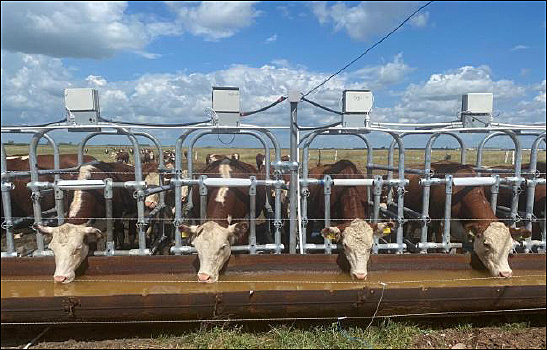
Figure 1. Automated insecticide application during voluntary passage of cattle through the watering area.
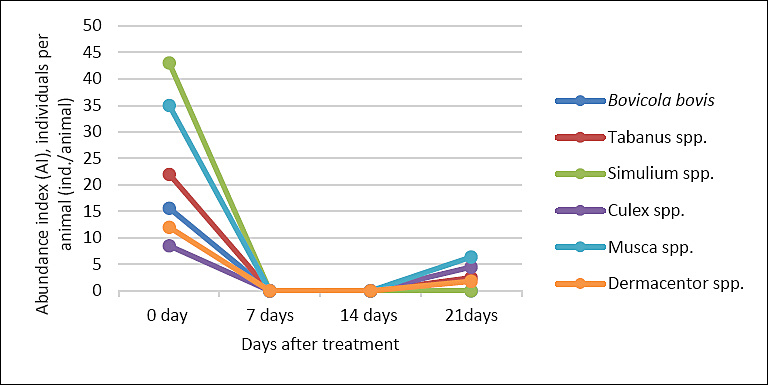
Figure 2. Dynamics of abundance index after treatment with an insecticidal biological product containing essential oil of
Figure 2 illustrates changes in AI following treatment with the
At 7 and 14 days after treatment, AI values for all parasite species decreased to 0, indicating the absence of detectable ectoparasite infestation during this period. By day 21, partial re-infestation was observed. AI values increased to 6.4 ind./animal for
These findings indicate a pronounced short-term field effect lasting approximately two weeks, followed by gradual reappearance of ectoparasites under pasture conditions.
Figure 3 presents changes in OI after treatment. Prior to application, infestation prevalence varied among species, reaching 100% for
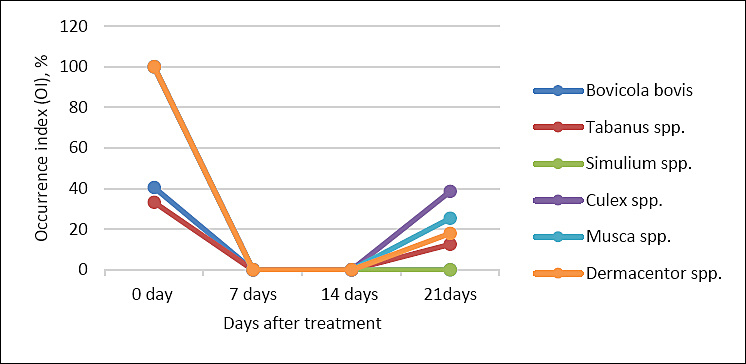
Figure 3. Dynamics of occurrence index after treatment with an insecticidal biological product containing essential oil of
At 7- and 14-days post-treatment, OI decreased to 0% for all recorded ectoparasites, confirming absence of detectable infestation in the treated herd during this period. By day 21, OI values increased again, indicating renewed exposure and partial re-infestation under pasture conditions. The highest prevalence was recorded for
Treatment efficacy, expressed as percent reduction in AI relative to baseline, indicated complete suppression of detectable infestation at days 7 and 14 (Figure 2). At day 21, efficacy values remained high but decreased due to partial re-infestation, ranging from 66.7% to 88.6% depending on parasite species.
Physiological, hematological, and biochemical indicators
The safety of the biological product was evaluated based on physiological, hematological, and biochemical parameters measured before treatment and 7 days after application. Physiological indicators are presented in Table 3.
Table 3. Physiological indicators of cattle before and after treatment.
| Indicator | Temperature (°C), mean ± SEM | Heart rate (beats/min), mean ± SEM | Respiratory rate (breaths/min), mean ± SEM |
|---|---|---|---|
| Before treatment | 37.92 ± 0.16 | 66 ± 0.63 | 18 ± 0.15 |
| 7 days after treatment | 38.05 ± 0.06 | 60 ± 0.28 | 19 ± 0.05 |
| Reference values | 37.5–39.0 | 50–80 | 15–30 |
SEM = Standard error of the mean, n = 145 animals. Reference ranges correspond to physiological norms for adult cattle.
Body temperature did not differ significantly between observation points (ANOVA: F = 0.61, p = 0.44). Respiratory rate also showed no significant changes (F = 2.31, p = 0.15). Heart rate decreased from 66 ± 0.63 to 60 ± 0.28 beats per minute. The difference was statistically significant (ANOVA: F = 5.34, p = 0.04, t-test: p = 0.04). All physiological parameters remained within reference ranges. Hematological results are presented in Table 4.
Table 4. Hematological parameters before and after treatment.
| Parameter | Reference range | Before treatment, mean ± SEM | 7 days after treatment, mean ± SEM |
|---|---|---|---|
| Hemoglobin (g/L) | 90–139 | 104.3 ± 0.91 | 107.8 ± 0.22 |
| Erythrocytes (×10¹²/L) | 5–10 | 6.47 ± 0.28 | 7.25 ± 0.026 |
| Leukocytes (×10⁹/L) | 5–16 | 11.92 ± 0.14 | 11.81 ± 0.03 |
| Lymphocytes (%) | 20–60 | 36.0 ± 0.23 | 39.6 ± 0.12 |
| Monocytes (%) | 4–12 | 4.3 ± 0.03 | 4.12 ± 0.06 |
| Granulocytes (%) | 30–65 | 60.0 ± 0.08 | 59.2 ± 0.027 |
| Thrombocytes (×10⁹/L) | 120–820 | 441.25 ± 0.39 | 459.6 ± 0.62 |
SEM = Standard error of the mean, n = 145 animals. Reference ranges correspond to physiological norms for adult cattle.
Hemoglobin concentration increased from 104.3 ± 0.91 g/L to 107.8 ± 0.22 g/L (t = 3.45, p = 0.018, ANOVA: F = 3.89, p = 0.04). Erythrocyte count increased from 6.47 ± 0.28 × 10¹²/L to 7.25 ± 0.026 × 10¹²/L (t = 2.78, p = 0.032, ANOVA: F = 4.12, p = 0.038). Lymphocytes increased from 36.0 ± 0.23% to 39.6 ± 0.12% (t = 4.02, p = 0.014, ANOVA: F = 5.21, p = 0.028). Platelet count increased from 441.25 ± 0.39 × 10⁹/L to 459.6 ± 0.62 × 10⁹/L (t = 3.12, p = 0.025, ANOVA: F = 3.66, p = 0.046). Leukocytes, monocytes, and granulocytes did not show statistically significant changes (p > 0.05). All values remained within reference ranges. Biochemical parameters are presented in Table 5.
Table 5. Biochemical blood parameters before and after treatment.
| Parameter | Reference range | Before treatment, mean ± SEM | 7 days after treatment, mean ± SEM |
|---|---|---|---|
| Total protein (g/L) | 77–120 | 115.0 ± 0.43 | 118.3 ± 0.19 |
| Albumin (g/L) | 31.6–47.2 | 38.56 ± 0.03 | 37.8 ± 0.046 |
| Glucose (mmol/L) | 2.3–3.8 | 2.35 ± 0.013 | 2.4 ± 0.02 |
| Blood urea nitrogen (mmol/L) | 2.5–6.9 | 4.8 ± 0.09 | 4.65 ± 0.011 |
| Calcium (mmol/L) | 2.5–3.38 | 2.65 ± 0.12 | 2.8 ± 0.05 |
| Phosphorus (mmol/L) | 1.3–2.0 | 1.63 ± 0.37 | 1.58 ± 0.014 |
| Cholesterol (mmol/L) | 1.3–4.4 | 3.42 ± 0.19 | 2.93 ± 0.06 |
| Creatinine (μmol/L) | 55.8–160 | 102.3 ± 0.42 | 113.0 ± 0.36 |
| Alkaline phosphatase (IU/L) | ≤164 | 69.4 ± 0.63 | 71.1 ± 0.05 |
SEM = Standard error of the mean, n = 145 animals. Reference ranges correspond to physiological norms for adult cattle.
Total protein increased from 115.0 ± 0.43 to 118.3 ± 0.19 g/L (p = 0.028, ANOVA p = 0.041). Calcium increased from 2.65 ± 0.12 to 2.80 ± 0.05 mmol/L (p = 0.039). Cholesterol decreased from 3.42 ± 0.19 to 2.93 ± 0.06 mmol/L (p < 0.05). Triglycerides increased from 0.17 to 0.20 mmol/L (p = 0.022). Creatinine increased from 102.3 ± 0.42 to 113.0 ± 0.36 μmol/L (p = 0.014). Albumin, glucose, urea, phosphorus, and alkaline phosphatase did not change significantly (p > 0.05). All biochemical parameters remained within physiological reference ranges.
Use of the automated spraying system
During the summer grazing period, animals were treated using the automated spraying system, and cumulative product consumption was monitored electronically. The system recorded spray activations and automatically accumulated the applied volume for each animal. Animals reached the programmed cumulative dose (500 ± 100 mL per animal) within several days through repeated voluntary passages. The average daily amount of product applied per animal varied due to differences in watering behavior and system activation frequency. Despite variability in daily exposure, efficacy assessment was conducted relative to the completion of the programmed cumulative dose (day 0), ensuring comparability of post-treatment evaluations across animals. Most animals received the intended cumulative dose within the programmed range.
DISCUSSION
Performance of the automated cumulative dosing system
The results demonstrate that the Smart automated spraying system enables controlled and individualized delivery of the insecticidal biological product, allowing animals to reach the programmed cumulative dose through voluntary passage within several days. This approach differs fundamentally from conventional single-application treatments, as it incorporates behavioral patterns of animals under pasture conditions and enables gradual accumulation of the active formulation without inducing handling stress. Although up to 150–200 mL of working solution could be delivered during a single passage through the spraying zone, the average daily consumption was lower due to variability in voluntary system activation [23–26]. Importantly, testing an alternative regimen with increased product consumption did not improve efficacy, indicating that the selected cumulative dose of approximately 500 mL per animal was sufficient under the field conditions studied.
Variability in system activation frequency was observed among animals due to differences in watering behavior. Nevertheless, the automated system was programmed to deliver a standardized cumulative dose of 500 ± 100 mL per animal, and efficacy assessment was conducted relative to completion of this cumulative exposure on day 0. Therefore, differences in daily activation frequency did not influence the final administered dose at the time of efficacy evaluation. However, environmental factors such as rainfall, solar radiation, and animal movement may influence the persistence of the formulation on the body surface, posing inherent challenges for pasture-based ectoparasite control strategies. Although the applied dose was not adjusted according to individual body weight, animals were within a relatively narrow weight range of 410–530 kg, which likely minimized variability in product distribution relative to body surface area.
Differences between laboratory and field efficacy endpoints
The apparent discrepancy between laboratory mortality rates and field efficacy reflects differences in experimental endpoints. Laboratory bioassays measured direct-contact mortality under controlled exposure conditions, whereas field efficacy was assessed by suppression of ectoparasite infestation indices, including AI and OI. Under natural grazing conditions, the reduction in AI likely reflects a combination of direct insecticidal effects and behavioral avoidance of treated animals by ectoparasites. Consequently, direct quantitative comparison between laboratory mortality and field AI reduction is not methodologically equivalent. Digital smart livestock technologies are increasingly applied in modern animal husbandry to monitor animal health, productivity, and welfare [23–25]. However, their use for automated ectoparasite control remains insufficiently investigated. The present study demonstrates the feasibility of integrating automated cumulative dosing systems with plant-derived insecticidal formulations under practical pasture conditions.
Biological activity of the N. cataria –based formulation
The biological activity observed for the
Practical relevance for sustainable ectoparasite management
Compared with conventional synthetic insecticides, plant-based formulations may offer several potential advantages. Although pyrethroids and macrocyclic lactones often provide high initial efficacy, their repeated use has been associated with the development of resistance in ectoparasite populations [6, 31]. Essential oils, characterized by multicomponent composition and multiple molecular targets, may reduce selective pressure for resistance development. In addition, plant-derived compounds generally exhibit lower environmental persistence due to volatility and photodegradation [32, 33], which may reduce long-term environmental accumulation. At the same time, potential environmental interactions must be considered. Essential oils and phenolic compounds may affect non-target arthropods present in pasture ecosystems. Therefore, further studies are necessary to evaluate possible short-term impacts on beneficial insects and dung-associated fauna under field conditions. Scalability of the proposed approach across different climatic conditions also requires consideration, as the activity of essential oils may vary with temperature, humidity, and parasite species composition [34]. In the present study, suppression of infestation indices persisted for approximately 14 days before the gradual reappearance of ectoparasites under continued grazing exposure. These results indicate the practical applicability of
Novelty and technological–biological integration
To our knowledge, this study represents the first field-based integration of a
Limitations and future research
The absence of an untreated field control group limits direct causal attribution of the observed efficacy exclusively to the tested formulation. Nevertheless, the complete suppression of detectable infestation (AI = 0) across all recorded parasite species during peak seasonal activity suggests that the observed effect was unlikely to be explained solely by natural seasonal fluctuations. Future randomized controlled trials including untreated and formulation-only control groups will be necessary to confirm these findings. Additional limitations should also be considered. Direct assessment of blood-feeding inhibition was not performed, which limits differentiation between insecticidal and repellent effects. The post-treatment observation period was relatively short and therefore does not allow conclusions regarding long-term persistence of the formulation. Furthermore, the trial was conducted in a single geographic region and during a single grazing season, which may limit the generalizability of the results. Environmental variables such as temperature, humidity, rainfall, and natural fluctuations in ectoparasite populations may also have influenced the observed outcomes despite efforts to standardize observation conditions.
CONCLUSION
The present study demonstrated that an automated cumulative dosing system delivering an
From a practical perspective, integrating plant-based insecticidal formulations with automated spraying technology offers a stress-free, labor-efficient, and precise approach to ectoparasite control in grazing livestock. The system enables individualized and cumulative dosing through voluntary animal movement, reducing handling stress and ensuring uniform treatment coverage. This approach is particularly relevant for organic and low-input livestock production systems, where the use of synthetic chemicals is restricted and environmentally sustainable alternatives are required.
A key strength of this study lies in the successful field-level integration of a plant-derived biopreparation with a precision livestock delivery system, representing a novel technological–biological strategy. The use of cumulative dosing under real pasture conditions, combined with comprehensive evaluation of efficacy and safety, enhances the translational value of the findings. Additionally, the formulation’s dual composition, incorporating both
However, the absence of an untreated control group, the relatively short observation period, and the lack of direct differentiation between insecticidal and repellent effects should be considered when interpreting the results. Future studies should include controlled experimental designs, extended monitoring periods, and mechanistic investigations to better understand formulation dynamics, long-term efficacy, and environmental interactions.
In conclusion, the automated application of an
DATA AVAILABILITY
The datasets generated during the current study are available upon reasonable request from the corresponding author.
AUTHORS’ CONTRIBUTIONS
GY: Data curation, formal analysis, methodology, resources, supervision, and writing – original draft. RU: Formal analysis, methodology, resources, project administration, supervision, and funding acquisition. SB: Project administration, resources, supervision, and funding acquisition. IT: Data curation, software, and visualization. AMu: Methodology and conceptualization. AMi: Methodology and conceptualization. FZ: Formal analysis, methodology, resources, visualization, and writing – review and editing. LL: Data curation, conceptualization, methodology, formal analysis, project administration, and writing – original draft. All authors have read and approved the final version of the manuscript.
COMPETING INTERESTS
The authors declare that they have no competing interests.
PUBLISHER’S NOTE
Veterinary World remains neutral with regard to jurisdictional claims in the published institutional affiliations.
ACKNOWLEDGMENTS
This research was financially supported by the Ministry of Science and Higher Education of the Republic of Kazakhstan as part of the scientific and technical program BR21882327 “Development of new technologies for organic production and processing of agricultural products”.
REFERENCES
- On production and turnover of organic products 2024. (Accessed 12 November 2024). No. 89-VIII LRK. [Available from] | [Google Scholar]
- Savin T, Morgounov A. Organic crop production in Kazakhstan: Agronomic solutions and bioresources. Resources 2025;14(7):108. [Google Scholar]
- Pumnuan J, Lakyat A, Klompanya A, Taemchuay D, Assavawongsanon A, Doungnapa T, Kramchote S. Parasiticidal properties of nanoemulsion-based plant essential oil formulations for controlling poultry ectoparasites in farm conditions. Insects 2024;15(11):829. [Google Scholar]
- Aubakirov MZh, Erenko EN, Shamgunov NA, Sapa VA, Shaimagambetova AA, Kaumenov NS. Species diversity and prevalence of zoophilic flies in Kostanay region (Northern Kazakhstan). Her Sci S Seifullin Kazakh Agrotechnical Res Univ Vet Sci 2024;1(005):44-49. [Google Scholar]
- Terrestrial animal health code. Chapter 1.1. Notification of diseases, infections and infestations. OIE 2018. (Accessed 19 January 2025). [Available from] | [Google Scholar]
- Lifschitz A, Nava S, Miró V, Canton C, Alvarez L, Lanusse C. Macrocyclic lactones and ectoparasites control in livestock: Efficacy, drug resistance and therapeutic challenges. Int J Parasitol Drugs Drug Resist 2024;26:100559. [Google Scholar]
- Pérez de León AA, Mitchell RD 3rd, Watson DW. Ectoparasites of cattle. Vet Clin North Am Food Anim Pract 2020;36(1):173-185. [Google Scholar]
- Kaminsky R, Mäser P. Global impact of parasitic infections and the importance of parasite control. Front Parasitol 2025;4:1546195. [Google Scholar]
- Beys-da-Silva WO, Rosa RL, Berger M, Coutinho-Rodrigues CJB, Vainstein MH, Schrank A, Bittencourt VREP, Santi L. Updating the application of
Metarhizium anisopliae to control cattle tickRhipicephalus microplus (Acari: Ixodidae). Exp Parasitol 2020;208:107812. [Google Scholar] - Eeva T, Andersson T, Berglund ÅM, Brommer JE, Hyvönen R, Klemola T, Laaksonen T, Loukola O, Morosinotto C, Rainio K, Sirkiä PM, Vesterinen EJ. Species and abundance of ectoparasitic flies (Diptera) in pied flycatcher nests in Fennoscandia. Parasit Vectors 2015;8:648. [Google Scholar]
- Bauer C, Kuibagarov M, Lider LA, Seitkamzina DM, Suranshiyev ZA. Bovine hypodermosis is highly prevalent in Kazakhstan: Results of a first serological study. Vet World 2023;16(6):1289-1292. [Google Scholar]
- Karmaliev RS, Sidihov BM, Usenov ZhT, Nurzhanova FH, Majkanov NS, Arisov MV, Sengaliev EM. Ixodids of cattle in the West Kazakhstan region, species composition and distribution. Sci Practic J Zhangir Khan West Kazakhstan Agrar Technic Univ 2024;3(76):41-54. [Google Scholar]
- Lifschitz A, Nava S, Miró V, Canton C, Alvarez L, Lanusse C. Ectoparasite control in livestock: Resistance to macrocyclic lactones and future challenges. Vet Parasitol 2023;315:109868. [Google Scholar]
- Waldman J, Klafke GM, Tirloni L, Logullo C, Vaz I. Putative target sites in synganglion for novel ixodid tick control strategies. Ticks Tick-borne Dis 2023;14(3):102123. [Google Scholar]
- Ellse L, Wall R. The use of essential oils in veterinary ectoparasite control: A review. Med Vet Entomol 2014;28(3):233-243. [Google Scholar]
- Stavropoulou LS, Efthimiou I, Giova L, Manoli C, Sinou PS, Zografidis A, Lamari FN, Vlastos D, Dailianis S, Antonopoulou M. Phytochemical profile and evaluation of the antioxidant, cyto-genotoxic, and antigenotoxic potential of
Salvia verticillata hydromethanolic extract. Plants 2024;13:731. [Google Scholar] - Giarratana F, Muscolino D, Ziino G, Lo Presti V, Rao R, Chiofalo V, Giuffrida A, Panebianco A. Activity of catmint (
Nepeta cataria ) essential oil againstAnisakis larvae. Trop Biomed 2017;34(1):22-31. [Google Scholar] - Paliy AYe, Paliy IN, Marko NV, Rabotyagov VD. Biologically active substances of
Nepeta cataria L. Bull SNBG 2016;118. [Google Scholar] - Aćimović M, Zeremski T, Kiprovski B, Brdar-Jokanović M, Popović V, Koren A, Sikora V.
Nepeta cataria : Cultivation, chemical composition, and biological activity. J Agron Technol Eng Manag 2021;4(4):620-634. [Google Scholar] - Doraysamy D, Mulyaningsih B, Ernaningsih E. Repellent activity of catnip extract (
Nepeta cataria L.) againstAedes aegypti mosquito as dengue vector. Trop Med J 2012;2(2):93-102. [Google Scholar] - Sharma A, Nayik GA, Canoo DS, Ozturk M, Hakeem K. Pharmacology and toxicology of
Nepeta cataria (catmint) species of genusNepeta . Cham: Springer; 2019. [Google Scholar] - Barrozo MM, Zeringóta V, Borges LMF, Moraes N, Benz K, Farr A, Zhu JJ. Repellent and acaricidal activity of coconut oil fatty acids and their derivative compounds and catnip oil against
Amblyomma sculptum . Vet Parasitol 2021;300:109591. [Google Scholar] - Bumbálek R, Zoubek T, Ufitikirezi JdDM, Umurungi SN, Stehlík R, Havelka Z, Kuneš R, Bartoš P. Implementation of machine vision methods for cattle detection and activity monitoring. Technologies 2025;13:116. [Google Scholar]
- El Bilali H, Bottalico F, Palmisano GO, Capone R, Brka M, Omanović-Mikličanin E, Karić L. Information and communication technologies for smart and sustainable agriculture. Cham: Springer; 2020. [Google Scholar]
- Uskenov R, Issabekova S, Mukhanbetkaliyeva A, Akibekov O, Zhagipar F. Digital technologies in dairy cattle breeding to improve the reproductive function of cows and heifers: A case study in Northern Kazakhstan. Vet World 2024;17(10):2385-2397. [Google Scholar]
- Antanaitis R, Džermeikaitė K, Šimkutė A, Girdauskaitė A, Ribelytė I, Anskienė L. Use of innovative tools for the detection of the impact of heat stress on reticulorumen parameters and cow walking activity levels. Animals 2023;13(11):1852. [Google Scholar]
- Ethical guidelines for the use of animals in research 2019. (Accessed 17 December 2024). [Available from] | [Google Scholar]
- Tursunovna GY, Lider LA, Uskenov RB, Bostanova SK, Mutushev AZ, Yernazarova AE, Mamytbekova GK. Biopreparation against ectoparasites of cattle and method of application thereof. U. S. Patent No. 12,484,586 B1 2024. [Google Scholar]
- Mirmanov AB, Alimbayev AS, Bayguanysh SB, Sharipov AS, Nabiyev NK, Suyeubayev MZh, Uskenov RB. Automatic stress-free weighing system. Utility model patent of RK No. 8658 2023. [Google Scholar]
- Gibb TJ, Oseto C. Insect collection and identification 2nd ed. Elsevier Science 2019. (Accessed 15 October 2024). [Available from] | [Google Scholar]
- Nkoko MM, Shivambu N, Shivambu TC, Nelufule T, Khumalo N, Seoraj-Pillai N, Nangammbi TC. Zoonotic ectoparasites infesting commensal invasive murid rodents. Vector Borne Zoonotic Dis 2025;25(8):481-490. [Google Scholar]
- Ayllón-Gutiérrez R, Díaz-Rubio L, Montaño-Soto M, Haro-Vázquez MP, Córdova-Guerrero I. Applications of plant essential oils in pest control and their encapsulation for controlled release: A review. Agriculture 2024;14(10):1766. [Google Scholar]
- Oyarce GA, Loyola P, Iubini-Aravena M, Romero Á, Rodríguez-Maciel JC, Becerra J, Silva-Aguayo G. Adulticidal and repellent activity of essential oils from three cultivated aromatic plants against
Musca domestica L. Insects 2025;16:542. [Google Scholar] - Isman MB. Botanical insecticides in the twenty-first century: Fulfilling their promise?. Annu Rev Entomol 2020;65:233-249. [Google Scholar]