

ABSTRACT
Agro-industrial byproducts, including distillers dried grains with solubles, sunflower seed meal, palm kernel cake, sweet orange peel meal, brewers’ dried grain, and various fruit and vegetable processing wastes, represent abundant, low-cost alternatives to conventional feed ingredients such as corn and soybean meal in broiler chicken diets. Their incorporation supports sustainability by reducing feed costs, alleviating food-feed competition, and promoting circular bioeconomy principles through waste valorization. However, the presence of complex non-starch polysaccharides, lignocellulosic structures, phytate, mannans, and other antinutritional factors often limits nutrient digestibility, impairs intestinal health, and compromises broiler growth performance when these byproducts are included at higher levels. Exogenous enzyme supplementation, particularly phytase, protease, xylanase, β-glucanase, β-mannanase, cellulase, and multi-enzyme complexes, has emerged as an effective strategy to overcome these limitations. Enzymes hydrolyze indigestible components, reduce digesta viscosity, improve nutrient availability (dry matter, crude protein, energy, and phosphorus), enhance intestinal morphology (increased villus height to crypt depth ratio), modulate gut microbiota toward beneficial populations such as Lactobacillus and Bifidobacterium, and mitigate inflammatory responses. These improvements enable substantially higher inclusion levels of byproducts, up to 50% substitution of conventional ingredients in some cases, without negative effects on body weight gain, feed conversion ratio, or overall performance. Reported performance gains include 1%–16% increases in weight gain, 2%–11% in feed intake, and 1%–26% reductions in feed conversion ratio, depending on byproduct type, enzyme combination, and inclusion level. Economically, enzyme supplementation often offsets its initial cost through better feed efficiency, resulting in lower production cost per kilogram of broiler meat (reductions of 7%–12% in several studies). Environmentally, the approach decreases reliance on high-carbon-footprint crops, reduces manure emissions, lowers greenhouse gas contributions from feed production, and supports waste minimization. Challenges remain, including variability in byproduct composition, enzyme specificity and stability, seasonal quality fluctuations, and occasional inconsistent results across trials. This review concludes that strategic enzyme supplementation offers a practical, science-based pathway to increase the sustainable and efficient utilization of agro-industrial byproducts in broiler production. Future efforts should focus on tailored multi-enzyme formulations, integration of omics technologies for precise matching of enzymes to specific byproducts, and large-scale commercial validation to facilitate wider industry adoption.
Keywords: agro-industrial byproducts, broiler chicken feed, broiler performance, enzyme supplementation, feed efficiency, non-starch polysaccharides, palm kernel cake, sustainable poultry production.
INTRODUCTION
Currently, the sustainability of broiler production is complicated by fluctuations in the availability and price of feed caused by climate change and geopolitical issues. Climate change intensifies the vulnerability of the broiler feed supply chain. Extreme weather adversely impacts crop production, affecting the availability of feed ingredients such as corn and soybean. This results in increased feed costs and ultimately undermines the economic viability of broiler production [1]. Wang et al. [2] showed that between 1998 and 2017, climate change-induced droughts in northeast China led to a 15.6 % reduction in corn production and a 20.4 % reduction in soybean production. Moreover, geopolitical tensions, such as international conflicts and economic sanctions, exacerbate vulnerabilities within the broiler feed supply chain, causing increased costs and delivery delays [3].
The use of agro-industrial byproducts as alternative feed ingredients for broilers has gained considerable interest due to their potential to enhance poultry production sustainability. Agro-industrial byproducts are materials remaining after the processing of crops and foods, and they have the potential to reduce feed costs and minimize the competition between food and feed resources [4, 5]. Agro-industrial byproducts, such as fruit juice industry leftovers, oilseed industrial byproducts, distillers’ grain byproducts, and byproducts from the vinification and olive oil industries, can be viable substitutes for conventional feedstuffs, such as corn and soybean meal [6, 7]. These byproducts are often rich in bioactive compounds, which can promote the health and well-being of broilers, offering both nutritional benefits and functional feed capabilities. Nevertheless, agro-industrial byproducts may cause nutritional variability and anti-nutritional factors in broiler chickens [6].
Enzyme supplementation is increasingly being recognized as a valuable strategy for optimizing broiler diets, especially when incorporating agro-industrial byproducts. The use of exogenous enzymes in broiler diets has become a common practice due to their ability to enhance nutrient digestibility and growth performance. Kwak et al. [8] demonstrated that enzyme supplementation can effectively allow distillers dried grains with solubles to serve as a cost-effective fiber source without compromising growth performance. Enzyme supplementation also allowed for an increase in sweet orange peel meal (OPM) up to 25 % in broiler diets without adversely affecting final body weight, weight gain, feed intake, and protein digestibility compared to 20 % sweet OPM without enzyme [9]. One study on the use of distillers dried grains with solubles in broiler diets highlighted that supplementation with enzymes improved the digestibility of dry matter, crude protein, and gross energy [8, 10]. Enzymes can enhance nutrient digestibility; however, the selection of specific enzymes and their concentrations is critical for optimizing the use of agro-industrial byproducts in broiler chicken diets.
Overall, the use of enzyme-supplemented agro-industrial byproducts is beneficial for optimizing growth performance, health, and economic efficiency while reducing waste and greenhouse gas emissions. Therefore, this practice promotes the sustainability of broiler production and the environment (Figure 1).
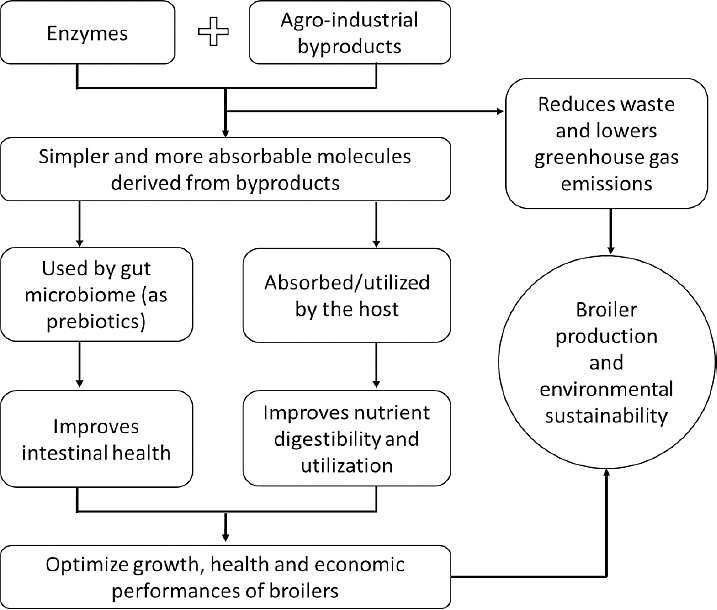
Figure 1. Schematic illustration of how enzyme supplementation promotes sustainability in broiler chicken production while delivering environmental benefits. The central role of enzymes enables higher utilization of agro-industrial byproducts, improves feed efficiency, reduces reliance on conventional high-impact feed ingredients, lowers greenhouse gas emissions and resource use, enhances animal health and performance, and supports circular bioeconomy principles through waste valorization [Source: The figure was prepared by the authors].
Although several studies on enzyme supplementation exist, no integrated review has critically assessed its sustainability, economic feasibility, and One Health implications on broiler chickens fed agro-industrial byproducts.
Therefore, this review elaborates the present state of knowledge about the use of enzymes to improve the nutritional value and use of agro-industrial byproducts in broiler diets. The mechanisms by which enzyme supplementation increases nutritional digestibility, intestinal health, and growth performance in broilers fed with diets containing these byproducts are discussed.
REVIEW METHODOLOGY
This narrative review was conducted to synthesize and critically evaluate the existing literature on the enzyme-assisted utilization of agro-industrial byproducts in broiler chicken diets, with a focus on nutritional enhancement, performance outcomes, gut health, economic implications, and sustainability aspects.
Literature was identified through comprehensive searches in major scientific databases, including PubMed, Scopus, Web of Science, Google Scholar, and relevant animal science-specific repositories (e.g., CAB Abstracts). The search was performed using combinations of the following keywords and phrases: “broiler” OR “broiler chicken” OR “poultry”, “enzyme” OR “exogenous enzyme” OR “phytase” OR “xylanase” OR “β-mannanase” OR “protease” OR “multi-enzyme”, “agro-industrial byproducts” OR “agricultural byproducts” OR “distillers dried grains with solubles” OR “DDGS” OR “palm kernel cake” OR “sunflower meal” OR “orange peel” OR “fruit waste” OR “brewers dried grain”, “feed” OR “diet” OR “nutrition” OR “performance” OR “digestibility” OR “sustainability”. No strict date restrictions were applied to capture foundational and recent developments, though emphasis was placed on publications from the last 20 years (approximately 2005–2025) to reflect current enzyme technologies and byproduct applications. Additional relevant studies were identified through manual screening of reference lists from key review articles, meta-analyses, and high-impact papers in poultry nutrition.
Inclusion criteria focused on peer-reviewed original research articles, reviews, and conference proceedings published in English that reported in vivo effects of exogenous enzyme supplementation in broiler diets containing agro-industrial byproducts. Studies were prioritized if they evaluated performance parameters (e.g., body weight gain, feed intake, feed conversion ratio), nutrient digestibility (e.g., dry matter, crude protein, energy, phosphorus), intestinal health (e.g., morphology, microbiota), carcass traits, economic outcomes, or environmental impacts. In vitro studies on enzyme activity or byproduct processing were included only when they directly supported in vivo findings or mechanisms. Exclusion criteria eliminated non-poultry studies, non-broiler species, studies without enzyme supplementation, purely theoretical papers, and non-peer-reviewed sources (e.g., industry reports, theses without published validation).
A total of over 100 relevant publications were screened, with approximately 80 key studies selected for detailed synthesis based on relevance, methodological quality, and contribution to the review objectives. Selection was not strictly systematic (as per PRISMA guidelines for systematic reviews) but followed a narrative approach to allow flexible integration of diverse evidence types, including experimental trials, mechanistic studies, and applied research. No formal meta-analysis was performed due to heterogeneity in byproduct types, enzyme formulations, inclusion levels, experimental designs, and outcome measures.
Data extraction focused on key elements: byproduct type and inclusion level, enzyme(s) used and dosage, experimental design (e.g., bird age, duration, replicates), main findings on performance, digestibility, health, and sustainability metrics, as well as reported limitations or challenges. Findings were organized thematically (e.g., by enzyme class, byproduct category, or outcome type) to facilitate critical discussion of mechanisms, benefits, constraints, and research gaps. All cited studies were evaluated for scientific rigor, including appropriate controls, statistical analysis, and reporting transparency, though no formal quality scoring tool was applied given the narrative nature of the review.
FEED AS A MAJOR FACTOR IN SUSTAINABLE BROILER PRODUCTION
Feed cost is a significant factor that affects the profitability and sustainability of the broiler industry. Feed costs account for the largest proportion of overall production costs, often reaching up to 70 % of total expenditure [11]. Hence, optimizing feed costs is critical for achieving economic sustainability in broiler production. In addition to feed costs, the availability and quality of feed greatly influence the sustainability of the broiler industry [12].
Currently, the availability of conventional feed ingredients, such as soybean meal and yellow corn, often fluctuates due to increasing global demand for these products, especially in developing countries. These conventional feed ingredients are also in high demand for other livestock species and human consumption, leading to increased competition and potential price volatility. Feed price fluctuations are closely related to factors such as climate change, geopolitical conflicts, and international trade dynamics [1, 3].
Studies have shown that climate change is causing more frequent and severe extreme weather events, leading to substantial fluctuations in crop yields (e.g., corn and soybean). Geopolitical conflicts can intensify this situation by disrupting supply chains and trade flows, resulting in sudden price fluctuations in global feed markets. Disruptions in global supply chains due to geopolitical events can lead to increased costs, delivery delays, and even production shutdowns [3]. This can result in shortages of essential feed ingredients and price volatility for the poultry industry. The shift in agricultural production priorities toward biofuel crops, driven by high oil prices and supportive agricultural policies, further complicates the situation [13].
Feed efficiency, which refers to how effectively broilers convert feed into body mass, plays a critical role in broiler industry feed cost management. In addition to improving rearing conditions, feed efficiency can be enhanced through dietary modifications, such as the addition of feed additives that improve nutrient absorption and utilization [12]. Broiler strains have been developed through genetic selection to achieve rapid growth and lower feed consumption per unit of meat produced. This approach represents a significant strategy for improving broiler chicken feed efficiency [14].
The broiler industry has shifted toward antibiotic-free production due to increasing concerns about antibiotic resistance. This shift necessitates the exploration of antibiotic alternatives that can improve growth performance, feed efficiency, and overall health [15]. Considering the increasingly expensive and volatile feed costs, the use of agro-industrial byproducts as alternative sources of protein and energy is becoming increasingly crucial for the sustainability of the broiler chicken industry.
DEFINITION AND TYPES OF AGRO-INDUSTRIAL BYPRODUCTS
Agro-industrial byproducts are secondary materials generated during agricultural and food processing activities, including fruit processing, crop cultivation, and other food manufacturing processes [16, 17]. These materials are frequently regarded as waste and, if not properly managed, can create environmental challenges. Agro-industrial byproducts are primarily composed of lignocellulosic materials, such as cellulose, hemicellulose, and lignin [18]. They are also rich in bioactive compounds, including phenolic compounds, organic acids, and carotenoids [19, 20], and contain valuable nutrients such as complex carbohydrates, proteins, lipids, vitamins, minerals, and dietary fibers [21].
Historically viewed as industrial waste, these byproducts are now increasingly recognized as valuable resources for various applications [22]. This change in perspective has stimulated interest in reincorporating them into production chains, either as feed ingredients or as sources of health-promoting bioactive compounds [16]. Their utilization supports the principles of a circular bioeconomy, delivering benefits to broiler producers and consumers while reducing waste and environmental impact [16, 19].
Agro-industrial byproducts encompass a wide range of materials from agricultural and food processing. Key categories include:
Fruit and vegetable processing wastes, such as grape pomace, which are rich in phenolic compounds and exhibit high antioxidant activity [23]. Residues from fruit processing industries can be reintroduced into the food chain as sources of bioactive compounds [16]. Lignocellulosic materials, common in many agro-industrial wastes, including wheat bran, soybean bran, and spent coffee grounds (SCA) [24]. These are typically high in cellulose, hemicellulose, and lignin [18, 25]. Wastes from winemaking and olive oil production, which contain substantial amounts of polyphenolic compounds [26] and generate large volumes of high-pollutant wastewater [27]. Calcium-rich wastes from biological sources (e.g., finger citron, shells of cockle, mussel, oyster, and eggshell) and inorganic sources (e.g., gypsum, dolomite, and sludge) [28]. Animal and fisheries refuse and byproducts [29].
Baldi and Merener [30] reported that approximately 57 % of global corn production and 70 % of global soybean production (in the form of meal) are used as livestock feed, particularly for poultry and pigs. Global corn production reaches 1,190 million metric tons, with nearly 684 million metric tons directed to livestock feed. Soybean production totals 363 million metric tons, of which 255 million metric tons serve as a protein source for livestock. With the growing global livestock population, demand for corn and soybean meal as energy and protein sources is projected to rise further, reaching an estimated 795 million metric tons for corn and 290 million metric tons for soybean meal by 2032 [30]. Diversifying alternative energy and protein sources is therefore essential to meet future livestock needs, particularly for broiler chickens. Specific global data on corn and soybean meal use in broiler production remain limited.
Worldwide, agricultural activities generate approximately 140 billion metric tons of biomass waste annually, offering substantial potential as an alternative feed resource [31]. Southeast Asia, with its major commodity crops (rice, palm oil, sugar cane, and corn), holds significant promise for byproduct valorization. Indonesia, the largest country in the region, produces an estimated 10.7 million tons of agro-industrial byproducts annually, including rice husks, cocoa pods, coconut shells, oil palm shells, and corncobs [32]. As a leading palm oil producer, Indonesia generates over 4.16 million tons of palm kernel cake each year [33], representing a major opportunity as an alternative energy source for farm animals.
Agro-industrial byproducts have both positive and negative environmental implications. Large-scale waste generation from food industries, especially fruit processing, imposes a considerable environmental burden [16]. Fruit processing waste contributes notably to greenhouse gas emissions (8%–10% of total annual global emissions) and has a significant water footprint [34]. At the same time, there is growing interest in reintroducing these byproducts into value chains as broiler feed ingredients or sources of bioactive compounds, thereby supporting a circular bioeconomy and waste reduction [16].
Interestingly, while agro-industrial byproducts can contribute to pollution and waste accumulation, they also present opportunities for sustainable innovation. For example, biosurfactants derived from agro-industrial waste are valued for their sustainability and environmental compatibility [35] and can be applied in bioremediation, food processing, and agriculture, aligning with waste minimization goals [35]. Similarly, lignocellulosic residues from soyhulls have been used to produce biodegradable films as an eco-friendly alternative to conventional plastic packaging, advancing circular economy principles [36].
In the broiler industry, incorporating agro-industrial byproducts into chicken diets represents a sustainable approach that simultaneously addresses environmental concerns and nutritional requirements. Given their nutritional composition, these byproducts serve as viable alternatives to conventional feed ingredients. This practice reduces food-feed competition, enhances environmental sustainability, and provides economic and social benefits by adding value to materials previously considered waste [14, 27, 28]. The environmental impact of agro-industrial byproducts is multifaceted: while they can contribute to pollution and waste issues, they also offer pathways for sustainable practices and innovative products.
USE OF AGRO-INDUSTRIAL BYPRODUCTS IN BROILER CHICKEN RATIONS
Agro-industrial byproducts have emerged as promising alternatives in broiler chicken diets, providing potential benefits for health, performance, sustainability, and cost-effectiveness. Numerous studies have demonstrated the successful inclusion of various byproducts in broiler rations. For example, supplementing broiler diets with up to 10 % extruded flaxseed meal can increase the omega-3 fatty acid content in meat, although higher inclusion levels may impair growth performance and oxidative stability [37]. Similarly, replacing two-thirds of the diet with milk thistle seeds in starter and grower phases improved body weight, feed conversion ratio (FCR), and the polyunsaturated fatty acid profile in breast and leg muscles [38]. These findings indicate that agro-industrial byproducts hold considerable promise for enhancing poultry production performance, meat quality, and overall sustainability. However, optimal inclusion levels and appropriate processing methods must be carefully determined to maximize advantages while minimizing any adverse effects [6].
Despite these opportunities, several constraints limit the widespread use of agro-industrial byproducts in broiler rations. The bioavailability and digestibility of nutrients are often low due to the presence of complex polymers and anti-nutritional factors [6]. Bioconversion techniques, such as solid-state fermentation (SSF), can degrade these compounds and improve nutrient availability [6], but scaling up such processes introduces additional complexity and cost, which may hinder practical adoption.
Another major limitation is the inconsistent composition and quality of agro-industrial byproducts. Variability in nutrient content, moisture, and anti-nutritional factors makes it difficult for producers to formulate nutritionally balanced rations that consistently meet the requirements of broilers [6, 7]. In some cases, certain components—such as raffinose-series oligosaccharides present in various plant-based byproducts—can exert negative effects on animal health and productivity [39]. This underscores the importance of careful selection, preprocessing, and quality control to ensure beneficial rather than detrimental outcomes.
Furthermore, technical and economic barriers exist, particularly when byproducts are intended as alternative protein sources to replace conventional ingredients like soybean meal [40]. The costs associated with collection, transportation, drying, processing, or detoxification of some byproducts can offset their apparent economic advantages, limiting their competitiveness in commercial feed formulations.
Taken together, agro-industrial byproducts offer significant potential to support sustainable broiler production by reducing reliance on conventional feedstuffs, lowering costs, and promoting circular economy principles. Nevertheless, their practical implementation is constrained by challenges related to nutrient bioavailability, compositional variability, processing requirements, and economic feasibility. Continued research is therefore essential to optimize bioconversion and pretreatment methods, standardize byproduct quality parameters, establish reliable inclusion guidelines, and comprehensively evaluate long-term impacts on broiler welfare, performance, product quality, and production economics.
ENZYMES AND THEIR APPLICATION IN BROILER CHICKEN PRODUCTION
Enzymes are specialized proteins that act as biological catalysts, accelerating chemical reactions in living organisms without being consumed in the process [41]. They are systematically classified by the Enzyme Commission (EC) number system into seven main classes based on the type of reaction catalyzed: (1) Oxidoreductases, which facilitate oxidation-reduction reactions involving electron transfer and play key roles in metabolic pathways and energy production. (2) Transferases, which transfer functional groups (e.g., methyl or phosphate groups) between molecules and are essential in metabolism and signal transduction. (3) Hydrolases, which catalyze the hydrolysis of chemical bonds and are critical for digestion, breaking large molecules (e.g., proteins) into smaller units such as amino acids. (4) Lyases, which add or remove groups to form or break double bonds without hydrolysis or oxidation, contributing to metabolic and biosynthetic pathways. (5) Isomerases, which rearrange atoms within a molecule to produce isomers and maintain biochemical diversity. (6) Ligases, which join two molecules with the hydrolysis of a high-energy bond (typically in ATP), supporting processes such as DNA replication and repair. (7) Translocases, which move ions or molecules across membranes or separate them within cellular compartments, maintaining ion gradients and organelle function [42].
This classification framework helps researchers understand enzyme mechanisms and tailor their applications in nutrition, biotechnology, and animal production.
In broiler chicken production, exogenous enzymes are widely used to enhance the nutritional value of feed, counteract anti-nutritional factors, and improve overall performance and health. The most commonly applied enzyme classes in poultry diets include: (1) Phytase, the most extensively used enzyme, which hydrolyzes phytic acid (phytate) in plant-based ingredients, thereby improving phosphorus availability, feed utilization, and reducing environmental phosphorus excretion [43]. (2) Protease, which degrades protein anti-nutrients and enhances protein digestibility, leading to better nutrient absorption and broiler performance [44]. (3) Non-starch polysaccharide (NSP)-hydrolyzing enzymes, such as xylanase and β-glucanase, which break down viscous fiber components, reduce intestinal digesta viscosity, improve nutrient digestion, and enhance growth and feed efficiency [45, 46]. (4) β-Mannanase, which specifically targets mannans in feed ingredients, improving nutrient digestibility, supporting beneficial gut microbiota, and boosting immune responses in broilers [47]. (5) Fibrolytic enzymes (e.g., endo-xylanase, endo-glucanase, cellulase, and hemicellulase), which degrade cellulose and hemicellulose into simpler sugars, facilitating the utilization of fibrous feed materials and improving nutrient absorption and animal performance [46].
Collectively, these enzymes mitigate the negative impacts of anti-nutritional factors, increase digestive efficiency, and contribute to superior broiler production outcomes.
Broiler chickens rely on both endogenous and exogenous enzymes for effective feed digestion. Endogenous enzymes, produced naturally in the gastrointestinal tract, handle many dietary components adequately. However, broiler diets often contain significant amounts of NSPs, which endogenous enzymes digest poorly, resulting in reduced nutrient availability, increased digesta viscosity, and impaired growth performance. Exogenous enzyme supplementation addresses this limitation by breaking down complex carbohydrates and proteins into absorbable forms, thereby improving FCR, body weight gain, and nutrient digestibility [48, 49]. Such supplementation also alleviates the anti-nutritive effects of certain feed constituents [50].
Combined application of NSP enzymes and proteases, for example, has been shown to enhance pancreatic enzyme secretion and overall nutrient digestibility [51]. Exogenous enzymes can further modify the intestinal environment, promoting better nutrient absorption and immune function. Challenges in their practical use include maintaining enzyme stability and activity during feed processing (e.g., high-temperature pelleting can reduce efficacy) [52]. Recent advances in enzyme technology have focused on developing thermostable formulations and high-activity strains better suited to modern feed processing conditions [53].
Overall, strategic supplementation with exogenous enzymes represents an effective approach to optimize nutrient utilization, enhance growth performance, improve feed efficiency, and achieve greater economic returns in broiler production, provided enzymes are carefully selected based on feed composition, processing methods, and target outcomes.
EFFECTS OF ENZYME SUPPLEMENTATION ON GUT HEALTH AND INTESTINAL MORPHOLOGY IN BROILERS
Numerous studies have demonstrated that enzyme supplementation plays a key role in improving the intestinal microbial balance of broilers. Zhang et al. [54] showed that mannanase supplementation promotes the proliferation of beneficial bacteria, such as Lactobacillus and Bifidobacterium, in the ileum while limiting the adhesion and colonization of pathogenic microorganisms, including Escherichia coli and Salmonella, on the intestinal epithelium. Similarly, Zhang et al. [55] reported that enzymes derived from Trichoderma reesei modulate gut microbiota diversity. At the genus level, these enzyme-supplemented diets significantly reduced the relative abundance of Bacteroides and increased the abundance of Parabacteroides—which supports mucosal immune regulation, reduces inflammation, and participates in carbon metabolism—and Faecalibacterium, which helps mitigate intestinal inflammation.
The precise mechanisms by which enzymes improve microbial balance are not fully elucidated, but they likely involve regulation of nutrient flow to the microbiota and provision of specific fermentable substrates that act as prebiotics [54, 56]. Non-starch polysaccharide-degrading enzymes (NSPase), phytases, and proteases enhance host digestion and absorption of nutrients in the upper gastrointestinal tract. This reduces the amount of undigested protein and starch reaching the lower intestine (ileum and ceca), thereby limiting substrates available to potentially harmful bacteria. By restricting protein flow while supplying fermentable carbohydrates, enzymes favor carbohydrate fermentation and the production of beneficial short-chain fatty acids (SCFA), such as butyrate, rather than protein putrefaction [56]. In terms of prebiotic effects, Zhang et al. [54] observed that mannanase hydrolyzes mannan into mannan-oligosaccharides (MOS), which function as prebiotics. Mannanase supplementation also alters the intestinal environment by generating SCFA, contributing to a healthier and more stable microbial community.
In addition to modulating microbiota, enzyme supplementation improves intestinal morphology and barrier integrity in broilers. Zhang et al. [54] found that mannanase supplementation reduced crypt depth and increased the villus height to crypt depth ratio in the jejunum and ileum. These improvements are likely linked to the anti-inflammatory properties of mannanase, which help maintain and enhance villus and crypt structure. Mannanase also strengthens intestinal barrier integrity, which is essential for preventing pathogen and toxin translocation into the bloodstream. In this context, mannanase significantly upregulated the expression of key tight junction proteins, including claudin-1 (CLDN1) and zonula occludens-1 (ZO-1), in the intestine [54]. Consistent with these findings, Bedford and Apajalahti [56] reported that enzymes enhance intestinal morphology and health by improving nutrient digestion, modulating substrate availability for gut microbiota, optimizing microbial composition, reducing inflammation, and increasing production of beneficial metabolites such as SCFA.
Enzymes are incorporated into broiler diets either as single-enzyme preparations or as multi-enzyme complexes. Some studies report similar effects between single and multi-enzyme forms, while others highlight differences. Kwak et al. [8] evaluated male broilers fed distillers dried grains with solubles (DDGS)-based diets supplemented with either mannanase alone or a multi-enzyme complex (mannanase, xylanase, and glucanase). Both approaches improved gut health and growth performance, including dry matter, crude protein, and gross energy digestibility [8]. However, multi-enzyme complexes often provide more comprehensive benefits. In the same study, the multi-enzyme combination significantly reduced populations of pathogenic bacteria, coliforms, and Bacteroidetes, while improving gut mucus-secreting cells and reducing inflammatory cytokines in the jejunum [8]. Overall, while single enzymes and multi-enzyme complexes can both enhance performance, multi-enzyme preparations appear to offer broader advantages, particularly for gut health and nutrient utilization. Multi-enzymes target multiple anti-nutritional factors across diverse feed ingredients, thereby optimizing growth and health more effectively [8, 57]. The choice between single- and multi-enzyme supplementation should be guided by diet composition and specific production goals [8, 58, 59].
Incorporating enzymes into poultry feed is an effective strategy to improve digestion, but it must comply with stringent regulatory requirements to ensure safety and efficacy. Regulatory authorities, such as the Food and Drug Administration (FDA) in the United States and the European Food Safety Authority (EFSA) in the European Union, oversee the approval process. Comprehensive data on manufacturing processes, toxicological testing, and efficacy are required to confirm that enzymes are safe for target animals, consumers, and the environment. Enzymes must demonstrate a clear capacity to enhance nutrient digestion or feed efficiency before approval is granted [60]. Regulatory guidelines also stress the importance of administering appropriate dosages to maximize benefits while avoiding any potential adverse effects.
ENZYME PRODUCTION FROM AGRO-INDUSTRIAL BYPRODUCTS
The selection of substrates is a critical factor in enzyme production. Utilizing agro-industrial byproducts as low-cost substrates has emerged as an economically viable and environmentally sustainable strategy for manufacturing essential industrial enzymes [61]. This approach not only reduces raw material costs but also contributes to waste recycling and mitigation of environmental pollution by converting residues into high-value products.
Agro-industrial byproducts serve as inexpensive, renewable, and nutrient-rich feedstocks for enzyme production. A diverse array of enzymes can be synthesized from these materials, including hydrolytic enzymes such as cellulase and xylanase, which play key roles in cellulose and hemicellulose degradation [62]. Amylase production has been successfully achieved using substrates such as wheat bran and potato peel [63]. Lipolytic enzymes (e.g., lipases) can be produced by fungi such as Aspergillus niger through SSF [64]. Pectinolytic enzymes, widely used in fruit juice processing, are effectively generated from fruit processing wastes via SSF [65].
Enzyme production is primarily carried out through microbial fermentation involving bacteria, yeasts, or fungi. The two principal fermentation techniques employed are submerged fermentation (SmF) and SSF. These methods differ markedly in terms of yield, process efficiency, operational conditions, and suitability for different substrates. SSF is generally preferred for enzyme production from agro-industrial byproducts due to the physical-chemical compatibility of many lignocellulosic substrates with solid-phase cultures. SSF mimics the natural habitat of many filamentous fungi, requires lower water input, generates higher enzyme concentrations, and often results in reduced downstream processing costs compared to SmF [66].
In addition to conventional SmF and SSF, novel non-conventional approaches, including on-site enzyme production, have been developed and validated to further improve yield and efficiency. On-site enzyme production involves synthesizing enzymes directly at or near the point of application (e.g., within feed mills or poultry farms), thereby eliminating transportation, storage, and associated costs. This strategy integrates enzyme production into the local value chain and can utilize either SSF or SmF depending on the feedstock and infrastructure available [24].
The compositional diversity and nutrient profile of agro-industrial byproducts—such as sugar cane bagasse, corn cob, rice bran, wheat bran, and fruit peels—make them highly suitable for enzyme production. Pretreatment of substrates (e.g., chemical, thermal, or biological methods) has been shown to significantly enhance enzyme yields by several folds by improving substrate accessibility and reducing inhibitory compounds [66]. Combining different substrates or supplementing with co-substrates can further optimize production. For example, mixing rice bran with glycerol has been reported to substantially increase lipase production [64].
Overall, leveraging agro-industrial byproducts for enzyme production aligns with circular economy principles, offering cost-effective, eco-friendly alternatives to traditional substrates while supporting sustainable enzyme supply chains for applications in animal nutrition, particularly broiler feed supplementation.
ENZYMATIC TREATMENT TO IMPROVE THE FUNCTIONAL AND NUTRITIVE VALUES OF AGRO-INDUSTRIAL BYPRODUCTS
In addition to serving as substrates for enzyme production, agro-industrial byproducts can be directly subjected to in vitro enzymatic treatment to enhance their functional and nutritive properties while reducing environmental pollution. Materials such as grape residues, wheat bran, sugarcane bagasse, citrus fruit wastes, longan peel, and feather meal are abundant, rich in organic compounds, and offer significant potential for enzyme-assisted bioprocessing to convert them into high-value feed ingredients or bioactive sources [23, 24].
Enzyme-assisted extraction has proven particularly effective for releasing bound bioactive compounds, especially antioxidative phenolics, from various residues. Commercial enzyme preparations, including Celluclast® 1.5 L (cellulase-rich), Pectinex® Ultra (pectinase-rich), and Novoferm® (a combination primarily of cellulases, pectinases, and laccases), have been successfully applied to hydrolyze grape pomace, liberating phenolic compounds such as o-coumaric acid. These treatments markedly increased total phenolic content and antioxidant capacity, as measured by Folin-Ciocalteu and 2,2-diphenyl-1-picrylhydrazyl (DPPH) assays, with Novoferm® showing particularly high efficiency [23]. Similarly, treatment of longan peel waste with cellulase and β-glucosidase significantly improved phenolic extraction yields and antioxidant activity [67]. Microbial enzymes are especially promising because they efficiently degrade cell wall components, thereby releasing bound phenolics that are otherwise inaccessible [68]. Oxidoreductases, such as laccase, tyrosinase, and horseradish peroxidase, also play important roles by converting phenolic pollutants into less toxic or more valuable derivatives, supporting sustainable production of functional compounds [69].
Enzymatic treatment is equally valuable for processing protein-rich byproducts. Feather meal, a keratin-rich waste from the poultry industry, is notoriously resistant to degradation due to its high cysteine content, extensive disulfide bonds, and dense β-sheet structure. Keratinase treatment effectively hydrolyzes these recalcitrant proteins, improving digestibility and nutritional value. Recent studies in broiler chickens have demonstrated that keratinase-treated feather meal can replace up to 33 % of soybean meal in diets without compromising performance, offering a sustainable alternative protein source [70].
Combining fermentation with enzymatic treatment provides synergistic benefits, leveraging the broad metabolic capabilities of microorganisms alongside the targeted catalytic action of enzymes to more completely break down complex substrates and release valuable nutrients. For instance, SSF of barley combined with fibrolytic enzymes substantially increased crude protein content while reducing fiber levels, resulting in improved feed utilization and growth performance in broilers [71]. More recently, Stringari et al. [72] showed that integrating enzymatic hydrolysis (using amylase, amyloglucosidase, and protease) with fermentation (using Lactobacillus plantarum and Saccharomyces cerevisiae) effectively valorized bread waste. Enzymatic pretreatment degraded starch and proteins into more accessible carbon and nitrogen sources for the fermenting microbes, while fermentation further enhanced the biochemical profile by increasing maltose, lactic acid, and peptide concentrations and reducing free amino acid levels. This combined approach improved both the nutritional quality and functional properties of the byproduct, demonstrating an efficient and sustainable strategy for food waste utilization in animal feed.
Overall, enzymatic treatment, whether applied alone or in combination with microbial fermentation, offers a powerful, eco-friendly method to upgrade the nutritive and functional value of agro-industrial byproducts. By improving digestibility, bioavailability of bioactive compounds, and overall feed quality, these bioprocesses support higher inclusion levels in broiler diets, reduce reliance on conventional ingredients, and advance circular bioeconomy principles in poultry production.
IMPACTS OF ENZYME SUPPLEMENTATION ON THE OPTIMIZATION OF AGRO-INDUSTRIAL BYPRODUCT USE IN BROILER CHICKENS
Numerous studies have investigated the incorporation of agro-industrial byproducts as alternative energy and protein sources in broiler chicken diets, with enzyme supplementation playing a pivotal role in optimizing their utilization (Table 1) [8–10, 50, 73–83]. Enzyme addition consistently enables higher inclusion levels of these byproducts without compromising performance, often improving growth parameters, feed efficiency, and nutrient digestibility.
| Enzymes and their levels in feeds | Agro-industrial byproducts and their levels in feeds | Enzyme action in broiler chickens | Performance gain | Economic benefits | Reference |
|---|---|---|---|---|---|
| Multienzyme complex (mannanase, xylanase, and glucanase) at 0.10 % of feed | DDGS at 5 % during starter phase and 10 % during grower and finisher phases | Enzyme increased weight gain (by 7.42 %) and feed intake (11.17 %) and decreased FCR (3.51 %) of broilers fed 10 % DDGS during finisher phase compared to 5 % without enzyme | Weight gain ↑ 7.42 %, feed intake ↑ 11.17 %, FCR ↓ 3.51 % | Not mentioned | [8] |
| Polyzyme® at 0.04 % of the feed | Sweet OPM at 20 % and 25 % of the feed | Enzyme increased final body weight (by 2.42 %), weight gain (2.44 %), and feed intake (3.40 %) of broilers fed 25 % sweet OPM compared with 20 % without enzyme | Body weight ↑ 2.42 %, weight gain ↑ 2.44 %, feed intake ↑ 3.40 % | Not mentioned | [9] |
| Multicarbohydrase complex + phytase at 0.01 % of the feed | DDGS at 0 %, 7 %, and 14 % in feeds | Enzyme optimized DDGS use up to 14 % with no adverse effects on growth and intestinal health (no differences in weight gain, feed intake, and FCR among groups) | No negative impact; maintained performance | Not mentioned | [10] |
| Allzyme® SSF (containing protease, amylase, β-glucanase, xylanase, pectinase, cellulase, and phytase) at 0.02 %/kg feed | Canola meal at 20 % in the diet | Enzyme increased feed intake (by 5.17 %) and body weight gain (8.59 %) and decreased FCR (3.20 %) in broilers fed 20 % canola meal compared with 20 % without enzyme | Feed intake ↑ 5.17 %, body weight gain ↑ 8.59 %, FCR ↓ 3.20 % | Not mentioned | [50] |
| Avizyme® 1500 (mixture of xylanase, protease, and amylase) at 0.1 g/kg | Sunflower seed meal at 25 %, 50 %, and 75 % replacing soybean meal | Enzyme increased weight gain (by 6.2 %) and α-amylase activity (16.4 %) and decreased feed intake (1.6 %) and FCR (6.4 %) of broilers fed 50 % sunflower seed meal replacing soybean meal compared with the same diet without enzyme | Weight gain ↑ 6.2 %, FCR ↓ 6.4 % | Not mentioned | [73] |
| Maxigrain® at 100 mg/kg of feed | Brewers’ dried grain at 0 %, 5 %, 10 %, and 15 % of diets | Enzyme increased daily weight gain (by 15.8 %) and feed intake (9.0 %), while decreasing FCR (6.12 %) of broilers fed 15 % brewers’ dried grain compared to 15 % without enzyme | Daily weight gain ↑ 15.8 %, feed intake ↑ 9.0 %, FCR ↓ 6.12 % | Reduced cost per kg weight gain by 6.77 % at 15 % brewers’ dried grain | [74] |
| Natuzyme P50® at 0, 350, and 700 ppm | Dried orange peel powder at 0 %, 2 %, and 4 % of feeds | Enzyme increased body weight gain (by 8.36 %) of broilers fed 4 % dried orange peel powder | Body weight gain ↑ 8.36 % | Not mentioned | [75] |
| Multiblend enzymes (xylanase, β-glucanase, cellulase, α-amylase, protease, and phytase) at 0.05 % of the diet | Palm kernel cake at 10 % and 20 % of the diet | Enzyme increased fasted live weight (by 6.47 %) of Sasso broilers fed 20 % palm kernel cake | Fasted live weight ↑ 6.47 % | Not mentioned | [76] |
| Xylanase, amylase, and protease multi-enzymes at 50 g/kg of feed | Yam peel meal at 15 % and 30 % of the diet | Enzyme increased weight gain (by 1.05 %) and feed intake (2.17 %) of broilers fed 30 % yam peel meal compared with 30 % without enzyme | Weight gain ↑ 1.05 %, feed intake ↑ 2.17 % | Highest profit margin at 30 % yam peel meal with enzyme | [77] |
| Enzyme mixture (xylanase, cellulase, β-glucanase, pectinase, amylase, protease, and phytase) at 250 g/ton of feed | Potato peels at 15 % of the feeds | Enzyme increased digestibility of dry matter (by 8.58 %), organic matter (8.46 %), crude protein (9.93 %), crude fat (9.42 %), and crude fiber (55.7 %) with no adverse effect on small intestinal development and meat quality | Dry matter digestibility ↑ 8.58 %, crude protein ↑ 9.93 %, crude fiber ↑ 55.7 % | Not mentioned | [78] |
| Enzyme mixture (xylanase, cellulase, β-glucanase, pectinase, amylase, protease, and phytase) at 250 g/ton of feed | Sugar beet pulp at 7.5 % of feed | Enzymes increased digestibility of dry matter (9.63 %), organic matter (11.7 %), crude protein (13.9 %), crude fat (12.7 %), crude fiber (103 %), and ash (3.35 %) with no adverse effect on small intestinal development and meat quality | Dry matter digestibility ↑ 9.63 %, crude protein ↑ 13.9 %, crude fiber ↑ 103 % | Not mentioned | [78] |
| Nutrizyme® at 0.25 % of the diet | Cassava peel meal and palm kernel cake mixture at 25 % and 50 % of the diets | Enzyme increased body weight gain (by 9.27 %) and decreased feed intake (18.8 %) and FCR (25.8 %) in broilers fed 50 % cassava peel meal and palm kernel cake mixture | Body weight gain ↑ 9.27 %, FCR ↓ 25.8 % | Not mentioned | [79] |
| Multi-enzymes (phytase, cellulase, and xylanase) at 0 and 0.5 g/kg | Olive pomace at 0 %, 5 %, and 10 % of diets | Enzyme increased feed consumption (by 7.76 %) and body weight gain (8.57 %) and decreased FCR (0.83 %), while improving serum lipid profile and liver enzyme activity of broilers fed 10 % olive pomace | Feed consumption ↑ 7.76 %, body weight gain ↑ 8.57 %, FCR ↓ 0.83 % | Not mentioned | [80] |
| Protease at 200 mg/kg or phytase at 100 mg/kg | Corn-DDGS at 30 % of the diet | Enzymes increased metabolizability of dry matter (protease by 5.41 %, phytase by 7.68 %) and crude protein (both by 28.7 %) and amino acid digestibility (protease by 7.3 %) | Dry matter metabolizability ↑ 5.41–7.68 %, crude protein ↑ 28.7 % | Not mentioned | [81] |
| Xylanase at 100 ppm | Palm kernel cake at 10 %, 20 %, or 30 % replacing maize | Enzyme increased weight gain (by 8.97 %) and decreased feed intake (3.14 %) and FCR (11.5 %) in broilers fed 30 % palm kernel cake | Weight gain ↑ 8.97 %, FCR ↓ 11.5 % | Reduced feed costs by 12.05 % at 30 % palm kernel cake | [82] |
| NSPase enzyme combination at 0.5 kg/ton of diet | Sunflower meal at 15 %, 20 %, and 25 % of the diet | Enzymes increased weight gain (by 0.96 %), decreased feed intake (5.02 %), and FCR (6.32 %) of broilers fed 20 % sunflower meal | Weight gain ↑ 0.96 %, FCR ↓ 6.32 % | Not mentioned | [83] |
Table 1. Studies on enzyme supplementation to optimize the use of agro-industrial byproducts in broiler diets.
| Enzymes and their levels in feeds | Agro-industrial byproducts and their levels in feeds | Enzyme action in broiler chickens | Performance gain | Economic benefits | Reference |
|---|---|---|---|---|---|
| Multienzyme complex (mannanase, xylanase, and glucanase) at 0.10 % of feed | DDGS at 5 % during starter phase and 10 % during grower and finisher phases | Enzyme increased weight gain (by 7.42 %) and feed intake (11.17 %) and decreased FCR (3.51 %) of broilers fed 10 % DDGS during finisher phase compared to 5 % without enzyme | Weight gain ↑ 7.42 %, feed intake ↑ 11.17 %, FCR ↓ 3.51 % | Not mentioned | [8] |
| Polyzyme® at 0.04 % of the feed | Sweet OPM at 20 % and 25 % of the feed | Enzyme increased final body weight (by 2.42 %), weight gain (2.44 %), and feed intake (3.40 %) of broilers fed 25 % sweet OPM compared with 20 % without enzyme | Body weight ↑ 2.42 %, weight gain ↑ 2.44 %, feed intake ↑ 3.40 % | Not mentioned | [9] |
| Multicarbohydrase complex + phytase at 0.01 % of the feed | DDGS at 0 %, 7 %, and 14 % in feeds | Enzyme optimized DDGS use up to 14 % with no adverse effects on growth and intestinal health (no differences in weight gain, feed intake, and FCR among groups) | No negative impact; maintained performance | Not mentioned | [10] |
| Allzyme® SSF (containing protease, amylase, β-glucanase, xylanase, pectinase, cellulase, and phytase) at 0.02 %/kg feed | Canola meal at 20 % in the diet | Enzyme increased feed intake (by 5.17 %) and body weight gain (8.59 %) and decreased FCR (3.20 %) in broilers fed 20 % canola meal compared with 20 % without enzyme | Feed intake ↑ 5.17 %, body weight gain ↑ 8.59 %, FCR ↓ 3.20 % | Not mentioned | [50] |
| Avizyme® 1500 (mixture of xylanase, protease, and amylase) at 0.1 g/kg | Sunflower seed meal at 25 %, 50 %, and 75 % replacing soybean meal | Enzyme increased weight gain (by 6.2 %) and α-amylase activity (16.4 %) and decreased feed intake (1.6 %) and FCR (6.4 %) of broilers fed 50 % sunflower seed meal replacing soybean meal compared with the same diet without enzyme | Weight gain ↑ 6.2 %, FCR ↓ 6.4 % | Not mentioned | [73] |
| Maxigrain® at 100 mg/kg of feed | Brewers’ dried grain at 0 %, 5 %, 10 %, and 15 % of diets | Enzyme increased daily weight gain (by 15.8 %) and feed intake (9.0 %), while decreasing FCR (6.12 %) of broilers fed 15 % brewers’ dried grain compared to 15 % without enzyme | Daily weight gain ↑ 15.8 %, feed intake ↑ 9.0 %, FCR ↓ 6.12 % | Reduced cost per kg weight gain by 6.77 % at 15 % brewers’ dried grain | [74] |
| Natuzyme P50® at 0, 350, and 700 ppm | Dried orange peel powder at 0 %, 2 %, and 4 % of feeds | Enzyme increased body weight gain (by 8.36 %) of broilers fed 4 % dried orange peel powder | Body weight gain ↑ 8.36 % | Not mentioned | [75] |
| Multiblend enzymes (xylanase, β-glucanase, cellulase, α-amylase, protease, and phytase) at 0.05 % of the diet | Palm kernel cake at 10 % and 20 % of the diet | Enzyme increased fasted live weight (by 6.47 %) of Sasso broilers fed 20 % palm kernel cake | Fasted live weight ↑ 6.47 % | Not mentioned | [76] |
| Xylanase, amylase, and protease multi-enzymes at 50 g/kg of feed | Yam peel meal at 15 % and 30 % of the diet | Enzyme increased weight gain (by 1.05 %) and feed intake (2.17 %) of broilers fed 30 % yam peel meal compared with 30 % without enzyme | Weight gain ↑ 1.05 %, feed intake ↑ 2.17 % | Highest profit margin at 30 % yam peel meal with enzyme | [77] |
| Enzyme mixture (xylanase, cellulase, β-glucanase, pectinase, amylase, protease, and phytase) at 250 g/ton of feed | Potato peels at 15 % of the feeds | Enzyme increased digestibility of dry matter (by 8.58 %), organic matter (8.46 %), crude protein (9.93 %), crude fat (9.42 %), and crude fiber (55.7 %) with no adverse effect on small intestinal development and meat quality | Dry matter digestibility ↑ 8.58 %, crude protein ↑ 9.93 %, crude fiber ↑ 55.7 % | Not mentioned | [78] |
| Enzyme mixture (xylanase, cellulase, β-glucanase, pectinase, amylase, protease, and phytase) at 250 g/ton of feed | Sugar beet pulp at 7.5 % of feed | Enzymes increased digestibility of dry matter (9.63 %), organic matter (11.7 %), crude protein (13.9 %), crude fat (12.7 %), crude fiber (103 %), and ash (3.35 %) with no adverse effect on small intestinal development and meat quality | Dry matter digestibility ↑ 9.63 %, crude protein ↑ 13.9 %, crude fiber ↑ 103 % | Not mentioned | [78] |
| Nutrizyme® at 0.25 % of the diet | Cassava peel meal and palm kernel cake mixture at 25 % and 50 % of the diets | Enzyme increased body weight gain (by 9.27 %) and decreased feed intake (18.8 %) and FCR (25.8 %) in broilers fed 50 % cassava peel meal and palm kernel cake mixture | Body weight gain ↑ 9.27 %, FCR ↓ 25.8 % | Not mentioned | [79] |
| Multi-enzymes (phytase, cellulase, and xylanase) at 0 and 0.5 g/kg | Olive pomace at 0 %, 5 %, and 10 % of diets | Enzyme increased feed consumption (by 7.76 %) and body weight gain (8.57 %) and decreased FCR (0.83 %), while improving serum lipid profile and liver enzyme activity of broilers fed 10 % olive pomace | Feed consumption ↑ 7.76 %, body weight gain ↑ 8.57 %, FCR ↓ 0.83 % | Not mentioned | [80] |
| Protease at 200 mg/kg or phytase at 100 mg/kg | Corn-DDGS at 30 % of the diet | Enzymes increased metabolizability of dry matter (protease by 5.41 %, phytase by 7.68 %) and crude protein (both by 28.7 %) and amino acid digestibility (protease by 7.3 %) | Dry matter metabolizability ↑ 5.41–7.68 %, crude protein ↑ 28.7 % | Not mentioned | [81] |
| Xylanase at 100 ppm | Palm kernel cake at 10 %, 20 %, or 30 % replacing maize | Enzyme increased weight gain (by 8.97 %) and decreased feed intake (3.14 %) and FCR (11.5 %) in broilers fed 30 % palm kernel cake | Weight gain ↑ 8.97 %, FCR ↓ 11.5 % | Reduced feed costs by 12.05 % at 30 % palm kernel cake | [82] |
| NSPase enzyme combination at 0.5 kg/ton of diet | Sunflower meal at 15 %, 20 %, and 25 % of the diet | Enzymes increased weight gain (by 0.96 %), decreased feed intake (5.02 %), and FCR (6.32 %) of broilers fed 20 % sunflower meal | Weight gain ↑ 0.96 %, FCR ↓ 6.32 % | Not mentioned | [83] |
Corn-DDGS = Corn distillers dried grains with soluble, DDGS = Distillers dried grains with soluble, FCR = Feed conversion ratio, NSPase = Non-starch polysaccharide-degrading enzyme, OPM = Orange peel meal. All percentage changes are relative to the corresponding unsupplemented control group within each study.
For DDGS, exogenous enzyme supplementation significantly enhances weight gain, FCR, and nutrient digestibility compared to unsupplemented diets [8]. This allows DDGS to be included at greater proportions without adverse effects. Dal Pont et al. [10] demonstrated that a multicarbohydrase complex (containing xylanase, β-glucanase, arabinofuranosidase, and phytase) optimized DDGS inclusion up to 14 % (versus 7 %), resulting in improved FCR and body weight gain in broilers at 21 days of age.
Enzyme supplementation also supports higher replacement levels of soybean meal with sunflower seed meal. Dietary addition of Avizyme® 1500 (a mixture of xylanase, protease, and amylase) at 0.1 g/kg enabled sunflower seed meal to replace soybean meal up to 50 % (compared to 25 % without enzyme) [73]. Broilers fed 50 % sunflower seed meal with enzyme exhibited improved body weight, weight gain, and FCR (1.61 versus 1.72 and 1.68 for unsupplemented 50 % and 25 % levels, respectively). Enzyme supplementation further increased amylase and protease activities, facilitating better nutrient digestion and utilization.
In the case of brewers’ dried grain, enzyme supplementation (e.g., Maxigrain® at 100 mg/kg) optimized inclusion up to 15 % (compared to 5 % and 10 % without enzyme) while enhancing performance [74]. The 15 % inclusion level with enzyme not only maintained or improved growth but also reduced production cost per kilogram of weight gain, highlighting economic advantages.
Sweet OPM inclusion can be increased to 25 % with Polyzyme® supplementation without negatively affecting final body weight, weight gain, feed intake, or protein digestibility, whereas unsupplemented 25 % levels reduced these parameters compared to 20 % [9]. Enzyme addition reversed the decline in crude protein utilization observed at higher inclusion rates. Similarly, Natuzyme P50® improved body weight gain in broilers fed 4 % dried orange peel powder, with enzyme-supplemented groups (at 350 ppm and 700 ppm) outperforming unsupplemented 4 % and even 2 % levels [75].
Palm kernel cake utilization also benefits from enzyme treatment. Supplementation with enzyme mixtures increased inclusion from 10 % to 20 % without major negative impacts [84], while mannanase-treated palm kernel meal allowed substitution of corn up to 25 % (versus 12.5 % for untreated) without compromising performance or carcass quality [85]. The enzyme degrades mannans, improving digestibility.
Enzyme supplementation generally increases byproduct inclusion by enhancing digestibility of NSPs and mitigating anti-nutritional factors. β-Glucanase and xylanase break down viscous fibers in high-fiber byproducts such as olive cake and palm kernel cake, improving nutrient absorption [86]. Phytase reduces phytic acid’s anti-nutritional effects, enhancing phosphorus availability and supporting higher inclusion rates [86]. Enzyme mixtures have also been shown to elevate serum albumin levels, reflecting improved protein status and correlating with better growth performance [84].
In summary, enzyme supplementation significantly expands the safe and effective inclusion levels of agro-industrial byproducts in broiler diets, improving nutrient utilization, performance, and economic viability. Success relies on matching enzyme type(s) to the specific anti-nutritional profile of the byproduct, with multi-enzyme complexes often providing superior results in heterogeneous diets. Careful selection is essential to maximize benefits while avoiding suboptimal outcomes.
Enzyme supplementation can significantly increase the inclusion level of agro-industrial byproducts in broiler diets by improving digestibility and nutrient utilization. This enables higher proportions of these byproducts without compromising broiler health and performance [76]. Enzymes such as β-glucanase and xylanase enhance the digestibility of NSPs, thereby increasing absorption and utilization of nutrients from high-fiber byproducts such as olive cake and palm kernel cake through the breakdown of complex polysaccharides and improved nutrient accessibility [86]. Phytase similarly mitigates antinutritional factors by enhancing phosphorus availability and reducing the adverse effects of phytic acid, supporting higher inclusion rates of byproducts like olive cake while maintaining health and growth [86]. Zubaidah et al. [84] further reported that supplementation with an enzyme mixture (NSPase at 400 g/ton, protease at 260 g/ton, and mannanase at 182 g/ton) increased serum albumin levels, a key indicator of protein status and overall health that positively correlates with improved growth performance in broilers.
In contrast, Stokvis et al. [87] found that proteolytic enzyme treatment did not improve production performance and actually reduced nutrient digestibility in broilers fed co-products of Ulva laetevirens and Solieria chordalis. Uns upplemented inclusion of these seaweed co-products increased FCR, decreased apparent pre-cecal digestibility of dry matter, organic matter, nitrogen, and all amino acids, and reduced duodenal villus height. The authors recommended future research on carbohydrase enzymes to target the unique polysaccharides in seaweed co-products, which may improve nutrient availability and counteract the observed negative effects. These findings highlight that enzyme type and specificity must be carefully matched to the compositional characteristics of the agro-industrial byproduct to achieve optimal results.
While both single-enzyme and multi-enzyme preparations are used in diets containing agro-industrial byproducts, the choice depends on dietary composition and production objectives [8]. Single enzymes target specific substrates—for example, breaking down a particular fiber type or protein fraction—and can be effective when the diet is dominated by one major indigestible component [88]. Multi-enzyme complexes, however, address a wider range of anti-nutritional factors simultaneously, making them more suitable for complex diets with diverse indigestible components [6, 88]. The combined action of multiple enzymes improves the breakdown of various fibers and proteins, thereby enhancing overall nutrient bioavailability [6]. Consequently, multi-enzyme preparations often provide superior benefits by comprehensively improving the nutritional profile of byproduct-based diets [89].
Enzymes may also be combined with other feed additives to further enhance their effectiveness. Alderey et al. [90] demonstrated that combining econase with a probiotic (dry yeast) maximized the benefits of sieved olive pulp in laying hen diets. However, synergistic effects are not universal in broilers. Yaseen et al. [91] found that combining protease with organic acids provided no additional benefit and negatively affected outcomes in diets containing poultry byproduct meal. Protease alone significantly improved FCR across the experimental period compared to the control, whereas the combined supplementation resulted in FCR similar to the unsupplemented group. Crude protein digestibility was highest in the protease-only and control groups but lowest in the combined group. These results indicate that combining enzymes with other additives requires careful evaluation, as inappropriate combinations may diminish rather than enhance the ability to maximize agro-industrial byproduct use as alternative feed ingredients.
In conclusion, enzyme supplementation substantially improves the practical and nutritional value of agro-industrial byproducts in broiler production by enabling higher inclusion levels, enhancing nutrient utilization, and supporting better performance and economic outcomes. The effectiveness depends on precise matching of enzyme(s) to byproduct composition, with multi-enzyme complexes frequently offering broader advantages in diverse diets. Strategic selection and judicious combination with other additives are essential to fully realize these benefits while avoiding potential counterproductive interactions.
EFFECTS OF ENZYME SUPPLEMENTATION ON THE ECONOMIC PERFORMANCE OF BROILERS FED AGRO-INDUSTRIAL BYPRODUCTS
From an economic perspective, incorporating agro-industrial byproducts as alternative feed ingredients can substantially reduce feed costs in broiler production (Table 1) [74, 77, 82]. This cost-saving potential is especially important for maintaining industry sustainability amid rising prices of conventional ingredients such as corn and soybean meal. Enzyme supplementation further enhances these economic benefits by improving feed efficiency and performance, often offsetting the added cost of the enzymes themselves.
Okukpe et al. [92] showed that including palm kernel cake in broiler diets lowered overall feed costs. However, increasing palm kernel cake levels without enzyme supplementation raised the cost per kilogram of broiler produced, reducing profitability. Adding xylanase slightly increased initial feed cost but decreased the total cost of raising 1 kg of broiler due to improved feed efficiency and weight gain. Aderibigbe et al. [82] conducted a cost-benefit analysis and reported that 30 % palm kernel cake inclusion reduced feed costs by up to 15.53 % without enzyme. With xylanase supplementation, feed cost reduction was 12.05 % at the same inclusion level, yet the total rearing cost per kilogram of broiler decreased across all inclusion levels. The most favorable outcome occurred at 10 % palm kernel cake with xylanase, combining significant cost reduction with markedly improved performance.
Oguntoye et al. [77] found that enzyme supplementation in yam peel meal diets increased both the cost per kilogram of diet and the cost per kilogram of weight gain. Nevertheless, the enzyme-supplemented diet (particularly at 30 % yam peel meal) achieved the highest gross profit margin. This was attributed to moderate diet costs combined with superior growth performance, demonstrating that improved FCR and weight gain can outweigh modest increases in feed cost and deliver the greatest net economic return.
Aku et al. [74] similarly reported economic advantages with brewers’ dried grain. Feed cost per kilogram decreased as inclusion level increased. Supplementation with Maxigrain® (100 mg/kg) further reduced production costs. Although total feed consumed per bird increased slightly with enzyme, the cost per kilogram of weight gain was lowest at 15 % brewers’ dried grain with enzyme. The improved FCR in enzyme-supplemented diets was a key driver of this economic benefit, reflecting better nutrient utilization and lower overall production expense.
While these findings are highly promising, the economic advantages of enzyme supplementation in byproduct-based diets must be interpreted cautiously. Most studies have been conducted under controlled laboratory conditions with limited bird numbers, leading to potential variability in results. Differences in byproduct quality, enzyme formulations, inclusion levels, bird strains, management practices, and local feed prices may influence outcomes when scaled to commercial operations. The gap between experimental settings and real-world farm conditions underscores the need for large-scale, on-farm trials to validate these economic benefits and enable broiler producers to confidently adopt enzyme-assisted byproduct utilization strategies.
In summary, enzyme supplementation often transforms agro-industrial byproducts from cost-neutral or costly alternatives into economically advantageous feed components by enhancing performance metrics such as FCR that directly reduce the cost per kilogram of broiler produced. Strategic use of enzymes can therefore support greater sustainability and profitability in broiler production, provided future research bridges the laboratory-to-commercial divide.
EFFECTS OF ENZYME SUPPLEMENTATION ON THE INTESTINAL HEALTH OF BROILERS FED AGRO-INDUSTRIAL BYPRODUCTS
While agro-industrial byproducts can positively influence intestinal microbial balance [10, 93] and stress resilience [93] in broiler chickens, their inclusion often negatively affects intestinal immune function and morphology. Dal Pont et al. [10] reported that short-term feeding (up to 14 days) with 7 % or 14 % DDGS had no significant impact on intestinal health, but prolonged exposure led to adverse changes in the intestinal immune system. These negative effects were linked to morphological alterations, including thicker intestinal layers/lamina propria and increased infiltration of inflammatory cells into the lamina propria and epithelium [10]. Zubaidah et al. [84] similarly observed that increasing palm kernel cake from 10 % to 20 % raised crypt depth in the duodenum and ileum while reducing villus height in the jejunum, potentially impairing small intestinal absorptive capacity. Abdel-Daim et al. [78] noted that sugar beet pulp, particularly during the starter phase, reduced villus height and villus height to crypt depth ratio, likely due to increased digesta viscosity in young birds that hindered nutrient utilization. High levels of tannins in grape pomace also caused histological lesions in the ileum, reduced crypt depth, and decreased intestinal wall thickness, leading to lower villus height and villus height to crypt depth ratio compared to controls [93].
Enzyme supplementation effectively counteracts many of these adverse effects on intestinal immune function and morphology. Dal Pont et al. [10] demonstrated that a multicarbohydrase complex combined with phytase mitigated the negative immune impacts of DDGS by reducing immune cell infiltration in the duodenal, jejunal, and ileal epithelium and decreasing inflammatory cell presence in the ileal lamina propria. The enzyme combination also modulated the intestinal microbiota, lowering dysbiosis-associated Proteobacteria and Enterococcaceae, thereby enabling safe use of higher DDGS levels [10]. Okukpe et al. [92] found that xylanase supplementation in palm kernel cake diets promoted beneficial microbes (Lactobacillus and Bifidobacterium) while suppressing pathogenic bacteria and fungi. This improvement resulted from the enzyme’s hydrolysis of NSPs, releasing prebiotic oligosaccharides that serve as substrates for beneficial microorganisms. Zubaidah et al. [84] showed that an enzyme mixture (mannanase, NSPase, and protease) alleviated palm kernel cake-induced morphological changes by increasing villus height and width in the duodenum and ileum and reducing crypt depth in the duodenum. Abdel-Daim et al. [78] confirmed that enzyme mixtures (e.g., Enziver®) mitigated sugar beet pulp’s negative effects on intestinal morphology by reducing viscosity, degrading viscous fibers, and improving nutrient accessibility, which supported better development of absorptive structures and overall gut health.
Beyond morphology and microbiota, enzyme supplementation enhances stress resilience in broilers fed agro-industrial byproducts. Ebrahimzadeh et al. [93] reported that adding tannase (1000 mg/kg) to 10 % grape pomace diets increased activities of superoxide dismutase (SOD) and glutathione peroxidase (GSH-Px) while decreasing serum malondialdehyde (MDA) levels, the lowest MDA and highest antioxidant enzyme activities were observed in this group compared to others, indicating reduced oxidative stress.
Enzyme supplementation also contributes to broader health and sustainability goals. Antimicrobial resistance in broilers, driven by overuse of antimicrobial growth promoters to support gut health, poses risks to human health via the food chain [94]. By improving intestinal health and function, enzymes offer an effective alternative that can reduce or eliminate the need for antibiotic growth promoters and therapeutic antibiotics, particularly in byproduct-based diets. Moreover, maximizing agro-industrial byproduct use decreases reliance on corn and soybean meal, major contributors to greenhouse gas (GHG) emissions and climate change [95], thereby lowering the broiler industry’s overall carbon footprint and supporting climate change mitigation efforts.
In conclusion, while certain agro-industrial byproducts can impair intestinal immune function, morphology, and oxidative status when fed at higher levels, strategic enzyme supplementation largely reverses these negative effects, restores gut health parameters, enhances stress resilience, reduces antimicrobial dependency, and promotes environmental sustainability. These benefits reinforce the value of enzyme-assisted strategies for safe, efficient, and eco-friendly incorporation of agro-industrial byproducts in broiler nutrition.
EFFECTS OF ENZYME SUPPLEMENTATION ON CARCASS TRAITS AND MEAT QUALITY OF BROILERS FED AGRO-INDUSTRIAL BYPRODUCTS
Feeding agro-industrial byproducts without enzyme supplementation frequently impairs carcass traits and meat quality in broiler chickens. Alefzadeh et al. [75] reported that inclusion of 2 % dried orange peel powder reduced weights of most valuable carcass parts, with more pronounced effects at 4 %. Supplementation with the multi-enzyme Natuzyme P50® (700 ppm) mitigated these negative impacts, particularly supporting development of prime cuts such as drumsticks. Ukorebi [79] observed that diets containing dried cassava peel and palm kernel cake adversely affected dressed weight, although some prime cuts (thigh/drumstick) remained unaffected. Nutrizyme® supplementation improved digestion of high-fiber components, leading to higher final body weights, increased dressed weight, higher dressing percentage, and greater weights of prime cuts [79].
Okukpe et al. [92] found that increasing palm kernel cake levels significantly reduced weights of commercially valuable parts, including thighs, drumsticks, and breast. Koranteng et al. [76] showed that raising palm kernel cake from 10 % to 20 % decreased dressing percentage in Sasso broilers. Multiblend enzyme supplementation increased leg and drumstick weights, likely due to improved FCR and heavier body weight. Xylanase supplementation also reduced abdominal fat deposition across palm kernel cake levels by enhancing nutrient utilization and limiting fat storage [92]. The enzyme mixture further improved carcass yield by degrading antinutritional factors and indigestible fibers in palm kernel cake, unlocking nutrients and promoting muscle synthesis, particularly in the breast [76].
Negative effects extend to meat quality. Palm kernel cake inclusion resulted in tougher texture (higher shear force) and lower redness in breast meat [96]. Xylanase supplementation lowered shear force values, indicating more tender meat, and increased redness of breast meat. These improvements were attributed to better nutrient digestibility through breakdown of NSPs and antinutritional factors, which primarily enhance growth but indirectly support favorable meat characteristics [96].
In contrast, enzyme supplementation was ineffective in some cases. Inclusion of 8 % guar meal (a byproduct of guar gum production) reduced dressing percentage by 2 %, decreased carcass muscularity by 3 %, increased saturated fatty acids (myristic C14:0 and palmitic C16:0), and worsened the n-6:n-3 PUFA ratio, atherogenic index (AI), and thrombogenic index in muscles compared to controls [97]. Enzyme preparations containing β-glucanase, hemicellulase, and pentosanase, or α-galactosidase and β-glucanase, had no effect on carcass traits or meat quality. The lack of benefit was likely due to other antinutritional factors in guar meal (e.g., trypsin inhibitors, saponins, polyphenols) beyond β-mannan, underscoring the need to select enzymes matched to the specific profile of the byproduct.
Agro-industrial byproducts may also introduce mycotoxins (aflatoxins, ochratoxins, zearalenone, fumonisins) from fungal contamination (Aspergillus, Fusarium, Penicillium), which impair nutrient absorption, reduce growth, and compromise meat safety and quality [98, 99]. Certain enzymes mitigate mycotoxin risks by transforming them into less toxic or non-toxic metabolites via acetylation, glucosylation, hydrolysis, or deamination [100, 101]. Such enzymatic detoxification reduces mycotoxin bioavailability in the gastrointestinal tract, limiting uptake and accumulation in tissues, thereby improving broiler health, performance, and meat safety for human consumption [100]. To date, however, no studies have specifically examined the effects of enzyme supplementation on meat safety parameters in broilers fed mycotoxin-contaminated agro-industrial byproducts.
In conclusion, enzyme supplementation largely counteracts the adverse effects of agro-industrial byproducts on carcass traits (e.g., dressing percentage, prime cut weights, abdominal fat) and meat quality (e.g., tenderness, color, fatty acid profile) by enhancing nutrient utilization and degrading antinutritional factors. Effectiveness depends on enzyme specificity to the byproduct’s composition. Enzyme-assisted strategies also offer potential for mycotoxin mitigation, supporting safer meat production. These benefits reinforce the role of targeted enzyme use in enabling higher, more sustainable inclusion of agro-industrial byproducts while preserving or improving carcass and meat quality parameters essential for market value and consumer acceptance.
EFFECTS OF ENZYME-TREATED AGRO-INDUSTRIAL BYPRODUCTS IN BROILER FEED ON CARBON FOOTPRINT REDUCTION, WATER USE, AND CIRCULAR ECONOMY
The broiler chicken industry contributes significantly to global carbon emissions, with feed production (including crop cultivation and processing) accounting for the largest share of the carbon footprint, followed by on-farm energy use for heating and ventilation, and manure management [102]. Integrating enzyme supplementation into diets based on agro-industrial byproducts offers substantial potential to reduce the carbon footprint of broiler production through improved resource efficiency and environmental sustainability. Agro-industrial byproducts are abundant, renewable, and often underutilized, making their repurposing as broiler feed an effective strategy for waste reduction and mitigation of environmental impacts [103].
Enzyme supplementation enhances nutrient digestibility and bioavailability in byproduct-based diets by breaking down complex carbohydrates, proteins, and fibers (e.g., NSPs, phytate, and mannans), thereby increasing nutrient availability to broilers. This leads to improved growth performance, higher feed efficiency, and reduced total feed intake per unit of body weight gain. Since feed production is the dominant contributor to the carbon footprint in poultry systems, decreasing reliance on conventional high-emission ingredients such as corn and soybean meal—whose cultivation involves significant land use, fertilizer application, and machinery-related emissions—directly lowers the overall carbon intensity of broiler production [104]. A reduced FCR further amplifies these benefits, as less feed is required per kilogram of meat produced, resulting in lower cumulative emissions from feed manufacturing, transport, and associated activities [105]. Enzyme supplementation also contributes to reduced manure output and altered manure composition, decreasing emissions of methane and nitrous oxide from manure storage and application [102–104].
Beyond carbon footprint reduction, enzyme-treated agro-industrial byproducts can decrease water consumption linked to feed production. Conventional feed ingredients such as soybean and corn require substantial irrigation and rainfall during cultivation. By substituting these with enzyme-enhanced byproducts (e.g., palm kernel cake, DDGS, fruit peels, and brewers’ dried grain), which are often generated with minimal additional water input, the broiler industry reduces its indirect water footprint. This aligns with sustainable agriculture objectives that prioritize efficient resource use and minimization of water-intensive crop production [103, 105].
Enzyme supplementation also promotes broiler health through improved gut integrity, microbiota modulation, and the release of bioactive compounds (e.g., antioxidants and prebiotic oligosaccharides) from byproducts. Enhanced immunity and gut health further support better FCR and growth rates, compounding the environmental benefits by reducing overall resource demand per unit of output [105].
The approach strongly supports circular economy principles in livestock production, which emphasize waste minimization, resource reuse, and closed-loop systems. Enzyme supplementation enables valorization of agro-industrial residues—previously considered waste—into high-value feed ingredients, thereby reducing disposal problems, lowering feed costs, and decreasing dependence on virgin raw materials [106]. This practice embodies the reduce-reuse-recycle framework: agricultural and food processing byproducts are diverted from landfills or low-value uses and transformed into inputs for broiler production, creating a closed-loop system that enhances economic viability while mitigating environmental degradation [107, 108]. By integrating enzyme technology, the broiler sector advances toward more sustainable, resource-efficient, and circular models of production.
In summary, enzyme supplementation in diets containing agro-industrial byproducts reduces the carbon footprint and water footprint of broiler production through improved feed efficiency, decreased reliance on high-impact conventional ingredients, and lower emissions from feed and manure. It simultaneously advances circular economy goals by turning industrial residues into valuable resources, promoting waste minimization, resource recycling, and long-term sustainability in the poultry industry.
ENZYME SUPPLEMENTATION TO INCREASE AGRO-INDUSTRIAL BYPRODUCT INCLUSION IN BROILER DIETS: CHALLENGES AND FUTURE PERSPECTIVES
Despite the well-documented benefits of enzyme supplementation in enhancing performance and enabling higher inclusion of agro-industrial byproducts in broiler diets, several studies have reported inconsistent or absent positive effects. Carvalho et al. [109] found no significant improvement from protease supplementation when animal byproduct meal served as the protein source. Abd El Latif et al. [58] observed that multi-enzyme addition did not permit increased inclusion of OPM without performance penalties. Al-Harthi et al. [110] similarly reported that an enzyme cocktail failed to improve olive cake utilization beyond control levels. Aghili et al. [111] demonstrated that even a complex multi-enzyme preparation (containing pectinase, proteases, endo-1,4-β-mannanase, β-mannosidase, and β-D-glucanase) could not prevent detrimental effects on growth performance when dried apple pomace was included at 12%, 16%, or 20%.
Several challenges limit the consistent success and widespread application of enzymes in byproduct-based broiler diets. The most prominent is variability in byproduct composition. Agro-industrial byproducts such as olive cake, citrus pulp, grape pomace, and apple pomace exhibit substantial differences in nutritional content, fiber fractions, and antinutritional factors depending on source, processing method, and harvest conditions [105]. This compositional heterogeneity makes it difficult to achieve reliable responses with standardized enzyme formulations. Different byproducts contain unique fiber types and antinutritional compounds that require specific enzyme activities (e.g., cellulases, hemicellulases, or pectinases) not always present in commercial multi-enzyme blends designed for general poultry diets [112, 113]. Consequently, enzyme efficacy is highly dependent on precise matching between the byproduct’s substrate profile and the enzyme’s catalytic specificity, limiting the feasibility of universal or “one-size-fits-all” enzyme solutions.
Seasonal and regional fluctuations in byproduct quality further complicate enzyme application. Variations in climate, soil conditions, and harvest timing alter chemical composition, including crude fiber, phytate, and NSP levels [114]. Elevated phytate content in certain seasons or regions reduces phytase effectiveness, while higher fiber fractions increase the demand for NSP-degrading enzymes such as β-glucanase and xylanase to maintain acceptable FCR [115, 116]. Seasonal shifts in byproduct composition also influence gut microbiota responses to enzyme treatment, as the availability of fermentable substrates for beneficial bacteria changes over time [117]. These temporal and geographic inconsistencies necessitate adaptive enzyme strategies rather than fixed formulations.
Future research should leverage omics technologies, proteomics, metabolomics, metagenomics, and transcriptomics to overcome these limitations and enable more precise enzyme-byproduct matching. Multi-omics approaches provide comprehensive insights into enzyme-substrate interactions, degradation pathways, microbial community dynamics, and metabolic outcomes during digestion of enzyme-treated byproducts [118, 119]. Proteomics can quantify enzyme expression and activity in the gastrointestinal tract, while metabolomics reveals substrate conversion efficiency and optimal conditions for maximal nutrient release [120, 121]. Metagenomics and transcriptomics elucidate how enzymes reshape gut microbiota and host gene expression in response to specific byproducts. Although omics tools have advanced understanding in other fields, their application in poultry nutrition, particularly for enzyme-optimized use of agro-industrial byproducts, remains limited and represents a critical area for future investigation.
Economic considerations also constrain adoption. While enzymes improve growth performance, nutrient digestibility, and health (references [80–83]), the added cost of enzyme formulations must be justified within the narrow profit margins of broiler production [8, 58]. Cost-benefit analyses should account for variable byproduct prices, enzyme pricing, inclusion levels, performance gains, and downstream impacts on feed and production costs. In many cases, the nutritional improvements from enzymes outweigh their expense when higher byproduct inclusion reduces reliance on costly conventional ingredients, but this balance varies by region, byproduct availability, and market conditions.
In summary, enzyme supplementation holds strong potential to increase safe and efficient inclusion of agro-industrial byproducts in broiler diets, but its effectiveness is constrained by compositional variability, seasonal quality fluctuations, enzyme specificity requirements, and economic factors. Overcoming these challenges will require tailored enzyme formulations, region- and byproduct-specific recommendations, and integration of advanced omics technologies to map substrate-enzyme interactions and microbiota responses. Large-scale commercial trials, cost-effectiveness modeling, and continued refinement of enzyme blends are essential to translate laboratory successes into reliable, economically viable strategies for sustainable broiler production.
CONCLUSION
This review highlights the transformative potential of enzyme supplementation in valorizing agro-industrial byproducts for broiler chicken diets. Key studies demonstrate that enzymes such as phytase, protease, xylanase, β-glucanase, β-mannanase, and multi-enzyme complexes enable higher inclusion levels of byproducts like DDGS (up to 14 %), sunflower seed meal (up to 50 %), palm kernel cake (up to 25 %), sweet OPM (up to 25 %), and brewers’ dried grain (up to 15 %), without compromising growth performance. Reported improvements include 1–16 % increases in body weight gain, 2–11 % in feed intake, and 1–26 % reductions in FCR, alongside enhanced nutrient digestibility (e.g., dry matter by 5–103 %, crude protein by 9–28 %). Enzymes mitigate antinutritional factors, improve intestinal morphology (increased villus height to crypt depth ratio), promote beneficial microbiota (Lactobacillus, Bifidobacterium), reduce oxidative stress, and enhance carcass traits (e.g., higher dressing percentage, reduced abdominal fat). Economically, enzyme use lowers production costs by 7–12 % per kg of broiler, while environmentally, it reduces carbon footprints by minimizing reliance on high-emission crops and lowering manure GHG emissions. Production methods like SSF using byproducts as substrates further support sustainability.
Enzyme-assisted byproduct utilization offers broiler producers a cost-effective, sustainable alternative to conventional feeds amid fluctuating prices and supply chain vulnerabilities. By enabling higher inclusion rates, this approach reduces feed costs, alleviates food-feed competition, and promotes circular bioeconomy principles through waste valorization. Improved gut health and performance decrease antibiotic dependency, addressing antimicrobial resistance concerns, while enhanced meat quality (e.g., tenderness, fatty acid profiles) meets consumer demands for healthier products. Environmentally, it lowers water and carbon footprints, supporting climate-resilient farming. For industry adoption, tailored enzyme formulations matched to local byproduct availability can optimize outcomes, particularly in developing regions like Southeast Asia with abundant residues (e.g., palm kernel cake in Indonesia).
The review’s strengths lie in its comprehensive synthesis of diverse evidence, linking enzyme mechanisms to multifaceted outcomes including performance, health, economics, and sustainability. It draws from in vivo trials, mechanistic studies, and applied research, providing a holistic view absent in prior literature focused on isolated aspects. The emphasis on enzyme-byproduct specificity, multi-enzyme benefits, and real-world challenges enhances applicability, while highlighting omics potential bridges fundamental and practical science.
Limitations include reliance on controlled laboratory trials with small sample sizes, potentially limiting generalizability to commercial scales where variability in byproduct quality, bird strains, and management practices may alter results. Inconsistent enzyme responses across byproducts (e.g., ineffective for seaweed or guar meal) underscore the need for specificity, while economic analyses often overlook regional price fluctuations or long-term costs. Few studies address mycotoxin mitigation or meat safety, and the review’s narrative nature precludes quantitative meta-analysis due to methodological heterogeneity.
Future research should prioritize large-scale, on-farm trials to validate laboratory findings under commercial conditions, incorporating multi-omics (proteomics, metabolomics, metagenomics) to tailor enzyme formulations to specific byproducts and microbiota dynamics. Investigating novel enzyme sources (e.g., from microbial fermentation of byproducts) and combinations with additives (e.g., probiotics, organic acids) could enhance efficacy. Long-term studies on mycotoxin detoxification, antimicrobial resistance reduction, and full life-cycle assessments of carbon/water footprints are needed. Exploring genetic selection for broilers better adapted to enzyme-enhanced byproduct diets, alongside economic modeling across regions, will facilitate broader adoption.
Enzyme supplementation represents a pivotal strategy for sustainable broiler production, transforming agro-industrial byproducts from environmental liabilities into valuable feed resources that enhance efficiency, health, and profitability while mitigating climate impacts. By addressing current limitations through innovative research, this approach can drive a more resilient, circular, and eco-friendly poultry industry, ensuring food security in an era of resource constraints.
AUTHOR’S CONTRIBUTIONS
SS: Prepared and revised the manuscript. FRH, DNA, MMS, and SSTU: Read and revised the manuscript. All authors have read and approved the final manuscript.
COMPETING INTERESTS
The authors declare that they have no competing interests.
PUBLISHER’S NOTE
Veterinary World remains neutral with regard to jurisdictional claims in the published institutional affiliations.
ACKNOWLEDGMENTS
The authors thank Universitas Diponegoro for financial assistance.
REFERENCES
- Haile MG, Von Braun J, Tesfaye K, Wossen T. Impact of climate change, weather extremes and price risk on global food supply. Econ. Disaster Clim. Chang 2017;1(1):55-75. [Google Scholar] | [Crossref]
- Wang C, Linderholm HW, Song Y, Wang F, Liu Y, Tian J. Impacts of drought on maize and soybean production in Northeast China during the past five decades. Int. J. Environ. Res. Public Health 2020;17:2459. [Google Scholar] | [Crossref]
- Rasshyvalov D, Portnov Y, Sigaieva T, Alboshchii O, Rozumnyi O. Navigating geopolitical risks:Implications for global supply chain management. Multidisc. Rev 2024;7:2024spe017. [Google Scholar] | [Crossref]
- El Sabrout K, Ahmad S, Buonaiuto G. Phytogenics, fermented ingredients, bee products, insect additives, and byproducts as promising dietary supplements for poultry. Ann. Anim. Sci 2025. [Google Scholar] | [Crossref]
- Sugiharto S, Nuengjamnong C. An update review on the use of agro-industrial byproducts on carcass and meat quality of broiler chickens. Dis. Food 2025;5:203. [Google Scholar] | [Crossref]
- Ababor S, Wamatu J, Terefe LA, Kuyu CG, Burton E, Tamiru M. The use of biologically converted agricultural byproducts in chicken nutrition. Sustainability 2023;15(19):14562. [Google Scholar] | [Crossref]
- Saleh AA, El-Far AH, Abdel-Latif MA, Emam MA, Ghanem R, Abd El-Hamid HS. Exogenous dietary enzyme formulations improve growth performance of broiler chickens fed a low-energy diet targeting the intestinal nutrient transporter genes. PLoS One 2018;13(5):e0198085. [Google Scholar] | [Crossref]
- Kwak MJ, Park MY, Whang KY, Ha DJ, Eor JY, Kim Y. Comparison study between single enzyme and multienzyme complex in distiller's dried grains with solubles supplemented diet in broiler chicken. J. Anim. Sci. Technol 2024;66(2):398-411. [Google Scholar] | [Crossref]
- Sunmola TA, Tuleun CD, Oluremi OIA. Growth performance, blood parameters and production cost of broiler chickens fed dietary sweet orange peel meal diets with and without enzyme addition. Niger. J. Anim. Prod 2019;46(1):37-50. [Google Scholar] | [Crossref]
- Dal Pont GC, Lee A, Bortoluzzi C, Junior NR, Farnell YZ, Pilla R. Distillers dried grains with solubles and enzyme inclusion in the diet effects broilers performance, intestinal health and microbiota composition. Poult. Sci 2023;102(11):102981. [Google Scholar] | [Crossref]
- Sugiharto S, Yudiarti T, Isroli I, Widiastuti E, Wahyuni HI, Sartono TA. Fermented feed as a potential source of natural antioxidants for broiler chickens –a mini review. Agric. Conspec. Sci 2019;84(4):313-318. [Google Scholar] | [Crossref]
- Zampiga M, Calini F, Sirri F. Importance of feed efficiency for sustainable intensification of chicken meat production:implications and role for amino acids, feed enzymes and organic trace minerals. World's Poult. Sci. J 2021;77(3):639-659. [Google Scholar] | [Crossref]
- Cassman KG. Climate change, biofuels and global food security. Environ. Res. Lett 2007;2(1):011002. [Google Scholar] | [Crossref]
- Tallentire CW, Leinonen I, Kyriazakis I. Breeding for efficiency in the broiler chicken:a review. Agron. Sustain. Dev 2016;36:1-16. [Google Scholar] | [Crossref]
- Zhu Q, Xiao C, Song Z, Zhang B, Sun P, Kong L. Progress on gut health maintenance and antibiotic alternatives in broiler chicken production. Front. Nutr 2021;8:692839. [Google Scholar] | [Crossref]
- Zuñiga-Martínez BS, Ayala-Zavala JF, Villegas-Ochoa MA, Domínguez-Avila JA, González-Aguilar GA, Robles-Sánchez RM. Agro-industrial fruit byproducts as health-promoting ingredients used to supplement baked food products. Foods 2022;11(20):3181. [Google Scholar] | [Crossref]
- Ahmed I, Riaz R, Sızmaz Ö. Sustainable livestock farming with oil seed crops and their by-products. Ankara Univ. Vet. Fak. Derg 2024;71(3):371-383. [Google Scholar] | [Crossref]
- Kumla J, Suwannarach N, Lumyong S, Kakumyan P, Sujarit K, Jatuwong K. Cultivation of mushrooms and their lignocellulolytic enzyme production through the utilization of agro-industrial waste. Molecules 2020;25((12)):2811. [Google Scholar] | [Crossref]
- Faustino M, Veiga M, Costa EM, Sousa P, Silva S, Pintado M. Agro-food byproducts as a new source of natural food additives. Molecules 2019;24((6)):1056. [Google Scholar] | [Crossref]
- Shirahigue LD, Ceccato-Antonini SR. Agro-industrial wastes as sources of bioactive compounds for food and fermentation industries. Cienc. Rural 2020;50(4):e20190857. [Google Scholar] | [Crossref]
- Naik B, Gupta S, Chauhan M, Kumar V, Kumar V, Rustagi S. Agro-industrial waste:a cost-effective and eco-friendly substrate to produce amylase. Food Prod. Process. Nutr 2023;5(1):30. [Google Scholar] | [Crossref]
- Okino Delgado CH, Fleuri LF. Orange and mango by-products:Agro-industrial waste as source of bioactive compounds and botanical versus commercial description –a review. Food Rev. Int 2016;32(1):1-14. [Google Scholar] | [Crossref]
- Gómez-García R, Aguilar CN, Martínez-Ávila GCG. Enzyme-assisted extraction of antioxidative phenolics from grape (Vitis vinifera L.) residues. 3 Biotech 2012;2(4):297-300. [Google Scholar] | [Crossref]
- Cunha FM, Florencio C, Badino AC, Vasconcellos VM, Farinas CS. On-site production of enzymatic cocktails using a non-conventional fermentation method with agro-industrial residues as renewable feedstocks. Waste Biomass Valori 2017;8(2):517-26. [Google Scholar] | [Crossref]
- Khorairi ANS, Sofian-Seng NS, Othaman R, Abdul Rahman H, Mohd Razali NS, Lim SJ. A review on agro-industrial waste as cellulose and nanocellulose source and their potentials in food applications. Food Rev. Int 2023;39(2):663-88. [Google Scholar] | [Crossref]
- Barbera M. Reuse of food waste and wastewater as a source of polyphenolic compounds to use as food additives. J. AOAC Int 2020;103(4):906-14. [Google Scholar] | [Crossref]
- Amor C, Lucas MS, Marchão L, Peres JA. Application of advanced oxidation processes for the treatment of recalcitrant agro-industrial wastewater:a review. Water 2019;11(2):205. [Google Scholar] | [Crossref]
- Yadav VK, Tirth V, Yadav KK, Gnanamoorthy G, Choudhary N, Prasad S. The processing of calcium rich agricultural and industrial waste for recovery of calcium carbonate and calcium oxide and their application for environmental cleanup:a review. Appl. Sci 2021;11(9):4212. [Google Scholar] | [Crossref]
- Ajila CM, Brar SK, Verma M, Tyagi RD, Godbout S, Valéro JR. Bio-processing of agro-byproducts to animal feed. Crit. Rev. Biotechnol 2012;32(4):382-400. [Google Scholar] | [Crossref]
- Baldi F, Merener N. Displacement risk in corn and soybean markets:The potential impact of alternative meat. Dev. Sustain. Econ. Finance 2025;5:100046. [Google Scholar] | [Crossref]
- Behera S, Kar I. Agricultural waste biomass reinvented:Pioneering resource transformation. Agri-Food E-News 2025;7(3):215-7. [Google Scholar] | [Crossref]
- Susilawati A, Maftuah E, Fahmi A. The utilization of agricultural waste as biochar for optimizing swampland:a review. IOP Conf. Ser. Mater. Sci. Eng 2020;980(1):012065. [Google Scholar] | [Crossref]
- Statistical Yearbook of Indonesia 2023. Jakarta: BPS - Statistics Indonesia; 2023. [Google Scholar]
- Argun ME, Argun MŞ, Ates H. Zero waste principle for the fruit processing industry:Recovery, advanced conversion and revalorization approaches. J. Water Process Eng 2025;71:107243. [Google Scholar] | [Crossref]
- Sundaram T, Rajamani Sekar SK, Govindarajan RK, Gnanasekaran GR, Nagarajan S, Vinayagam S. Advancements in biosurfactant production using agro-industrial waste for industrial and environmental applications. Front. Microbiol 2024;15:1357302. [Google Scholar] | [Crossref]
- Regmi S, Paudel S, Janaswamy S. Development of eco-friendly packaging films from soyhull lignocellulose:towards valorizing agro-industrial byproducts. Foods 2024;13(24):4000. [Google Scholar] | [Crossref]
- Anjum FM, Arshad MS, Haider MF, Khan MI, Sohaib M. Impact of extruded flaxseed meal supplemented diet on growth performance, oxidative stability and quality of broiler meat and meat products. Lipids Health Dis 2013;12(1):13. [Google Scholar] | [Crossref]
- Janocha A, Milczarek A, Pietrusiak D. Impact of milk thistle (Silybum marianum [L Gaertn.) seeds in broiler chicken diets on rearing results, carcass composition and meat quality. Animals 2021;11(6):1550. [Google Scholar] | [Crossref]
- Iji PA, Tivey DR. Natural and synthetic oligosaccharides in broiler chicken diets. World's Poult. Sci. J 1998;54(2):129-43. [Google Scholar] | [Crossref]
- Lestingi A, Alagawany M, Di Cerbo A, Crescenzo G, Zizzadoro C. Spirulina (Arthrospira platensis) used as functional feed supplement or alternative protein source:a review of the effects of different dietary inclusion levels on production performance, health status and meat quality of broiler chickens. Life 2024;14(12):1537. [Google Scholar] | [Crossref]
- Che Y, Xuan P, Ju Y, Xing F, Long R. Identification of multi-functional enzyme with multi-label classifier. PLoS One 2016;11(4):e0153503. [Google Scholar] | [Crossref]
- Tao Z, Teng Z, Zhao Y, Dong B. The classification of enzymes by deep learning. IEEE Access 2020;8:89802-11. [Google Scholar] | [Crossref]
- Abd El-Hack ME, Emam M, Arif M, Alagawany M, Patra A, Arain MA. The uses of microbial phytase as a feed additive in poultry nutrition –a review. Ann. Anim. Sci 2018;18(3):639-58. [Google Scholar] | [Crossref]
- Erdaw MM, Bhuiyan MM, Iji PA. Enhancing the nutritional value of soybeans for poultry through supplementation with new-generation feed enzymes. World's Poult. Sci. J 2016;72(2):307-22. [Google Scholar] | [Crossref]
- Swiatkiewicz S, Jozefiak D, Swiatkiewicz M, Arczewska-Wlosek A. Efficacy of feed enzymes in pig and poultry diets containing distillers dried grains with solubles:a review. J. Anim. Physiol. Anim. Nutr 2016;100(1):15-26. [Google Scholar] | [Crossref]
- Kouzounis D, Soares N, Michiels J, Hageman JA, Schols HA. Impact of xylanase and glucanase on oligosaccharide formation, carbohydrate fermentation patterns and nutrient utilization in the gastrointestinal tract of broilers. Animals 2021;11(5):1285. [Google Scholar] | [Crossref]
- Saeed M, El-Hack MA, Ayaşan T, Alagawany M, Patra A, Abdel-Latif M. The role of ß-mannanase (hemicell) in improving poultry productivity, health and environment. Braz. J. Poult. Sci 2019;21(3):1-8. [Google Scholar] | [Crossref]
- Acamovic T. Commercial application of enzyme technology for poultry production. World's Poult. Sci. J 2001;57(3):225-42. [Google Scholar] | [Crossref]
- Law FL, Liang JB, Awad EA, Soleimani AF, Zulkifli I. The effects of low-protein diets and protease supplementation on broiler chickens in a hot and humid tropical environment. Asian-Australas. J. Anim. Sci 2018;31(8):1291-300. [Google Scholar] | [Crossref]
- Elbaz AM, El-Sheikh SE, Abdel-Maksoud A. Growth performance, nutrient digestibility, antioxidant state, ileal histomorphometry and cecal ecology of broilers fed on fermented canola meal with and without exogenous enzymes. Trop. Anim. Health Prod 2023;55(1):46. [Google Scholar] | [Crossref]
- Yuan L, Zhang X, Wang M, Wang Z. Effects of protease and non-starch polysaccharide enzyme on performance, digestive function, activity and gene expression of endogenous enzyme of broilers. PLoS One 2017;12(3):e0173941. [Google Scholar] | [Crossref]
- Amerah AM, Gilbert C, Simmins PH, Ravindran V. Influence of feed processing on the efficacy of exogenous enzymes in broiler diets. World's Poult. Sci. J 2011;67(1):29-46. [Google Scholar] | [Crossref]
- Son JH, Ravindran V. Feed enzyme technology:present status and future developments. Recent Pat. Food Nutr. Agric 2011;3(2):102-9. [Google Scholar] | [Crossref]
- Zhang X, Xu H, Gong L, Wang J, Fu J, Lv Z. Mannanase improves the growth performance of broilers by alleviating inflammation of the intestinal epithelium and improving intestinal microbiota. Anim. Nutr 2024;16:376-94. [Google Scholar] | [Crossref]
- Zhang L, Liu Y, Xie C, Huang X, Deng P, Li C. Effects of enzymes originating from Trichoderma reesei on the performance, organ index, serum biochemical indices, and intestinal health homeostasis of broiler chicken. Front. Vet. Sci 2025;12:1550463. [Google Scholar] | [Crossref]
- Bedford MR, Apajalahti JH. The role of feed enzymes in maintaining poultry intestinal health. J. Sci. Food Agric 2022;102(5):1759-70. [Google Scholar] | [Crossref]
- Classen HL, Grootwassink JWD, Campbell GL. Improved feeding value of Saskatchewan-grown barley for broiler chickens with dietary enzyme supplementation. Can. J. Anim. Sci 1988;68(4):1253-9. [Google Scholar] | [Crossref]
- Abd El Latif MA, Lohakare J, Abdel-Wareth AAA, Daley M. Effect of dietary orange peel meal and multi-enzymes on productive, physiological and nutritional responses of broiler chickens. Animals 2023;13(15):2473. [Google Scholar] | [Crossref]
- Mohammadigheisar M, Kim HS, Kim IH. Effect of inclusion of lysolecithin or multi-enzyme in low energy diet of broiler chickens. J. Appl. Anim. Res 2018;46((1)):1198-201. [Google Scholar] | [Crossref]
- Urgessa OE, Koyamo R, Dinka H, Tafess K, Gemeda MT. Review on desirable microbial phytases as a poultry feed additive:their sources, production, enzymatic evaluation, market size, and regulation. Int. J. Microbiol 2024;2024:9400374. [Google Scholar] | [Crossref]
- Sharma V, Dong C-D, Chen C-W, Kuo C-H, Nargotra P, Sun P-P, Tsai M-L. Agro-industrial food waste as a low-cost substrate for sustainable production of industrial enzymes:a critical review. Catalysts 2022;12(11):1373. [Google Scholar] | [Crossref]
- Bajar S, Bishnoi NR, Singh A. Exploration of low-cost agro-industrial waste substrate for cellulase and xylanase production using Aspergillus heteromorphus. Appl. Water Sci 2020;10(6):153. [Google Scholar] | [Crossref]
- Mojumdar A, Deka J. Recycling agro-industrial waste to produce amylase and characterizing amylase–gold nanoparticle composite. Int. J. Recycl. Org. Waste Agric 2019;8((Suppl 1)):263-269. [Google Scholar] | [Crossref]
- Costa TM, Garcia-Roman M, Hermann KL, Tavares LBB, Valle RDCS. Lipase production by Aspergillus niger grown in different agro-industrial wastes by solid-state fermentation. Braz. J. Chem. Eng 2017;34(2):419-427. [Google Scholar] | [Crossref]
- Patidar MK, Nighojkar S, Kumar A, Nighojkar A. Pectinolytic enzymes-solid state fermentation, assay methods and applications in fruit juice industries:a review. 3 Biotech 2018;8(4):199. [Google Scholar] | [Crossref]
- Ravindran R, Jaiswal AK, Hassan SS, Williams GA. A review on bioconversion of agro-industrial wastes to industrially important enzymes. Bioengineering 2018;5(4):93. [Google Scholar] | [Crossref]
- Rakariyatham K, Liu X, Wu S, Shahidi F, Liu Z, Zhou D, Zhu B. Improvement of phenolic contents and antioxidant activities of longan (Dimocarpus longan) peel extracts by enzymatic treatment. Waste Biomass Valori 2020;11(8):3987-4002. [Google Scholar] | [Crossref]
- Gulsunoglu-Konuskan Z, Kilic-Akyilmaz M. Microbial bioconversion of phenolic compounds in agro-industrial wastes:a review of mechanisms and effective factors. J. Agric. Food Chem 2022;70(23):6901-6910. [Google Scholar] | [Crossref]
- Salehi S, Panahi R, Mokhtarani B, Rahmanian N, Shakeri M, Abdollahi K. Applications of biocatalysts for sustainable oxidation of phenolic pollutants:a review. Sustainability 2021;13:158620. [Google Scholar] | [Crossref]
- Salehizadeh M, Tajabadi Ebrahimi M, Mousavi SN, Sepahi AA, Orooji R. Transforming feather meal into a high-performance feed for broilers. Vet. Med. Sci 2025;11(1):e70199. [Google Scholar] | [Crossref]
- Ibrahim D, El-sayed HI, Mahmoud ER, El-Rahman GIA, Bazeed SM, Abdelwarith AA. Impacts of solid-state fermented barley with fibrolytic exogenous enzymes on feed utilization and antioxidant status of broiler chickens. Vet. Sci 2023;10(10):594. [Google Scholar] | [Crossref]
- Stringari A, Polo A, Rizzello CG, Arora K, Racinelli F, Ampollini M, Di Cagno R. Successful combination of lactic acid bacteria and yeast fermentation and enzymatic treatment to re-cycle industrial bread by-products for bread making. New Biotechnol 2024;84:140-150. [Google Scholar] | [Crossref]
- Alagawany M, Attia AI, Ibrahim ZA, El-Sayed SA, Mahmoud RA. The effectiveness of dietary sunflower meal and exogenous enzyme on growth, digestive enzymes, carcass traits and blood chemistry of broilers. Environ. Sci. Pollut. Res 2017;24((13)):12319-12327. [Google Scholar] | [Crossref]
- Aku EO, Kaankuka FG. Effect of Maxigrain®enzyme supplementation of dietary brewers dried grain on the performance, digestibility and economic of production of starter broiler chickens. Niger. J. Anim. Prod 2019;46(3):219-227. [Google Scholar] | [Crossref]
- Alefzadeh T, Bouyeh M, den Hoven RV, Seidavi A, Laudadio V, Tufarelli V. Effect of dietary dried orange (Citrus sinensis) peel powder and exogenous multi-enzymes on growth and carcass traits and ileal microflora of broiler chickens. Pak. J. Zool 2016;48(6):1891-1897. [Google Scholar] | [Crossref]
- Koranteng AA-A, Gbogbo KA, Adjei-Mensah B, Bouassi T, Aïna CTF, Glago J, Kokou T. Impact of palm kernel cake with or without multi-blend enzyme on the growth performance and carcass traits of Sasso broilers. Int. J. Vet. Sci. Med 2022;10((1)):80-89. [Google Scholar] | [Crossref]
- Oguntoye MA, Hapson U, Adamu F, Daniel DK, Daniel B. Performance and economic of production of broiler chickens fed maize and yam peels based diets supplemented with xylanase, amylase and protease multi-enzymes at starter phase target audience:nutritionist, researchers, feed millers and poultry farmers. Niger. J. Anim. Sci 2018;20(3):73-82. [Google Scholar] | [Crossref]
- Abdel-Daim ASA, Tawfeek SS, El-Nahass ES, Hassan AHA, Youssef IMI. Effect of feeding potato peels and sugar beet pulp with or without enzyme on nutrient digestibility, intestinal morphology and meat quality of broiler chickens. Poult. Sci. J 2020;8(2):189-199. [Google Scholar] | [Crossref]
- Ukorebi BA. Effects of enzyme supplementation of dried cassava peel meal and palm kernel cake based diets fortified with palm oil on the performance of broiler chickens. IOSR J. Agric. Vet. Sci 2022;15(12):65-73. [Google Scholar] | [Crossref]
- Ghaffar OR, Khoshnaw DM, Ahmed OR, Aziz SO, Abdollahi A, Mohammed NI. Supplementing high-fiber olive pomace and multi-enzymes to broiler chicken's diet can improve health and performance. Trop. Anim. Health Prod 2025;57(2):1-16. [Google Scholar] | [Crossref]
- Dalólio FS, Ladeira da Silva D, Teixeira LV, Sens RF, Júnior VR, Teixeira Albino LF, Rostagno HS. Metabolizable energy and amino acid digestibility of corn distillers dried grains with solubles with or without enzymes supplementation in broiler diets. J. Appl. Poult. Res 2020;29((4)):863-874. [Google Scholar] | [Crossref]
- Aderibigbe TA, Atteh JO, Alli OI, Okukpe KM. Effects of xylanase enzyme supplemented palm kernel cake (PKC) diet on performance and nutrient retention of broiler chickens. Niger. J. Anim. Sci 2018;20(4):402-413. [Google Scholar] | [Crossref]
- Bilal M, Mirza MA, Kaleem M, Saeed M, Reyad-ul-ferdous M, Abd El-Hack ME. Significant effect of NSP-ase enzyme supplementation in sunflower meal-based diet on the growth and nutrient digestibility in broilers. J. Anim. Physiol. Anim. Nutr 2017;101(2):222-228. [Google Scholar] | [Crossref]
- Zubaidah S, Ariyadi B, Hanim C, Baskara AP. Health status of broiler chickens fed diets containing palm kernel cake with enzyme mixture supplementation. Trop. Anim. Sci. J 2024;47(4):465-474. [Google Scholar] | [Crossref]
- Natsir MH, Djunaidi I, Sjofjan O, Suwanto A, Puspitasari E, Virginia LJ. The effect of corn substitution with palm kernel meal treated by enzyme on production performance and carcass quality of broiler. Buletin Peternakan 2018;42(2):103-108. [Google Scholar] | [Crossref]
- Pourreza J, Samie AH, Rowghani E. Effect of supplemental enzyme on nutrient digestibility and performance of broiler chicks fed on diets containing triticale. Int. J. Poult. Sci 2007;6(2):115-117. [Google Scholar] | [Crossref]
- Stokvis L, Rayner C, van Krimpen MM, Kals J, Hendriks WH, Kwakkel RP. A proteolytic enzyme treatment to improve Ulva laetevirens and Solieria chordalis seaweed co-product digestibility, performance, and health in broilers. Poult. Sci 2022;101(5):101777. [Google Scholar] | [Crossref]
- Brunetti L, Leuci R, Colonna MA, Carrieri R, Celentano FE, Bozzo G. Food industry byproducts as starting material for innovative, green feed formulation:a sustainable alternative for poultry feeding. Molecules 2022;27((15)):4735. [Google Scholar] | [Crossref]
- Salahuddin M, Abdel-Wareth AAA, Hiramatsu K, Tomberlin JK, Luza D, Lohakare J. Flight toward sustainability in poultry nutrition with black soldier fly larvae. Animals 2024;14(3):510. [Google Scholar] | [Crossref]
- Alderey AA, El-Kassas NEM, El-Hadad ES, Gomaa MH, Hussein EA. Impacts of enzymes and probiotic in improving the utilization of sieved olive pulp meal on productive performance of laying hens. J. Anim. Health Prod 2023;11(4):363-374. [Google Scholar] | [Crossref]
- Yaseen MA, Iqbal W, Bhatti SA, Rehman MSU, Subhani A, Shoaib M. Dietary supplementation of protease and organic acid in poultry by-product meal-based diet in broilers. Anim Biosci 2024;37(12):2145-2154. [Google Scholar] | [Crossref]
- Okukpe KM, Aderibigde TA, Atleh JO. Effect of supplementation of palm kernel cake (PKC) with enzyme xylanase on performances and gut microbiota of broiler chickens. Vidyodaya J. Sci 2019;22(21):12-28. [Google Scholar] | [Crossref]
- Ebrahimzadeh SK, Navidshad B, Farhoomand P, Aghjehgheshlagh FM. Effects of exogenous tannase enzyme on growth performance, antioxidant status, immune response, gut morphology and intestinal microflora of chicks fed grape pomace. S. Afr. J. Anim. Sci 2018;48(1):2-18. [Google Scholar] | [Crossref]
- Hedman HD, Vasco KA, Zhang L. A review of antimicrobial resistance in poultry farming within low-resource settings. Animals 2020;10(8):1264. [Google Scholar] | [Crossref]
- Chataut G, Bhatta B, Joshi D, Subedi K, Kafle K. Greenhouse gases emission from agricultural soil:A review. J. Agric. Food Res 2023;11:100533. [Google Scholar] | [Crossref]
- Zamani HU, Loh TC, Foo HL, Samsudin AA, Alshelmani MI. Effects of feeding palm kernel cake with crude enzyme supplementation on growth performance and meat quality of broiler chicken. Int. J. Microbiol. Biotechnol 2017;2:22-28. [Google Scholar] | [Crossref]
- Milczarek A, Pachnik M, Osek M, Świnarska R. Evaluation of the growth performance, carcass composition and meat quality of broiler chickens fed rations containing guar meal and enzyme preparations. Anim. Sci. Gene 2023;19(2):27-49. [Google Scholar] | [Crossref]
- Xu R, Sun L, Kiarie EG, Yiannikouris A, Karrow NA. Nutritional impact of mycotoxins in food animal production and strategies for mitigation. J. Anim. Sci. Biotechnol 2022;13(1):69. [Google Scholar] | [Crossref]
- Longobardi C, Ferrara G, Andretta E, Montagnaro S, Damiano S, Ciarcia R. Ochratoxin A and kidney oxidative stress:The role of nutraceuticals in veterinary medicine-A review. Toxins 2022;14(6):398. [Google Scholar] | [Crossref]
- McCormick SP. Microbial detoxification of mycotoxins. J. Chem. Ecol 2013;39(7):907-918. [Google Scholar] | [Crossref]
- Li P, Lai D, Liu Y, Wang M, Yin R, Su R, Zhou L. Detoxification of mycotoxins through biotransformation. Toxins 2020;12(2):121. [Google Scholar] | [Crossref]
- Sugiharto S. Feeding fermented agricultural byproducts as a potential approach to reduce carbon footprint from broiler production –a brief overview. Rev. Agric. Sci 2022;10:90-100. [Google Scholar] | [Crossref]
- Singh nee'Nigam P, Gupta N, Anthwal A. Pre-treatment of agro-industrial residues. Dordrecht: Springer Netherlands; 2009. p. 13-33. [Google Scholar]
- Vastolo A, Calabrò S, Cutrignelli MI. A review on the use of agro-industrial CO-products in animals'diets. Italian J. Anim. Sci 2022;21(1):577-594. [Google Scholar] | [Crossref]
- Azizi M, Seidavi AR, Ragni M, Laudadio V, Tufarelli V. Practical applications of agricultural wastes in poultry feeding in Mediterranean and Middle East regions. Part 1:citrus, grape, pomegranate and apple wastes. World's Poult. Sci. J 2018;74(3):489-498. [Google Scholar] | [Crossref]
- Yu JC, Wu YJZ, Shin WS. From waste to value:Integrating legume byproducts into sustainable industrialization. Compr. Rev. Food Sci. Food Saf 2025;24(3):e70174. [Google Scholar] | [Crossref]
- Ogbu CC, Okey SN. Agro-industrial waste management:the circular and bioeconomic perspective. In:Agricultural Waste-New Insights 2023. [Google Scholar] | [Crossref]
- Fytili D, Zabaniotou A. Circular economy synergistic opportunities of decentralized thermochemical systems for bioenergy and biochar production fueled with agro-industrial wastes with environmental sustainability and social acceptance:a review. Curr. Sustain./Renew. Energy Rep 2018;5(2):150-155. [Google Scholar] | [Crossref]
- Carvalho DP, Leandro NSM, Andrade MA, de Oliveira HF, Pires MF, Teixeira KA, Assunção PS, Stringhini JH. Protease inclusion in plant-and animal-based broiler diets:Performance, digestibility and biometry of digestive organs. S. Afr. J. Anim. Sci 2020;50:291-301. [Google Scholar] | [Crossref]
- Al-Harthi MA, Attia YA, Elgandy MF. The effect of pelleting and enzyme supplementation on performance, carcass and blood parameters of broilers fed on different concentrations of olive cake. Europ. Poult. Sci 2019;83((3)). [Google Scholar] | [Crossref]
- Aghili AH, Toghyani M, Tabeidian SA. Effect of incremental levels of apple pomace and multi enzyme on performance, immune response, gut development and blood biochemical parameters of broiler chickens. Int. J. Recycl. Org. Waste Agric 2019;8:321-334. [Google Scholar] | [Crossref]
- Al-Harthi MA. The effect of olive cake, with or without enzymes supplementation, on growth performance, carcass characteristics, lymphoid organs and lipid metabolism of broiler chickens. Rev. Bras. Cienc. Avic 2017;19((spe)):83-90. [Google Scholar] | [Crossref]
- Pettersson D, Åman P. Enzyme supplementation of a poultry diet containing rye and wheat. Br. J. Nutr 1989;62(1):139-149. [Google Scholar] | [Crossref]
- Feyisa T, Tolera A, Nurfeta A, Balehegn M, Adesogan A. Availability, distribution and quality of agro-industrial byproducts and compound feeds in Ethiopia. Front. Anim. Sci 2024;5:1408050. [Google Scholar] | [Crossref]
- Dwivedi SL, Ortiz R. Food crops low in seed-phytate improve human and other non-ruminant animals'health. Crop. Breed. Genet. Genom 2021;3(4):e210009. [Google Scholar] | [Crossref]
- Sateri S, Seidavi A, Bouyeh M, Kutzler M, Neumann P, Laudadio V. Effect of olive meal and supplemental enzymes on performance traits, blood biochemistry, humoral immunity response and caecal microbiota of broilers. S. Afr. J. Anim. Sci 2017;47(6):804-812. [Google Scholar] | [Crossref]
- Galassi G, Jucker C, Parma P, Lupi D, Crovetto GM, Savoldelli S, Colombini S. Impact of agro-industrial byproducts on bioconversion, chemical composition, in vitro digestibility, and microbiota of the black soldier fly (Diptera:Stratiomyidae) larvae. J. Insect Sci 2021;21(1):8. [Google Scholar] | [Crossref]
- Sanches PHG, de Melo NC, Porcari AM, de Carvalho LM. Integrating molecular perspectives:Strategies for comprehensive multi-omics integrative data analysis and machine learning applications in transcriptomics, proteomics, and metabolomics. Biology 2024;13(11):848. [Google Scholar] | [Crossref]
- Gutierrez Reyes CD, Alejo-Jacuinde G, Perez Sanchez B, Chavez Reyes J, Onigbinde S, Mogut D. Multi omics applications in biological systems. Curr. Issues Mol. Biol 2024;46(6):5777-5793. [Google Scholar] | [Crossref]
- Rai V, Karthikaichamy A, Das D, Noronha S, Wangikar PP, Srivastava S. Multi-omics frontiers in algal research:techniques and progress to explore biofuels in the postgenomics world. OMICS J. Integr. Biol 2016;20(7):387-399. [Google Scholar] | [Crossref]
- Kim SJ, Kim SH, Kim JH, Hwang S, Yoo HJ. Understanding metabolomics in biomedical research. Endocrinol. Metab 2016;31(1):7-16. [Google Scholar] | [Crossref]